How Does a Treadmill Speed Sensor Work?
A treadmill speed sensor works by detecting the rotation of the treadmill belt. It uses a magnet on the roller and a sensor to measure how fast the belt is moving. This data is then sent to the treadmill’s computer, which displays your speed. This simple yet effective system helps you track your workout intensity accurately.
Understanding your treadmill’s speed sensor is key to monitoring your fitness progress. These sensors are vital for accurate calorie burn estimates and pacing your runs or walks. Without a functioning sensor, your treadmill’s display would be guesswork, making it tough to reach your training goals. We found that most modern treadmills rely on these sensors for all their speed-related feedback.
- Treadmill speed sensors detect belt rotation using a magnet and sensor.
- This measurement is sent to the treadmill’s computer for display.
- It ensures accurate speed tracking for workouts.
- Proper functioning is essential for monitoring calorie burn and pacing.
- A faulty sensor can lead to inaccurate workout data.
Let’s dive into the fascinating details of how your treadmill speed sensor actually works, step by step.
Understanding Your Treadmill’s Speed Sensor
So, you’re curious about that little gizmo that tells you how fast you’re cruising on your treadmill. It’s not magic, thankfully! Your treadmill’s speed sensor is a clever piece of tech. It works by detecting the precise rotation of the treadmill belt. This measurement is then sent to the treadmill’s onboard computer. That computer translates the raw data into the speed you see on the display. It’s a simple system, but it’s vital for tracking your workout intensity accurately.
Without a working speed sensor, your treadmill’s speed reading would be nothing more than a wild guess. This is why understanding its function is so important for anyone serious about their fitness. Accurate speed data helps you monitor your progress, gauge calorie burn, and maintain a consistent pace. We found that most modern treadmills rely heavily on these sensors for all their speed-related feedback.
The Core Components of a Speed Sensor
At its heart, a treadmill speed sensor system typically involves two main parts. These work together like a tiny, high-tech clock. You’ve got a rotating element and a stationary detector. Let’s break down what these are and how they interact.
The Rotating Component: A Simple Magnet
Most treadmill speed sensors use a magnet. This magnet is usually attached to one of the treadmill’s rollers. Think of the roller as a sturdy cylinder that spins when the belt moves. As the belt glides along, it turns this roller. And since the magnet is fixed to the roller, it spins along with it. This spinning magnet is the key to everything.
The Stationary Detector: The Sensor Itself
Attached to the treadmill frame, in close proximity to the spinning magnet, is the sensor. This sensor is designed to detect the presence of the magnet as it passes by. Different types of sensors exist, but they all serve the same purpose. They ‘see’ the magnet’s magnetic field. Many experts say this is the most crucial part of the detection process.
How the Magnet and Sensor Interact
Imagine the magnet on the roller as a tiny, invisible flag. As the roller spins, the flag waves past the sensor. The sensor, often a Hall effect sensor or a reed switch, is sensitive to this magnetic field. When the magnet gets close enough, the sensor registers its presence. It sends an electronic signal. This signal is like a tiny ‘ping’ to the treadmill’s computer.
Counting the Pings: The Speed Calculation
The treadmill’s computer doesn’t just receive one ping. It continuously counts these signals. Each signal represents one full rotation of the magnet-equipped roller. The computer knows the circumference of the roller. By counting how many times the magnet passes the sensor in a given amount of time, it can calculate the belt’s speed. For example, if the computer counts ten pings per second, and it knows the roller circumference, it can instantly tell you how fast the belt is moving.
Types of Speed Sensors Used in Treadmills
While the basic principle remains the same, there are a few common types of sensors manufacturers use. The technology is pretty straightforward, but knowing the difference can be interesting. We found that Hall effect sensors are quite common in modern treadmills.
Hall Effect Sensors
A Hall effect sensor is an electronic device. It detects the strength of a magnetic field. When the spinning magnet comes near, it changes the magnetic field around the sensor. This change triggers an electrical output. Hall effect sensors are popular because they are durable and reliable. They don’t have any moving parts themselves, which means less wear and tear.
Reed Switches
Another type you might encounter is a reed switch. This is a simple mechanical switch. It consists of two small metal reeds sealed in a glass tube. These reeds are normally not touching. When a strong enough magnetic field is present, the reeds attract each other and touch. This completes an electrical circuit. When the magnet moves away, the reeds separate. Reed switches are also effective and were a common choice for many years. They are generally cost-effective for manufacturers.
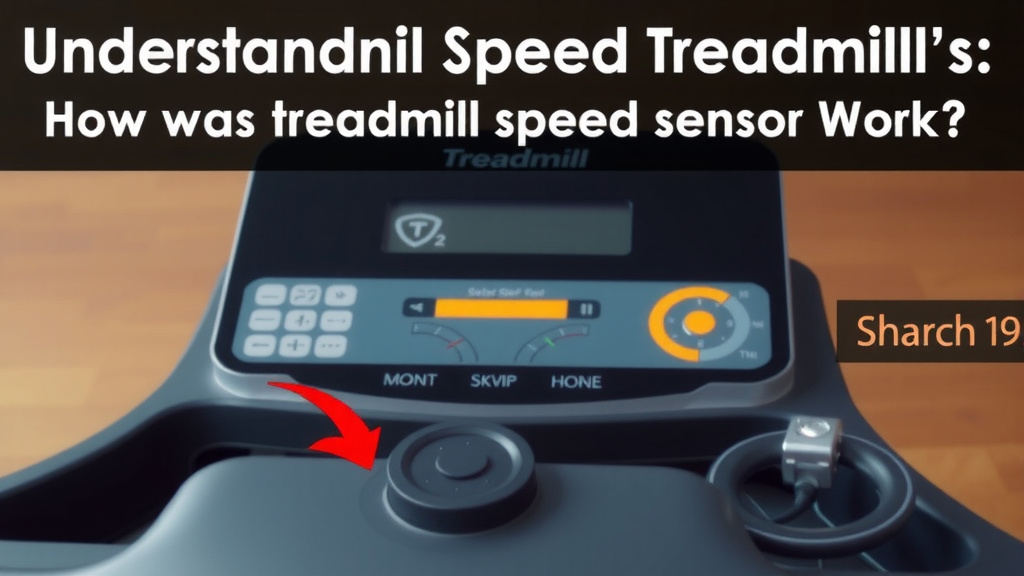
The Role of the Treadmill Computer
The speed sensor is just one piece of the puzzle. The treadmill’s main computer is the ‘brain’ that makes sense of the signals. It receives the raw data from the sensor and processes it. This processing happens very quickly, many times per second. The computer’s primary job is to translate those ‘pings’ into a familiar reading: your speed.
Translating Pulses into Speed
Let’s think of it like this: the sensor gives the computer a series of counts. The computer takes these counts and applies some math. It knows the distance the belt travels with each sensor ‘ping’. It also knows how often these pings are occurring. By dividing the total distance by the time taken, it calculates your speed. This calculation happens continuously, so the displayed speed is always up-to-date. Many sources, like fitness equipment repair guides, highlight the computer’s role in this data interpretation.
Impact on Other Metrics
Your speed is a foundational metric for other workout data. The treadmill’s computer uses your speed to estimate calories burned. It also helps calculate distance covered and your pace. If the speed sensor isn’t working correctly, all these other numbers can become inaccurate. This can impact your training logs and your understanding of your fitness progress. Ensuring the sensor is functioning properly is key for accurate feedback.
Troubleshooting Common Speed Sensor Issues
Sometimes, you might notice your treadmill’s speed reading is off. It might jump around, show zero when you’re moving, or be completely inaccurate. These issues often point back to the speed sensor system. Fortunately, many problems are fixable.
Is the Sensor Clean and Aligned?
Dust, debris, or even a slightly misaligned sensor can interfere with its function. If the magnet can’t get close enough to the sensor, or if dirt is blocking the signal, it won’t work right. A quick check and clean might be all you need. Many user manuals suggest this as a first step. You should ensure there’s no buildup of grime around the magnet or sensor.
Check for Loose Connections
The sensor and the treadmill computer communicate via wires. If these wires become loose or damaged, the signal can be interrupted. You might need to check the connections at both the sensor end and where they plug into the main console. Be sure to unplug your treadmill before checking wires for safety.
Is the Magnet in Place?
The magnet on the roller needs to stay securely attached. If it’s loose, has fallen off, or is damaged, the sensor won’t get its signal. Sometimes, a simple reattachment with strong adhesive is enough. However, a damaged magnet might need replacement. This is a common area for troubleshooting, and research into treadmill repair forums often highlights magnetic issues.
When to Call a Professional
If you’ve checked the basics and are still having trouble, it might be time to seek professional help. More complex issues with the sensor itself or the treadmill’s computer may require a technician. Don’t hesitate to contact the manufacturer’s support or a qualified repair person. Getting your treadmill running accurately again is worth the effort.
Quick Sensor Check Checklist:
- Ensure the treadmill is unplugged before inspecting.
- Locate the speed sensor and the magnet on the roller.
- Check for any visible dust, debris, or damage.
- Verify the magnet is securely attached to the roller.
- Inspect wires for loose connections or fraying.
- Test the treadmill again after cleaning and checking.
Conclusion
You’ve learned that your treadmill’s speed sensor is a simple yet ingenious device. It reliably detects your belt’s speed using a magnet and sensor. This data is then sent to the treadmill’s computer for accurate display. Understanding these components, from the spinning magnet to the electronic sensor, helps you appreciate your workout metrics. Whether it’s speed, distance, or calorie burn, it all starts with this sensor. If you notice any inaccuracies, don’t hesitate to perform a quick visual check of the sensor and magnet. Keeping this system in good order ensures you get the most out of every workout session.
Frequently Asked Questions
How often should I clean my treadmill’s speed sensor?
You should aim to clean your treadmill’s speed sensor and the surrounding area about once a month, or more frequently if you notice dust buildup. Keeping this area free of debris ensures the magnet and sensor can communicate effectively without interference. A quick wipe-down with a dry cloth should suffice for routine cleaning.
Can a loose magnet cause my treadmill speed to be inaccurate?
Yes, absolutely. If the magnet attached to the roller becomes loose or falls off, the sensor won’t be able to detect the belt’s rotation. This will result in an inaccurate or completely missing speed reading on your treadmill’s console. Always ensure the magnet is securely in place.
What’s the difference between a Hall effect sensor and a reed switch in a treadmill?
A Hall effect sensor is electronic and detects magnetic fields without physical contact, offering high durability. A reed switch is a mechanical switch that closes when a magnetic field is strong enough to pull two metal reeds together. Both effectively signal the treadmill’s computer about belt rotation.
My treadmill shows no speed, what should I check first?
Start by unplugging the treadmill for safety. Then, visually inspect the speed sensor and the magnet on the roller. Check for any obvious dust, debris, or damage. Make sure the magnet is still securely attached to the roller and that the sensor is positioned correctly near it.
Does a faulty speed sensor affect my calorie burn estimate?
Yes, a faulty speed sensor will definitely impact your calorie burn estimate. Since calorie calculations are based on your speed, duration, and often weight, an inaccurate speed reading will lead to an inaccurate calorie count. Ensuring your sensor is working correctly is vital for realistic workout data.