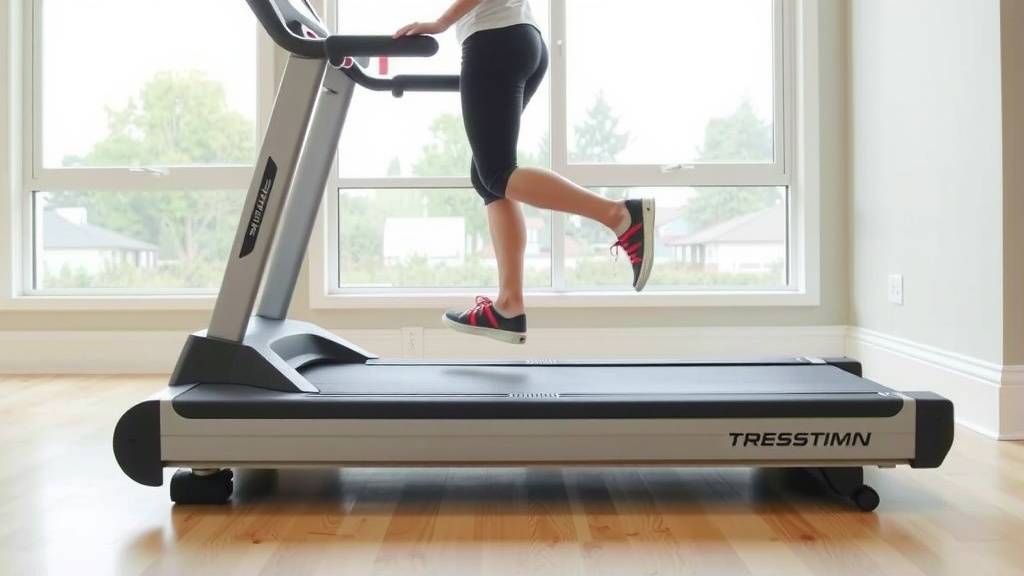
What’s the Average Treadmill Speed Most People Use
Most treadmills go up to about 10 to 12 miles per hour, with many reaching speeds of 12 mph. This range is plenty for most runners, whether you’re jogging or sprinting. Some high-end models might even push a bit faster, but 12 mph is a very common top speed.
The speed you need really depends on your workout goals. A casual walker might only need speeds around 3 to 4 mph. Serious runners, however, will want a treadmill that can handle faster paces. We found that understanding the typical treadmill speed range helps you pick the right machine for your fitness level and ambitions.
- Most treadmills top out at 10-12 mph.
- Slower speeds are fine for walking.
- Faster speeds are needed for serious runners.
- Machine speed depends on the model and price.
Let’s break down what these speeds mean for your workouts and how to choose the best treadmill for your needs.
Understanding Treadmill Speed Capabilities
When you’re looking at treadmills, one of the first things you’ll notice is the maximum speed. Most home treadmills are designed to accommodate a wide range of fitness levels, from gentle walkers to serious sprinters. We found that the typical top speed generally sits between 10 and 12 miles per hour (mph).
This speed range is more than enough for the vast majority of users. Think about it: 12 mph is a 5-minute mile pace! If you’re training for a marathon or just enjoying a brisk jog, this capability is usually well within reach. Let’s break down what these speeds mean for your workouts.
What Speed Do You Actually Need?
Your ideal treadmill speed isn’t a one-size-fits-all answer. It really hinges on your personal fitness goals and current activity level. What feels like a sprint to one person might be a warm-up jog for another.
The Walker’s Pace
If your primary goal is walking for exercise, you won’t need a treadmill that goes incredibly fast. Most people walk at speeds between 3 and 4 mph. Some might prefer a slightly faster power walk, reaching up to 4.5 mph. For these users, even a basic treadmill will have more than enough speed options.
We found that models with speeds going up to 6 or 8 mph offer plenty of room for progression, even if you start by just walking. You might even find yourself picking up the pace as you get fitter!
The Jogger’s Domain
Moving into jogging territory, speeds typically range from 5 to 7 mph. This is a very common and sustainable pace for many individuals looking to improve cardiovascular health or burn calories. A treadmill that comfortably reaches 8 mph will give you ample space to jog without feeling restricted.
You’ll want to ensure the treadmill has a sturdy frame and a good motor if you plan on jogging consistently. Research suggests that consistent, moderate-intensity exercise like jogging is excellent for heart health (Cleveland Clinic).
The Runner’s Requirement
For those who identify as runners, the speed demands increase. Recreational runners might comfortably run between 7 and 9 mph. However, if you’re training for speed, competing, or pushing your limits, you might need speeds from 9 mph up to 12 mph or even higher.
This is where the 10-12 mph top speed common in many treadmills becomes very relevant. If you’re an advanced runner aiming for sub-6-minute miles, you’ll definitely want to look for a treadmill that reliably hits those faster paces. Many experts say that consistent high-intensity interval training (HIIT) can significantly boost your fitness (NIH).
Understanding Treadmill Motor Power (HP)
While the top speed is important, the motor’s power, measured in horsepower (HP), plays a huge role in how smoothly and consistently the treadmill operates, especially at higher speeds or under heavier use. This is an often-overlooked spec!
Continuous Duty Horsepower (CHP) vs. Peak Horsepower
You’ll often see two types of horsepower ratings: peak and continuous duty (CHP). Continuous duty horsepower is the more important metric for treadmills. It tells you the motor’s sustained power output.
We found that for walkers and casual joggers, a motor with at least 2.0 to 2.5 CHP is usually sufficient. For serious runners who plan on using the treadmill frequently at higher speeds, a motor with 3.0 CHP or more is highly recommended. This ensures the motor won’t overheat or struggle during your intense workouts.
A weak motor can feel sluggish and unresponsive, which really detracts from your workout experience. Think of it like trying to climb a steep hill in a car with a tiny engine – it just won’t cut it!
Factors Affecting Treadmill Speed Ratings
Why the variation in speed capabilities? Several factors come into play, and they often correlate with the treadmill’s price point and intended user.
Home vs. Commercial Grade
Treadmills you find in gyms (commercial grade) are built to withstand constant use by many different people. They often have more robust motors and can reach higher speeds, sometimes exceeding 12 mph. However, these are typically much more expensive and built for durability.
Home treadmills are designed for individual or family use. The 10-12 mph range is considered the sweet spot for balancing performance, features, and cost for the average household user. Many research studies indicate that consistent treadmill use is a key factor in achieving fitness goals (CDC).
Price Point and Features
Generally, the more you spend, the more likely you are to get a treadmill with a higher top speed and a more powerful motor. Cheaper models might top out at 8 or 10 mph and may not feel as stable at their maximum speeds.
Higher-end models often offer speeds up to 12 mph, better cushioning systems, larger running decks, and more advanced training programs. If reaching very high speeds is critical for your training plan, be prepared to invest a bit more.
What to Look For When Buying
When you’re shopping for a treadmill, consider these points regarding speed and performance:
- Maximum Speed: Ensure it meets or exceeds your highest training pace.
- Motor Power (CHP): Aim for 2.5+ CHP for jogging, 3.0+ CHP for serious running.
- Deck Size: Longer decks are better for longer strides, especially at faster speeds.
- Stability: A heavier treadmill usually indicates better stability.
- Incline: Many treadmills offer incline options to add intensity without needing higher speeds.
We found that a treadmill with a good incline feature can be a fantastic alternative for adding workout intensity. You can simulate hill climbs, which are great for building leg strength and burning calories, even if you don’t need top-end speed.
| User Type | Typical Speed Range (mph) | Recommended Treadmill Top Speed (mph) | Motor Recommendation (CHP) |
|---|---|---|---|
| Walker | 3.0 – 4.5 | 6.0 – 8.0 | 2.0+ |
| Jogger | 5.0 – 7.0 | 8.0 – 10.0 | 2.5+ |
| Runner | 7.0 – 9.0+ | 10.0 – 12.0+ | 3.0+ |
This table summarizes what we’ve discussed. Remember, these are general guidelines. Your personal fitness level is the most important factor!
Putting It All Together: Your Treadmill Speed Checklist
Ready to find the perfect treadmill? Keep these quick points in mind:
- Confirm the treadmill’s maximum speed is sufficient for your goals.
- Check the motor’s CHP rating for sustained performance.
- Consider your typical workout: walking, jogging, or running?
- Don’t underestimate the value of a good incline feature.
- Read reviews to see how well the treadmill performs at its top speeds.
- Test it out if possible! See how it feels underfoot.
Conclusion
Choosing the right treadmill means understanding its speed capabilities and how they align with your personal fitness journey. Most home treadmills offer a top speed of 10 to 12 mph, which is ample for a wide range of users, from walkers to serious sprinters. Remember to consider your typical pace – whether you’re strolling at 3 mph or sprinting at 9 mph – and look for a motor with sufficient horsepower (CHP) to support your efforts. Don’t forget to check deck size and stability.
Your next step? Use this knowledge to confidently select a treadmill that will support your goals and help you stay motivated on your path to better health. Happy running!
Frequently Asked Questions
Do I need a treadmill that goes faster than 12 mph?
For most home users, 12 mph is more than sufficient, even for experienced runners. This speed translates to a 5-minute mile pace, which is very challenging. If you’re an elite athlete training for professional competitions that require speeds beyond this, you might need to look at specialized commercial-grade equipment.
Can a treadmill motor’s HP affect its top speed?
Yes, motor power (CHP) is directly related to performance, especially at higher speeds. A more powerful motor can sustain higher speeds without overheating or struggling. If you plan on running at speeds close to the treadmill’s maximum, a higher CHP rating is essential for consistent performance.
How much faster should a treadmill go than my fastest running pace?
It’s wise to have some buffer. If your fastest pace is 8 mph, a treadmill with a 10 mph top speed gives you plenty of room. This ensures the treadmill isn’t constantly maxed out, leading to a smoother, more reliable workout experience and potentially extending the machine’s lifespan.
Are treadmills with higher top speeds more expensive?
Generally, yes. Treadmills that offer higher maximum speeds, more powerful motors, and better overall construction tend to be priced higher. This is because more robust components are needed to safely and effectively handle those faster speeds and the increased strain they place on the machine.
Will a treadmill feel slower or faster than running outside at the same speed?
Treadmill speeds can sometimes feel different than outdoor running speeds. Due to the moving belt, many people find they can sustain a slightly faster pace on a treadmill. Conversely, some find the lack of wind resistance and the consistent surface makes it feel easier to run faster for longer periods.