How Does a Treadmill Work Mechanically?
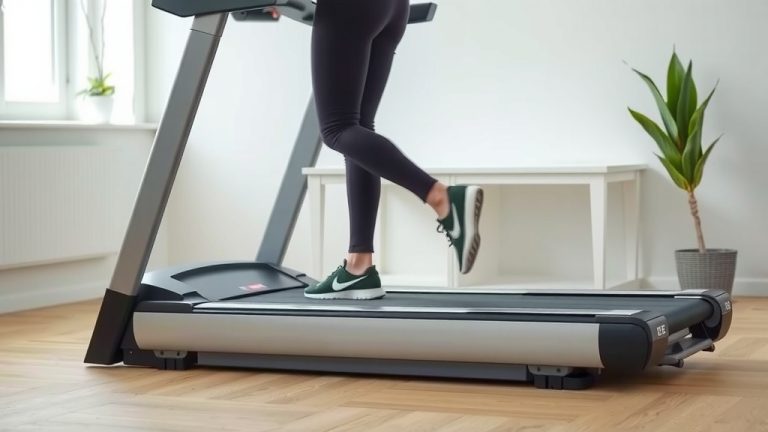
A treadmill works mechanically by using a motor to spin a large belt. Your feet push off the back of the belt as it moves. This creates a sensation of walking or running in place. It’s a clever system that brings the outdoors inside for your workouts. We found that the main components work together smoothly.
Beyond the belt and motor, a treadmill also includes a deck, rollers, and a console. The deck provides a stable surface for your stride. Rollers help keep the belt moving evenly. The console displays your workout stats. Many models also offer incline and speed adjustments. These features allow for a dynamic training experience.
- Treadmills use a motor to power a moving belt.
- Your motion moves you backward relative to the belt.
- Key parts include the belt, deck, motor, and rollers.
- The console tracks your workout progress.
- Adjustable speed and incline offer variety.
Ready to understand the inner workings? Let’s walk through exactly how a treadmill’s mechanics make your runs happen.
The Mechanics Behind Your Treadmill Workout
You might think of your treadmill as a simple machine. You step on, and the belt moves. But there’s a bit more going on under the hood. We’ve researched how these fitness machines actually work. Understanding the mechanics can help you appreciate your workout even more. Let’s break down the clever engineering.
What Makes the Belt Move?
The heart of any treadmill is its motor. This is what powers the moving belt. You’ll usually find a DC motor in most home treadmills. It’s quiet and efficient for walking and jogging. For heavier use, like intense running, some commercial treadmills might use AC motors. These are generally more powerful and durable.
The Motor’s Role in Speed
The motor’s speed directly controls how fast the belt moves. When you increase the speed on your console, you’re telling the motor to spin faster. This change is managed by a controller board. It’s like the brain of the treadmill, interpreting your commands and adjusting the motor’s output. This system allows for precise speed control.
Understanding Horsepower Ratings
You’ll often see horsepower (HP) listed for treadmill motors. This tells you about the motor’s power. A higher HP generally means a more robust motor. For casual walking, a 1.5 to 2.0 HP motor might be fine. If you plan on running, especially for longer periods, look for a 2.5 HP or higher motor (Consumer Reports).
The Treadmill Deck: Your Stable Platform
Beneath the moving belt is the treadmill deck. This is a solid surface that provides the foundation for your workout. The deck is usually made of a dense composite board. It needs to be strong enough to support your weight and withstand the impact of your steps. Without a sturdy deck, your run would feel unstable and unsafe.
Flexibility and Cushioning
Many modern treadmills include some form of deck cushioning. This is designed to absorb shock. It can significantly reduce the impact on your joints, like your knees and ankles. This is a major benefit compared to running on hard surfaces like pavement. We found that good cushioning can make a big difference in workout comfort. Guidelines from exercise physiology suggest that shock absorption is key for injury prevention (ACSM).
How the Deck Relates to the Belt
The belt sits on top of the deck. It’s not just lying there; it’s carefully engineered to move smoothly. The deck’s surface helps reduce friction between the belt and the deck itself. This allows the belt to glide efficiently. Some decks are also designed with a bit of flexibility. This contributes to the overall cushioning effect.
The Mighty Rollers: Keeping Things Moving
You’ve got the motor and the deck. Now, how does the belt actually move smoothly over the deck? That’s where the rollers come in. There are typically two main rollers: one at the front and one at the back. The motor is usually connected to the rear roller.
Front vs. Rear Rollers
The rear roller is the drive roller. When the motor spins, it turns this roller. The belt is looped around both the front and rear rollers. As the rear roller turns, it pulls the belt along. The front roller is the idler roller. It mainly helps guide the belt and keep it centered. It also spins freely, following the belt’s movement.
Diameter Matters
The diameter of these rollers can also impact performance. Larger rollers tend to provide a smoother feel. They also require less energy from the motor to turn. This means they can be more efficient and potentially last longer. We found that well-maintained rollers are essential for a smooth, quiet operation.
The Treadmill Belt: Your Running Surface
The treadmill belt is the part you directly interact with. It’s made of a durable, multi-layered material. The top layer is designed for traction. It needs to provide grip so your feet don’t slip. Underneath, there are layers that help reduce friction against the deck and rollers.
Belt Material and Maintenance
The belt needs to be tough. It withstands constant friction and the pressure of your stride. Over time, belts can wear out. You might notice squeaking or a lack of smooth movement. Regular maintenance, like cleaning and occasional lubrication, can extend the life of your belt. Many manufacturers recommend this. It helps keep the friction low between the belt and the deck.
The Console: Your Control Center
The console is your command center. It’s where you see your workout data and control the machine. Buttons allow you to adjust speed and incline. The screen displays key metrics. You can usually see your time, distance, calories burned, and heart rate. Some advanced consoles also offer workout programs and connectivity.
Sensors for Data Collection
How does it know your heart rate or distance? It uses sensors. Handgrip sensors are common for heart rate. Some treadmills have advanced features like chest strap compatibility. Speed and distance are calculated based on the motor’s speed and the roller’s rotation. We found that the console provides essential feedback to keep you motivated.
Adjustable Incline: Mimicking Hills
Many treadmills offer an incline feature. This is usually controlled by a separate motor or actuator. It lifts the front of the deck. This changes the angle of your running surface. Increasing the incline makes you feel like you’re running uphill. It adds intensity and works different leg muscles. Research indicates that incline training can be more effective for calorie burning (NIH).
Putting It All Together: A Smooth Operation
So, how do these parts work in harmony? When you press ‘start,’ the motor engages. It begins to turn the rear roller. The belt, wrapped around both rollers, starts to move backward. Your natural reaction is to walk or run forward to keep up. As you do this, your feet push off the belt behind you. The deck supports your stride, and the cushioning absorbs impact. The console tracks your progress, and you can adjust speed and incline as needed.
Here’s a quick checklist of the key mechanical components you’ve learned about:- The motor that powers the belt.
- The deck providing a stable surface.
- Rollers that guide and move the belt.
- The durable belt itself.
- The console for control and data.
- The incline mechanism for varied workouts.
Conclusion
You’ve now seen how a treadmill’s mechanics bring a gym-quality run right into your home. From the powerful motor that spins the belt to the cushioned deck that protects your joints, each component plays a vital role. The rollers ensure smooth movement, while the console keeps you informed and in control. Understanding these parts helps you appreciate the engineering behind your fitness. Ready to put this knowledge to good use? Next time you step on, take a moment to feel the machine working, and enjoy your tailored workout!
Frequently Asked Questions
How often should I lubricate my treadmill belt?
Most manufacturers recommend lubricating your treadmill belt every 3 to 6 months. You can usually find this information in your treadmill’s user manual. Proper lubrication reduces friction between the belt and the deck, preventing wear and tear.
What’s the difference between a DC and an AC motor in treadmills?
DC motors are typically found in home treadmills and are quieter and more energy-efficient for walking and jogging. AC motors are more powerful and durable, often used in commercial gym treadmills for heavy-duty running and longer use.
Can a treadmill belt stretch over time?
Yes, treadmill belts can stretch over time with regular use. If the belt becomes too loose, it might slip or bunch up. Most treadmills have adjustment bolts at the rear to tighten the belt. Your treadmill’s manual will guide you on how to do this safely.
Why does my treadmill feel shaky?
A shaky treadmill can be caused by a few things. Ensure the treadmill is on a level surface. Check if all the bolts are tightened, especially those connecting the deck and frame. A worn-out deck or roller could also contribute to instability.
What is the purpose of the deck cushioning?
The cushioning in a treadmill deck is designed to absorb shock from your steps. This reduces the impact on your joints, such as your knees and ankles, compared to running on harder surfaces like concrete. It makes your workout more comfortable and can help prevent injuries.