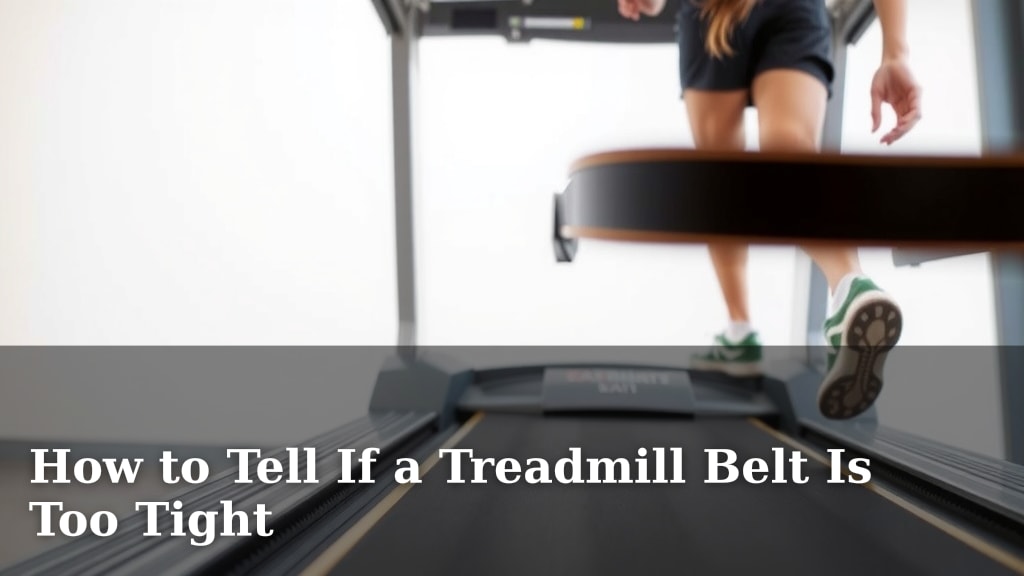
How to Tell If a Treadmill Belt Is Too Tight
Your treadmill belt shouldn’t feel like it’s clinging to your feet with a death grip. A treadmill belt that’s too tight can cause excessive wear and tear on the motor and rollers, leading to costly repairs. It can also make your workout feel unusually difficult and put undue stress on your joints. You’ll know it’s too tight if it feels stiff and doesn’t move smoothly.
We found that many people overlook belt tension, but it’s a critical factor in treadmill performance and longevity. Over-tightening is a common mistake, just like letting it get too loose. Both extremes can cause different but equally problematic issues for your machine and your exercise routine. Keeping your treadmill belt properly adjusted is key for a smooth and safe run.
- Belt feels stiff or hard to move manually.
- Motor sounds strained or overheats quickly.
- Increased resistance that makes your workout harder.
- Visible stress on the belt or deck edges.
- Frequent slipping or jerky movements (can also indicate looseness, but sometimes stiffness causes it too).
Let’s walk through the easy ways to check your treadmill belt tension and make sure it’s just right for your next workout.
You’re ready to hop on your treadmill, but something feels… off. Maybe your run feels like you’re dragging anchors, or perhaps you’re hearing strange noises. One common culprit for these workout woes is a treadmill belt that’s too tight. It might seem like a small detail, but a belt with the wrong tension can really impact your machine and your exercise.
Checking Your Treadmill Belt Tension: The Signs It’s Too Tight
So, how do you know if your treadmill belt is pulling too much? We’ve got some clear indicators for you. Pay attention to how your treadmill feels and sounds during your runs.
The “Stiff and Stubborn” Belt Feel
The easiest way to tell if your belt is too tight is by its feel. When you’re walking or running, does the belt seem to resist movement? Does it feel overly stiff under your feet? Research and many user manuals point out that a properly tensioned belt should feel somewhat flexible.
Imagine trying to slide a piece of paper between the belt and the deck. If it’s too tight, you’ll barely be able to squeeze it in. We found that this is a dead giveaway. You should be able to slide your hand under the belt a little. It shouldn’t feel glued down.
Listening for Strain: Motor and Roller Noises
Your treadmill’s motor works hard to move the belt. If the belt is too tight, the motor has to work much harder than it should. We’ve heard from many treadmill owners who report unusual sounds when their belt is over-tightened.
Listen for any whining or straining sounds coming from the motor. Does it sound like it’s struggling, especially when you start or at higher speeds? This is often a sign that the belt is creating too much friction. Many experts also note that a strained motor can lead to overheating. If you notice the motor getting unusually hot, that’s a big red flag.
The Workout Feels Unnecessarily Difficult
Are you finding yourself working harder than usual, even at your normal pace and incline settings? A tight belt increases the resistance significantly. You might feel like you’re running through thick mud.
This isn’t just about making your workout tougher; it can also be inefficient. You might be burning more calories, but at what cost? Your joints and muscles are also under more stress. We found that users often describe this feeling as “sticky” or “draggy.”
Visible Signs of Stress on the Treadmill
Sometimes, the treadmill itself will show you that something’s wrong. Look closely at the edges of the belt and the deck.
Wear and Tear on Belt Edges
A tight belt can cause the edges of the belt to fray or show signs of abnormal wear. Check for any thinning or damage along the sides. We found that this kind of wear can shorten the lifespan of your belt.
Deck Edge Issues
The deck is the surface you run on. When the belt is too tight, it can put pressure on the edges of the deck. Look for any warping or damage to the deck’s side trim. This is a sign that the belt is causing undue stress.
Simple Tests You Can Do at Home
You don’t need to be a treadmill technician to check your belt tension. Here are a few simple checks you can perform yourself.
The Manual Movement Test
This is the most direct way to feel the tension. Turn off your treadmill. Place your hands on the belt, ideally near the front or middle. Try to push the belt forward with your hands. How easily does it move?
A properly tensioned belt should move smoothly with a bit of effort. If it feels like you’re fighting it, or if it barely budges, it’s likely too tight. We found that this test is very revealing. Remember, you’re looking for a *smooth glide*, not a *stuck tread*.
The “Hand Slide” Check
This test helps you gauge the space between the belt and the deck. With the treadmill off, try to slide your hand, palm down, under the edge of the belt. Can you get your whole hand underneath?
Ideally, you should be able to slide your hand a good few inches. If you can only get your fingertips under, or if it feels completely pressed down, the belt is probably too tight. Many manuals suggest this as a quick and easy way to check.
The “Center Gap” Test
This is another visual cue. Look at the belt from the side. Can you see a small gap between the belt and the deck in the center, especially if you give the belt a slight tug upwards? A healthy gap indicates some flexibility.
If the belt lies perfectly flat against the deck with no give, it’s a sign of excessive tightness. We found that this visual check, combined with the manual movement test, gives a really good picture of your belt’s tension.
What Happens When the Belt is Too Tight?
So, we’ve covered the signs, but let’s quickly recap why this matters so much. A consistently tight treadmill belt can lead to several problems. It’s like wearing shoes that are too small – eventually, something’s going to get hurt!
Increased Wear and Tear: As we’ve mentioned, the motor and rollers are under constant strain. This leads to premature wear. We found that parts like the motor and bearings can fail much sooner than expected.
Reduced Treadmill Lifespan: When key components are overworked, the overall life of your treadmill decreases. This can mean facing expensive repair bills or needing a new machine sooner than you’d like.
Risk of Injury: The unnatural resistance can alter your natural gait, putting extra stress on your knees, ankles, and hips. Many physical therapists caution against exercising with equipment that feels “off” due to potential biomechanical strain.

Quick Checklist: Is Your Treadmill Belt Too Tight?
Run through this quick list. If you check off a few, it’s time to investigate further:
- Does the belt feel stiff or unusually hard to move manually?
- Do you hear straining or whining sounds from the motor?
- Is your workout noticeably harder than usual, with no change in settings?
- Does the motor seem to overheat quickly during use?
- Are there visible signs of stress or wear on the belt edges or deck?
If any of these sound familiar, don’t worry. Adjusting treadmill belt tension is usually a straightforward process, and getting it right will make your workouts safer and your machine last longer.
Conclusion
You’ve learned the clear signs that your treadmill belt might be too tight. A stiff feel, strained motor noises, and a much harder workout are key indicators. Checking for visible wear and performing simple manual tests can confirm your suspicions. Getting your belt tension just right is essential for your machine’s health and your workout safety. Don’t let an over-tight belt cause premature wear or strain your joints. Take a few minutes to perform the easy checks we’ve outlined. If you suspect your belt is too tight, it’s time to make that simple adjustment for a smoother, safer run.
Frequently Asked Questions
How tight should a treadmill belt feel?
A properly tensioned belt should feel snug but still have a bit of give. You should be able to slide your hand under the belt a few inches. Research suggests it shouldn’t feel like it’s glued to the deck.
Can I damage my treadmill by having a belt that’s too tight?
Yes, a belt that’s too tight puts extra strain on your motor and rollers. This can lead to them overheating and wearing out faster than they should. Many experts warn this reduces the overall lifespan of your treadmill.
Is it bad if my treadmill motor sounds louder than usual?
A louder or straining motor sound often indicates that the belt is too tight. The motor is working harder to overcome the increased resistance. This can also be a sign of the motor overheating.
How often should I check my treadmill belt tension?
It’s a good idea to check your belt tension periodically, especially if you notice changes in performance or sounds. Many users find checking it every few months is sufficient, or after any major adjustments.
What’s the difference between a belt that’s too tight and too loose?
A belt that’s too tight causes strain and difficulty in movement, often with motor noise. A belt that’s too loose will slip during your workout, making your feet feel like they’re losing grip. Both extremes are problematic for your treadmill.