
How Fast is an 8 Minute Mile on a Treadmill
Running an 8-minute mile pace on a treadmill is considered a moderately fast pace. It means you’re covering one mile in exactly eight minutes, or about 7.5 miles per hour. Many runners can achieve this pace, but it requires some consistent training to maintain.
This pace is a great goal for those looking to improve their cardiovascular fitness and endurance. It’s faster than a casual jog but not quite sprinting speed. For many, it hits a sweet spot for an effective workout that is challenging yet sustainable.
- An 8-minute mile is 7.5 mph.
- It’s a solid, moderately fast pace.
- Good for cardio and endurance.
- Achievable with regular training.
- A great fitness goal.
Let’s dive into what that 8-minute mile pace really means for you on the treadmill and how you can get there if it’s your new fitness target.
Understanding Your 8-Minute Mile Pace on the Treadmill
So, you’re curious about what it takes to hit an 8-minute mile on your treadmill. That’s a fantastic goal! Essentially, you’re aiming to cover 1.0 mile in exactly 8 minutes. This translates to a consistent speed of 7.5 miles per hour (mph).
Think of it this way: if you were to run at this pace for a full hour, you’d cover 7.5 miles. It’s a steady, purposeful clip that many find to be a sweet spot for a challenging yet doable workout. It’s faster than a leisurely jog but not so fast that you’re gasping for air after just a few minutes. Many recreational runners aim for this pace to improve their cardiovascular health.
Is 7.5 MPH Fast? Let’s Compare.
When we talk about treadmill speeds, it’s helpful to put 7.5 mph into context. Where does it fit in the running spectrum?
Comparing Speeds: From Jogging to Racing
Your average walking speed is typically around 3 to 4 mph. So, 7.5 mph is definitely in the running category. For many people, a casual jogging pace might be anywhere from 5 mph to 6 mph. This means your 8-minute mile pace is a solid step up from a relaxed jog.
What about faster runners? Elite marathon runners often maintain paces well under 5 minutes per mile. For them, 7.5 mph would be considered a recovery jog! However, for the average fitness enthusiast, 7.5 mph is a very respectable pace. It’s often used as a benchmark for intermediate runners.
What Does 7.5 MPH Mean for Your Workout?
Hitting an 8-minute mile pace typically means you’re working at a moderately intense level. According to guidelines from organizations like the American Heart Association, moderate-intensity aerobic activity means your heart rate is between 50% and 70% of your maximum heart rate. This pace usually gets you right into that zone.
It’s a pace that challenges your cardiovascular system, helping to build endurance and strengthen your heart. You’ll likely feel like you can hold a conversation, but only in short sentences. It’s that point where you’re breathing harder but not completely out of breath.
Achieving Your 8-Minute Mile Goal
If an 8-minute mile isn’t your current go-to pace, don’t worry! It’s a goal that’s achievable with consistent effort and a smart training plan. It doesn’t require you to be a naturally gifted athlete. It requires dedication. Let’s look at how you can build up to it.
Building Your Running Endurance
The foundation of any running goal is endurance. You need to train your body to sustain effort over time. Start by running consistently, even if it’s at a slower pace than your target. Aim for 3-4 running sessions per week.
If you’re new to running or returning after a break, begin with shorter distances or intervals. For instance, try running for 1 minute and walking for 1 minute, repeating this for 20-30 minutes. Gradually increase the running intervals and decrease the walking intervals. We found that this gradual approach is key to avoiding injury and building confidence.
Introducing Speed Work
Once you have a base level of endurance, you can start incorporating speed work. This means introducing faster bursts of running into your routine. Treadmills are great for this because you can easily control the speed.
Try interval training: Run at your target 8-minute mile pace (7.5 mph) for 1-2 minutes, then recover by jogging or walking at an easier pace for 2-3 minutes. Repeat this several times during your workout. We found that alternating between high-intensity bursts and recovery periods helps your body become more efficient at handling faster speeds. It also improves your lactate threshold, meaning you can run faster for longer before fatigue sets in.
The Role of Incline
Don’t forget about the incline feature on your treadmill! Adding a slight incline can make a big difference. Running uphill simulates outdoor running conditions and engages different leg muscles.
You can use incline in a few ways. You might run at a slightly slower pace but with an incline to mimic a challenging hill. Or, you can keep your speed at 7.5 mph and add a small incline (like 1-2%) to increase the intensity and calorie burn without necessarily running faster. Many find that incorporating incline helps build strength that translates to better performance on a flat surface too. The Centers for Disease Control and Prevention (CDC) suggests that varying your workout can lead to better overall fitness.
Consistency is Your Best Friend
The most critical factor in achieving any running goal is consistency. Showing up regularly, even when you don’t feel like it, is what leads to progress. Aim to stick to your training schedule as much as possible.
Missed a workout? Don’t dwell on it. Just get back on track for your next scheduled session. We found that allowing for rest and recovery is just as important as the workouts themselves. Your muscles need time to repair and get stronger. Listen to your body; if you feel pain, take a rest day or consult a healthcare professional.
Treadmill vs. Outdoor Running: What’s the Difference?
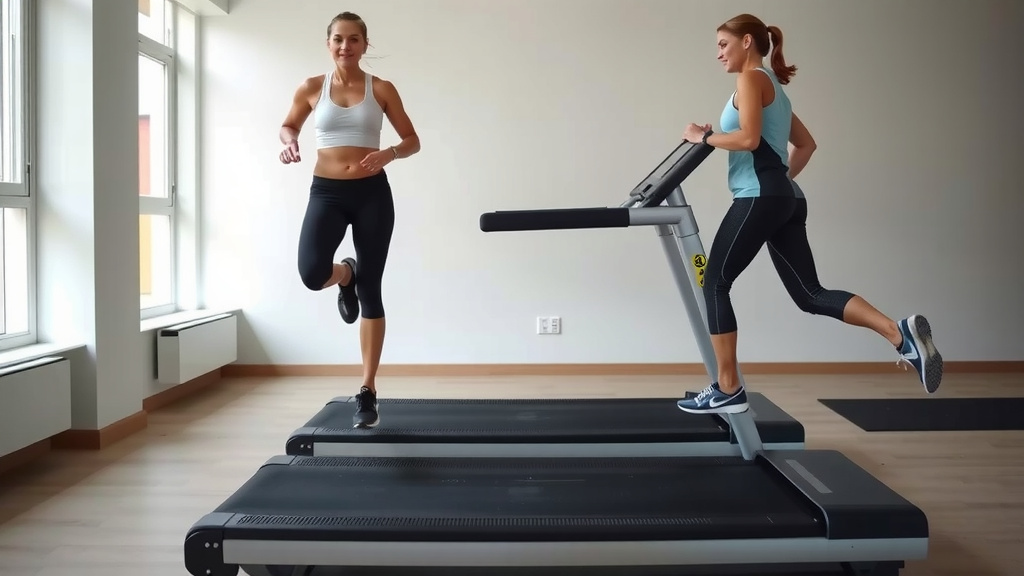
Running on a treadmill has its own unique characteristics compared to running outdoors. Understanding these differences can help you optimize your training.
Treadmill Advantages
The biggest advantage of a treadmill is the controlled environment. You can set the exact speed and incline you want, making it easy to hit and maintain your 7.5 mph target. There are no external factors like weather, traffic, or uneven terrain to worry about. This predictability is excellent for focused training sessions aimed at a specific pace.
Additionally, the cushioned belt of most treadmills can be a bit gentler on your joints than hard pavement. This can be beneficial for reducing impact, especially when you’re increasing your mileage or intensity. We found that for many, this reduced impact allows them to train more frequently.
Treadmill Challenges
On the flip side, the treadmill belt actually moves you forward. This means you don’t have to work as hard to propel yourself compared to outdoor running, where you push off the ground. Many experts suggest that running on a treadmill is roughly 5-10% easier than running at the same speed outdoors. To compensate, some runners like to add a slight incline (around 1%) to their treadmill runs to better simulate outdoor conditions.
You also miss out on the wind resistance you encounter outside. This is another reason why some people find treadmill running feels easier. While it’s great for hitting that 8-minute mile, remember to occasionally challenge yourself outdoors to prepare for real-world running scenarios. The Mayo Clinic suggests that varied training surfaces can improve overall running mechanics.
Your Checklist for Reaching 7.5 MPH
Ready to get serious about hitting that 8-minute mile? Here’s a quick checklist to keep you on track:
- Set your treadmill speed to 7.5 mph and see how long you can comfortably maintain it.
- Build a consistent running routine with 3-4 sessions per week.
- Incorporate interval training: mix faster bursts with recovery periods.
- Don’t be afraid to use incline to add challenge and variety.
- Listen to your body and prioritize rest and recovery.
- Stay patient and persistent; progress takes time!
Conclusion
You’ve learned that an 8-minute mile pace on the treadmill, equivalent to 7.5 mph, is a moderately fast and achievable goal for many. It represents a solid workout that enhances cardiovascular fitness without being overly strenuous. Remember, consistency in your training, incorporating interval work, and smart use of incline are your best allies. Don’t forget to listen to your body and allow for proper recovery. Ready to take the next step? Start by setting your treadmill to 7.5 mph for a short burst and see how it feels. Build from there!
Frequently Asked Questions
Is 7.5 mph a fast running speed for beginners?
For someone just starting their running journey, 7.5 mph (or an 8-minute mile) is quite fast. Most beginners find a comfortable jogging pace is closer to 5-6 mph. It’s a great goal to work towards, but it requires building a solid endurance base first.
How many calories can you burn running an 8-minute mile?
The number of calories burned varies based on your weight, age, and metabolism. However, running at 7.5 mph for 30 minutes typically burns a substantial amount of calories, often in the range of 300-400 for an average-sized person. This makes it an effective pace for calorie expenditure.
Can I run an 8-minute mile if I’m overweight?
Yes, absolutely! Many people who are overweight can achieve and maintain an 8-minute mile pace with consistent training. The key is to start gradually, focus on building endurance, and listen to your body to avoid injury. Weight loss can also make running at this pace feel easier over time.
How can I prepare my body for an 8-minute mile pace without getting injured?
Injury prevention is key. Start with a run-walk program to build your base. Gradually increase your running time and decrease walking time. Incorporate interval training with rest periods, and use a slight incline to build strength. Always warm up before and cool down after your runs.
What’s the difference in effort between treadmill running and outdoor running at 7.5 mph?
Generally, running on a treadmill at 7.5 mph feels slightly easier than running outdoors at the same speed. The treadmill belt assists with propulsion, and you don’t have to contend with wind resistance or push off uneven surfaces. Many runners add a 1% incline on the treadmill to better simulate outdoor conditions.