How Do Manual Treadmills Work?
Manual treadmills work by using your own body’s momentum to move the belt. When you walk or run, your feet push the belt backward. This creates a natural, self-propelled motion. You are in complete control of the speed and incline. It’s a simple yet effective design.
Unlike motorized treadmills, there’s no motor to regulate the belt speed. This means the effort you put in directly translates to performance. Many users appreciate this direct connection and the workout it provides. It’s a more engaging way to get your steps in. You can also find them to be quite durable.
- Manual treadmills are powered by your own movement.
- Your feet push the belt as you walk or run.
- You control the speed and incline directly.
- They offer a more engaging and connected workout.
- No motor means less complexity and often more durability.
Ready to learn exactly how this unique fitness machine gets you moving? Let’s walk through the mechanics step by step.
Understanding How Manual Treadmills Get You Moving
A manual treadmill is a marvel of simple mechanics. It uses your body’s own energy to make the belt move. Think of it like a skateboard you stand on. When you step forward, your weight pushes down. This motion naturally causes the belt to roll beneath your feet.
The Core Mechanism: Friction and Momentum
The magic happens through momentum and friction. As you walk or run, your feet push backward against the belt. This backward force is what propels the belt forward. The faster you move your legs, the faster the belt moves. It’s a direct cause-and-effect relationship.
The belt itself is usually made of a strong, flexible material. It’s wrapped around two rollers, one at the front and one at the back. Your stepping motion creates the momentum that turns these rollers, and thus the belt. This is different from motorized treadmills, which have an electric motor to do this work.
Your Role in Speed Control
You are the engine of a manual treadmill. There’s no button to press for speed. Your pace is determined entirely by how quickly you move your legs. If you want to go faster, you simply take quicker steps. To slow down, you ease up your stride.
This direct control offers a unique workout experience. It requires you to be attentive to your body. You learn to adjust your speed based on how you feel. Many users find this engaging. It feels more like a natural run or walk than being pushed by a machine.
The Incline Feature: A Simple Lever
Many manual treadmills also offer an incline adjustment. This is typically done with a simple lever or a dial. You manually set the angle of the front of the treadmill. This changes the slope the belt runs on.
Raising the incline makes your workout more challenging. It targets different leg muscles. You’ll feel it more in your glutes and hamstrings. Lowering the incline makes it easier. This allows for a less intense pace. Adjusting the incline is usually a straightforward process. You might do it before you start or even during your workout, if the model allows.
How Incline Affects Your Workout
When you increase the incline, you’re essentially asking your legs to work harder against gravity. This can burn more calories. It also helps build strength. Research shows that incline walking can be as effective as running on a flat surface (Harvard Health Publishing). It’s a great way to boost your fitness.
Manual vs. Motorized: A Key Difference
The biggest distinction lies in the absence of a motor. Motorized treadmills have a powerful electric motor. This motor spins the belt at a set speed. You choose the speed, and the motor maintains it. This provides a very consistent pace.
Manual treadmills, on the other hand, are responsive. They react to your every move. This can sometimes feel jarring if you’re used to a motorized machine. However, many people prefer this dynamic feel. It demands more from your body and can lead to a better cardiovascular workout.
Advantages of No Motor
Fewer parts often mean less can go wrong. Manual treadmills tend to be more durable. They are less prone to mechanical failure because there’s no motor to burn out. They also use less electricity, making them an eco-friendly option. Plus, they are generally lighter and easier to move.
Understanding the Belt System
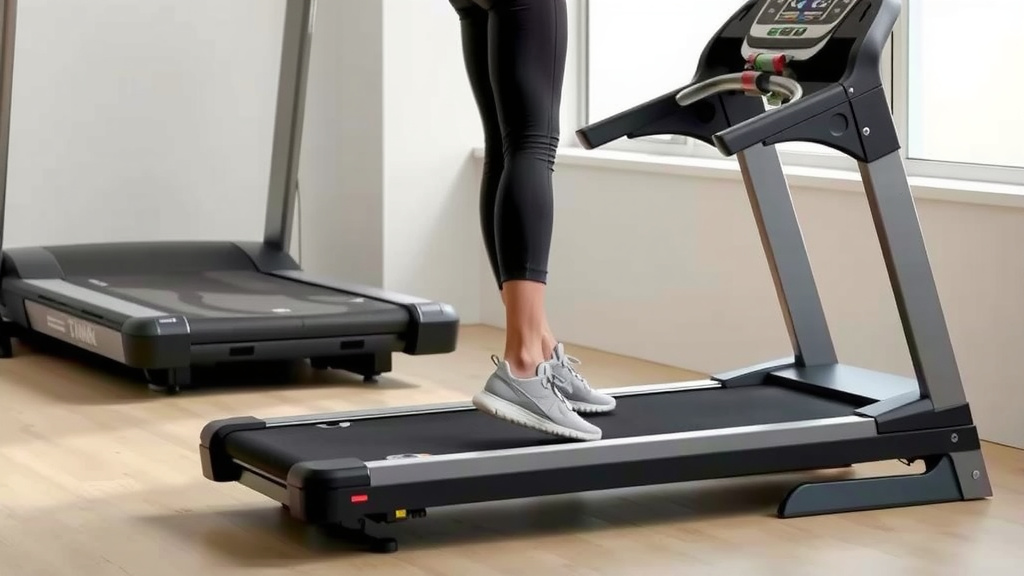
The belt on a manual treadmill is designed to move with minimal resistance. It’s often a single-piece belt or a segmented belt. It glides over a deck. Sometimes, the deck is flat, and other times it has a slight curve. The design aims to make your steps as smooth as possible.
On some high-end manual treadmills, you might find a curved belt. These are designed to mimic natural running motion even more closely. They often require less effort to start moving. However, traditional flat-belt manual treadmills rely more on your initial push to get going.
What to Expect During Your First Workout
Your first few steps on a manual treadmill might feel a bit different. You’ll need to find a rhythm. Start slowly. Take a few normal steps. You’ll feel the belt start to move. Gradually increase your pace as you get comfortable.
Don’t be discouraged if you stumble a bit at first. It’s a learning curve. Think of it like learning to ride a bike. Once you find your balance and coordination, it becomes second nature. Many experts suggest holding onto the handrails lightly for support initially (CDC).
The Benefits of a Self-Propelled Workout
Working out on a manual treadmill offers several advantages. It can improve your balance and coordination. You’re constantly making micro-adjustments to stay on the belt. This engages more stabilizer muscles.
Many users report feeling a more intense workout. You’re not just running; you’re actively pushing the belt. This can lead to a higher calorie burn. Studies have shown that manual treadmills can engage the posterior chain muscles more effectively (National Institutes of Health). This means your hamstrings and glutes get a great workout.
Is a Manual Treadmill Right for You? A Quick Checklist
Consider these points to see if a manual treadmill fits your needs:
- Do you prefer a workout where you are in complete control of the pace?
- Are you looking for a simpler, potentially more durable machine?
- Do you want a machine that can help improve your balance and coordination?
- Would you appreciate a machine that typically uses less electricity?
- Are you okay with a slight learning curve to get your rhythm?
- Do you want a machine that can target your leg muscles more intensely?
Conclusion
You’ve learned that manual treadmills are all about your power. Your steps directly control the belt’s speed and your effort dictates the incline. This creates a uniquely engaging workout. It’s a simpler machine, often meaning more durability and less maintenance. You are the engine driving every stride. Ready to experience this direct connection? Consider trying out a manual treadmill for your next workout and feel the difference.
Frequently Asked Questions
How do I start moving on a manual treadmill?
To get moving, simply step onto the belt and start walking at a comfortable pace. Your natural walking motion will begin to turn the belt. You may need to hold the handrails lightly at first for balance until you find your rhythm.
Will a manual treadmill be too hard to use compared to a motorized one?
It can feel different initially. You need to actively push the belt, which requires more effort than a motorized treadmill. Many find this increased engagement leads to a better workout. Start slow and gradually increase your speed and intensity.
Can I adjust the speed on a manual treadmill?
Yes, you adjust the speed entirely by how fast you walk or run. Faster steps make the belt go faster. Slowing your pace will naturally slow the belt down. There are no buttons to press for speed control.
How does the incline work on a manual treadmill?
Most manual treadmills have a manual adjustment, usually a lever or dial, to change the incline. You manually set the angle of the front of the treadmill. Raising the incline makes your workout harder, targeting different muscles.
Are manual treadmills good for burning calories?
Yes, manual treadmills can be very effective for calorie burning. Because you are directly powering the belt and often working against an incline, you engage more muscles and may burn more calories than on a motorized treadmill for the same duration.