How Fast Can Treadmills Go? Your Guide
The fastest treadmill speed you’ll likely find is around 12.5 mph. Most home treadmills top out at about 10-12 mph, while some commercial models can go a bit faster for elite athletes or specialized training. Knowing the treadmill’s maximum speed is key for your training goals.
This top speed is important for sprinters, high-interval training, and even some specific sports conditioning. If you’re looking to simulate very fast running or require a higher challenge, you’ll want to focus on treadmills that advertise speeds beyond the standard 10 mph. Research indicates that most users don’t need speeds exceeding 10 mph.
TL;DR:
- Fastest treadmills reach around 12.5 mph.
- Home treadmills usually max out at 10-12 mph.
- Commercial models might offer slightly higher speeds.
- This speed is for advanced training and elite athletes.
- Most everyday users don’t require this high speed.
Let’s break down what this means for you and how to choose the right treadmill based on speed. We’ll look at what’s available and what you should consider.
Understanding Treadmill Speed Capabilities
When you’re thinking about treadmill speed, it’s smart to know what the highest speeds actually mean for your workouts. Most treadmills you’ll encounter in a gym or buy for home use have a maximum speed that’s designed for a wide range of users. You’ll often see a top speed listed around 10 mph to 12 mph.
This range covers most of your running needs. Think about it – even elite runners don’t maintain speeds much higher than this for extended periods. The speed you choose should really match your fitness level and your training goals. It’s not just about how fast the machine *can* go, but how fast you *need* it to go.
What Does Top Speed Actually Mean for You?
So, what does that 12.5 mph top speed really translate to? For the average person, it’s incredibly fast. A pace of 12 mph means you’re running a 5-minute mile. This is a speed that very few people can sustain, even for short distances.
For the vast majority of home users, a treadmill that tops out at 10 mph is perfectly sufficient. Many fitness studies suggest that speeds above 10 mph are mainly for highly specialized training. This includes athletes preparing for sprinting events or engaging in very specific interval training protocols.
Home Treadmills vs. Commercial Models
When you’re shopping, you’ll notice differences between treadmills for your home and those found in commercial gyms. Home treadmills are typically built for a broader audience. Their speed limits are often set at around 10-12 mph, which is more than enough for most people’s fitness journeys.
Commercial treadmills, on the other hand, are designed for heavy use and a wider variety of users, including professional athletes. These machines sometimes offer slightly higher top speeds, maybe reaching up to 12.5 mph or even a bit more on very high-end models. This extra bit of speed caters to sprinters and those doing intense, sport-specific drills.
Who Needs That Extra Speed?
Let’s be clear: if you’re not a competitive sprinter or training for a specific event that requires extremely high speeds, you likely won’t need a treadmill that goes much beyond 10 mph. You might get a thrill from seeing the numbers climb, but your body might not be able to keep up!
Elite athletes, professional sports teams, and specialized training facilities are the primary users who benefit from treadmills that push these higher speed limits. For example, someone training for the 100-meter dash might use these higher speeds for short, explosive bursts. It’s all about very specific training requirements.
The Role of Incline
Don’t forget about the incline feature! Many treadmills offer an incline that can significantly increase the intensity of your workout without needing extreme speeds. You can simulate hill training by increasing the incline, which is a fantastic way to boost calorie burn and build leg strength.
Research shows that adding incline can be just as effective, if not more so, for cardiovascular health and muscle engagement than simply increasing speed. For example, running at 6 mph with a 5% incline can provide a workout comparable to running at 8 mph on a flat surface (Cleveland Clinic). This means you can get a challenging workout without needing to reach those top-tier speeds.
Choosing a Treadmill Based on Speed Needs
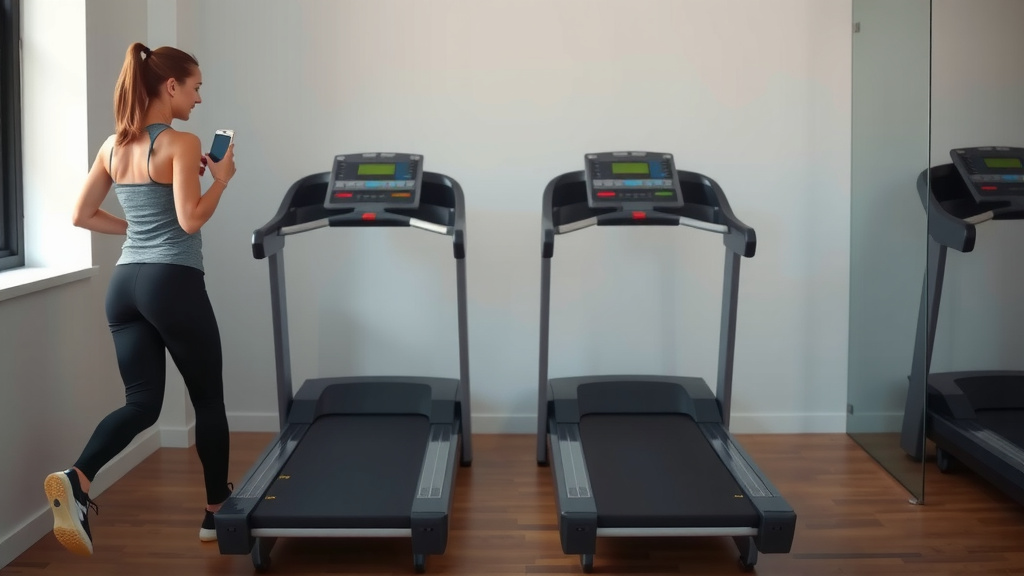
When you’re looking for a treadmill, think practically about your own fitness habits. Ask yourself: what speeds do I actually use now, and what speeds do I realistically aim for?
If you’re just starting out or focus on steady-state cardio, a treadmill with a top speed of 8-10 mph is likely more than adequate. You’ll probably spend most of your time in the 4-7 mph range. A good motor and a comfortable deck are probably more important for you than chasing the highest possible speed.
Assessing Your Personal Speed Requirements
Consider your current running pace. Are you a casual jogger, a marathoner, or a sprinter? Your current pace is the best indicator of the speed you’ll need. If your fastest mile time is 8 minutes, that’s about 7.5 mph. If you’re aiming to run a 6-minute mile, that’s 10 mph.
Think about your long-term goals, too. Do you plan to become a competitive runner? Or are you looking to maintain general fitness? Most people find that a treadmill with a maximum speed of 10 mph offers plenty of room for progression and varied workouts.
What About Interval Training?
High-Intensity Interval Training (HIIT) on a treadmill can be very effective. This typically involves short bursts of maximum effort followed by recovery periods. Even in HIIT, the speeds used during the “work” intervals usually don’t exceed 10-12 mph for most people.
If your HIIT sessions involve sprints that go beyond what a standard treadmill can offer, then you might need to look at those higher-end commercial models. But for most users, a treadmill that goes up to 10 mph is perfectly capable of supporting challenging interval workouts.
Key Features to Look For Beyond Speed
While speed is one factor, don’t let it be the *only* factor. You’ll want to consider other features that contribute to a great running experience. A stable frame is essential for safety, especially at higher speeds. Look for treadmills that feel solid and don’t wobble.
The motor size is also important, especially if you plan to run frequently or at higher speeds. A motor that’s too small will overheat and struggle. For speeds up to 10 mph, a 2.5 to 3.0 HP motor is generally recommended for home use (Consumer Reports). A good cushioning system will also protect your joints.
Here’s a quick checklist to help you decide:
- Assess your current running pace and future goals.
- Determine if you need speeds above 10 mph for specific training.
- Consider the motor power for sustained performance.
- Prioritize a stable and well-cushioned deck for safety.
- Think about incline options for workout variety.
- Check reviews for user experiences at different speed settings.
| Treadmill Type | Typical Max Speed | Best For |
|---|---|---|
| Home Treadmill | 10-12 mph | General fitness, jogging, moderate running, most home users. |
| Commercial Treadmill | 12-15+ mph | Elite athletes, sprinters, specialized sports training, high-demand gym environments. |
Conclusion
You’ve learned that while the fastest treadmills can reach speeds around 12.5 mph, most home models top out at 10-12 mph. This higher speed is primarily for elite athletes and specialized training. For your everyday fitness, focusing on speeds up to 10 mph, combined with incline options, offers a robust and challenging workout. Remember, the best treadmill for you matches your personal fitness level and goals, not just the highest number on the display.
Your next step is to honestly assess your current running pace and future aspirations. Use this information to confidently choose a treadmill that will effectively support your fitness journey for years to come.
Frequently Asked Questions
Do I really need a treadmill that goes faster than 10 mph?
For most home users, a treadmill with a maximum speed of 10 mph is more than sufficient. Research suggests that speeds above this are mainly for highly specialized training like sprinting. Unless you’re an elite athlete, you likely won’t need speeds much higher than 10 mph for effective workouts.
Are commercial treadmills always faster than home treadmills?
Commercial treadmills often have higher top speeds, sometimes reaching 12.5 mph or more, to accommodate a wider range of users, including professional athletes. Home treadmills typically max out at 10-12 mph, which is adequate for the general fitness needs of most people.
Can incline make a treadmill workout as intense as high speed?
Yes, you can significantly increase workout intensity with incline. Running at a moderate speed with a higher incline can provide a cardiovascular challenge and muscle engagement comparable to running at a faster speed on a flat surface.
What’s a good motor HP for a treadmill that goes up to 10 mph?
For home treadmills reaching speeds up to 10 mph, a motor between 2.5 and 3.0 HP is generally recommended. This ensures the motor can sustain consistent performance without overheating, especially during frequent or longer runs.
How do I know if my current running pace requires a faster treadmill?
Consider your current fastest mile time. If you’re running faster than a 6-minute mile (10 mph) regularly or aspire to, you might benefit from a treadmill with a higher top speed. Otherwise, a treadmill topping out at 10 mph will likely meet your needs.