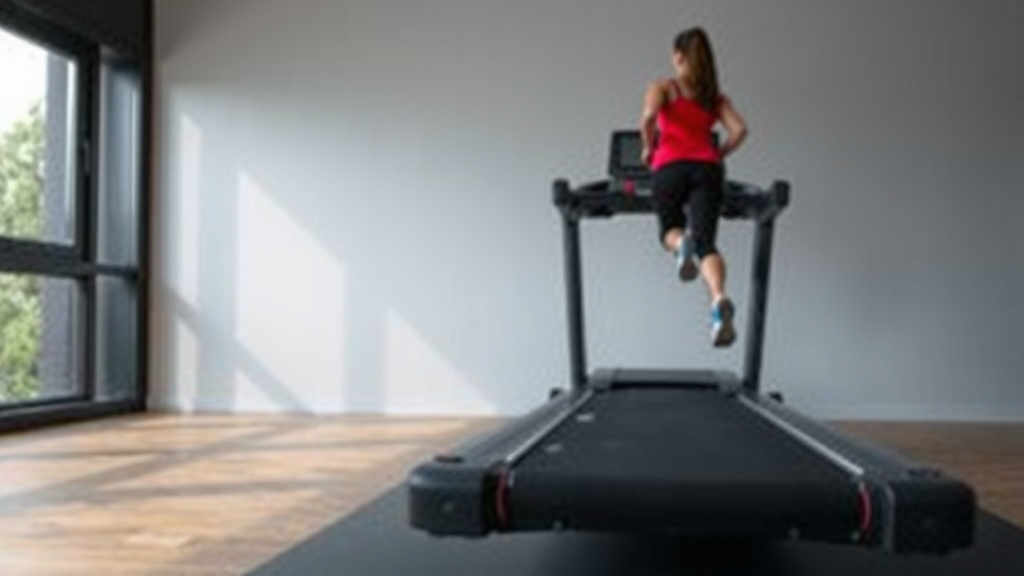
How Fast Should Your Treadmill Workout Be
The treadmill speed you should use depends on your fitness level and workout goals, but a good starting point for beginners is often between 3.0 to 4.0 miles per hour. For moderate cardio, aim for 4.5 to 5.5 mph, while a brisk walk can be around 3.5 to 4.0 mph. Don’t worry if you can’t keep up with faster speeds; the best speed is one that challenges you safely.
Finding the right pace is key to a successful treadmill workout. It’s not just about speed; inclines also play a big role in increasing intensity. We want to help you find that sweet spot where you’re working hard enough to see results, but not so hard that you risk injury. Your comfort and progress are our main focus here. Our guide on how a treadmill helps you lose weight explains the calorie burn and metabolism benefits.
- The best treadmill speed is personal.
- Start slow if you’re new to treadmills.
- Moderate cardio usually falls between 4.5-5.5 mph.
- Listen to your body; don’t push too hard.
- Speed and incline both matter for your workout.
Ready to find your perfect treadmill speed? Let’s walk through how to set it up for your best workout yet.
So, you’re wondering about the ideal treadmill speed. That’s a fantastic question! Finding the right pace is like finding the perfect tempo for your favorite song. Too slow, and you might get bored. Too fast, and you could feel overwhelmed. We’re here to help you discover that sweet spot for your best workout. You can learn how to do interval training on a treadmill to vary your workouts and boost intensity.
Setting Your Treadmill Pace: A Step-by-Step Guide
The best treadmill speed is really about your personal fitness level and what you want to achieve. There’s no single magic number for everyone. Think of it like this: your speed for a gentle stroll is different from your speed for a serious cardio session. We’ll break down how to find what works for you.
Understanding Treadmill Speeds: What Do the Numbers Mean?
Treadmill consoles typically display speed in miles per hour (mph). Most people find that a comfortable walking pace is around 3.0 to 4.0 mph. This is a great starting point for many. If you’re looking to get your heart rate up a bit more for cardio, you’ll likely be in the 4.5 to 5.5 mph range. These are general guidelines, of course.
Walking Speeds: Finding Your Stroll
A leisurely walk might be as slow as 2.0 mph. However, for a more purposeful walk that still feels relaxed, aim for 3.0 to 4.0 mph. This speed allows you to carry on a conversation easily. Many health organizations suggest brisk walking as a great way to improve cardiovascular health (CDC). This falls right into that 3.0-4.0 mph zone.
Jogging and Running Speeds: Picking Up the Pace
When you’re ready to jog, you might start around 4.5 to 5.5 mph. This is where it starts to feel more like a workout. For running, speeds often range from 6.0 mph up to 8.0 mph or even higher for experienced runners. Remember, consistency is key. It’s better to maintain a steady pace you can stick with than to go too fast and have to stop.
Factors Influencing Your Ideal Treadmill Speed
Your perfect speed isn’t just about numbers on a screen. Several things affect how fast you should go. We need to consider your body’s signals and your workout objectives.
Your Current Fitness Level: Start Where You Are
If you’re new to exercise or treadmills, start slowly. Your body needs time to adjust to the new movements and intensity. Beginning with a walking speed of 2.5 to 3.5 mph is perfectly acceptable. You can gradually increase this as you feel stronger and more comfortable. Don’t feel pressured to match someone else’s pace. Your journey is unique.
Workout Goals: What Are You Trying to Achieve?
Are you aiming for weight loss, improved endurance, or just general fitness? Each goal might suggest a different speed. For fat burning, longer duration workouts at a moderate intensity are often recommended. This usually means a pace where you can talk but not sing. For improving speed and performance, interval training with bursts of faster running is effective.
The Role of Incline: Adding Intensity Without Speed
Don’t forget about incline! This is a powerful tool on the treadmill. Increasing the incline simulates hills and makes your workout more challenging. You can often achieve a great cardio workout at a lower speed by simply increasing the incline. For example, walking at 3.5 mph with a 5% incline can be as effective as running at 5.0 mph on a flat surface.
| Workout Type | Typical Speed Range (mph) | Notes |
|---|---|---|
| Warm-up/Cool-down Walk | 2.0 – 3.0 | Gentle pace to prepare your body or recover. |
| Brisk Walk | 3.0 – 4.0 | Heart rate increases slightly; can hold a conversation. |
| Light Jog/Power Walk | 4.0 – 5.0 | Breathing becomes heavier; conversation is broken. |
| Moderate Run | 5.0 – 6.5 | Challenging pace; talking is difficult. |
| Fast Run/Intervals | 6.5+ | High intensity; requires focused effort. |
Listening to Your Body: The Most Important Metric
Above all, pay attention to how you feel. Your body will tell you if you’re pushing too hard. Signs of overexertion include dizziness, extreme shortness of breath, or sharp pains. If you experience any of these, slow down immediately or stop. It’s always better to be safe than sorry. Many experts recommend using the “talk test” to gauge intensity.
The Talk Test: Your Built-in Intensity Monitor
This is a simple yet effective way to monitor your effort. If you can comfortably hold a full conversation, you’re likely at a low to moderate intensity. If you can only speak a few words at a time, you’re working at a higher intensity. This is a great method for ensuring you’re in the right zone for your goals, especially for cardio.
Progressing Safely and Effectively
As you get fitter, you’ll notice that your current speed starts to feel easier. This is a good sign! When this happens, you can gradually increase your speed or incline. Don’t make drastic jumps. Aim to increase by 0.1 to 0.5 mph at a time, or a slight increase in incline. Give your body time to adapt to the new challenge.
Building Stamina Over Time
Consistency builds stamina. Aim for regular treadmill sessions. Even 20-30 minutes a few times a week can make a big difference. Gradually increasing the duration of your workouts at your chosen speed is also a great way to progress. Think of it as building a strong foundation, one workout at a time.
Here’s a quick checklist to help you find your stride:
- Assess your current fitness level honestly.
- Set clear, achievable workout goals.
- Start with a comfortable walking pace.
- Gradually increase speed or incline as you feel stronger.
- Always listen to your body’s signals.
- Don’t be afraid to adjust speed and incline during your workout.
Conclusion
Finding your perfect treadmill speed is a personal journey, not a race. You’ve learned that the ideal pace balances your fitness level, workout goals, and how your body feels. Remember, it’s not just about mph; incline plays a huge role in intensity. You’re equipped to start walking, jogging, or running at a speed that challenges you safely and effectively. Your next step? Lace up your shoes, hop on the treadmill, and experiment with the speeds and inclines we’ve discussed. Trust your body’s signals, and enjoy the process of getting stronger!
Frequently Asked Questions
How do I know if my treadmill speed is too fast?
Your treadmill speed is likely too fast if you’re experiencing dizziness, extreme shortness of breath, or sharp pains. The “talk test” is a great indicator: if you can barely speak a few words, slow down. Prioritize safety over pushing too hard.
Can I use incline instead of speed to increase my workout intensity?
Absolutely! Increasing the incline is a fantastic way to boost intensity without necessarily increasing speed. Walking at a moderate speed on a higher incline can be just as effective as running faster on a flat surface for cardiovascular benefits.
What’s a good treadmill speed for beginners who want to lose weight?
For weight loss, consistency and duration are key. Start with a brisk walking pace of 3.0 to 4.0 mph. Focus on maintaining this speed for 30 minutes or more, and gradually increase your pace or incline as you build stamina.
How often should I change my treadmill speed during a workout?
For steady-state cardio, maintaining a consistent speed is fine. However, interval training involves changing speeds more frequently. You might alternate between a moderate pace for a few minutes and a faster pace for 30-60 seconds.
Is it okay to walk very slowly on a treadmill?
Yes, it’s perfectly fine to walk slowly on a treadmill, especially if you’re warming up, cooling down, or just starting out. Speeds around 2.0 to 3.0 mph are great for these purposes. The most important thing is to find a pace that feels right for your current needs.