
Treadmill Speed 4.5: What Pace Is That Actually
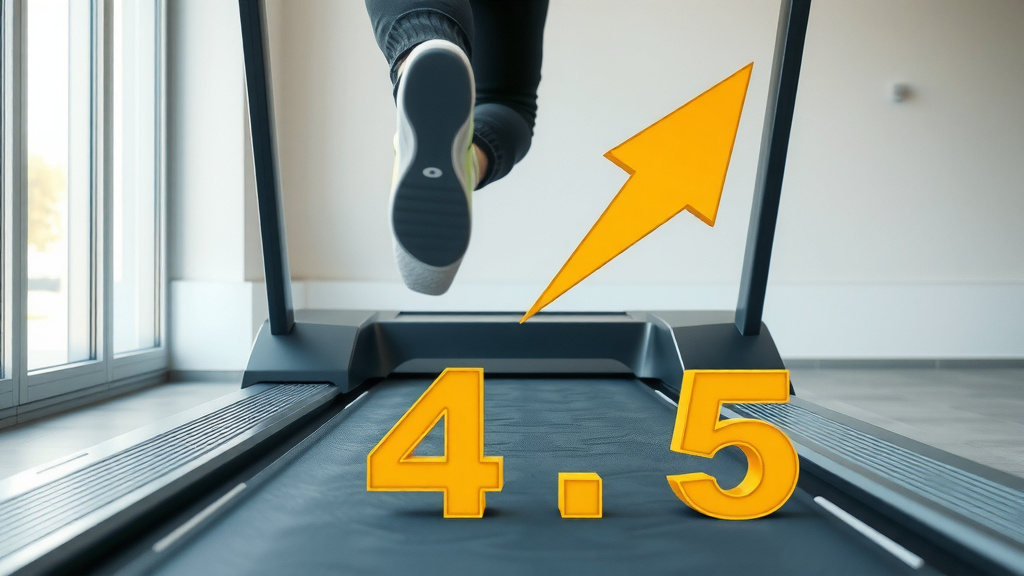
A 4.5 speed on a treadmill is generally considered a brisk walking pace. It’s a speed that most people can sustain for a decent workout. Many find it to be a challenging but achievable speed for cardio. It falls between a slow jog and a fast walk for most users. You’ll likely feel your heart rate increase at this pace.
This treadmill setting is excellent for a variety of fitness goals. It can be a great part of an interval training session. Or, it can serve as a steady-state cardio workout. This speed is also often used for active recovery days. It provides a good workout without being too strenuous for many individuals.
- 4.5 on a treadmill is a brisk walking speed.
- It’s a challenging pace for many walkers.
- Good for cardio and interval training.
- Sustainably faster than a casual stroll.
- Heart rate will likely increase at this speed.
Ready to see what a 4.5 treadmill speed feels like for your workout? Let’s break down what this speed means for you and how to use it effectively.
Understanding Your 4.5 Treadmill Pace
So, what does a 4.5 speed on the treadmill actually mean for you? Think of it as your power walking stride. It’s faster than your casual stroll to the mailbox. You’ll probably break a light sweat if you keep it up. It’s a speed that gets your blood pumping without feeling like you’re about to run a marathon. Most treadmills are calibrated to a similar standard, so 4.5 should feel consistent across different machines.
Many users find this pace to be a perfect sweet spot. It’s challenging enough to feel like you’re working. Yet, it’s usually manageable for extended periods. This speed is often recommended for getting a good cardiovascular workout. It’s about that moderate intensity zone we hear so much about.
What 4.5 Speed Looks Like in Miles Per Hour
On most treadmills, a speed of 4.5 is equivalent to 4.5 miles per hour (mph). This is a pretty common setting. It’s a speed that a lot of people can sustain. Think of it as moving along at a clip that’s definitely faster than a leisurely walk. It’s a pace that requires a bit more effort from your legs and lungs.
For context, a typical casual walking pace is around 3 mph. A very brisk walk or a light jog might start around 4 mph. So, 4.5 mph places you firmly in the brisk walking category, bordering on a light jog for some. This is why you feel that increased heart rate the intro mentioned.
How 4.5 Compares to Other Common Treadmill Speeds
Let’s put 4.5 into perspective with other speeds you might see on a treadmill. Understanding these differences can help you gauge your own effort and progress.
| Treadmill Speed (mph) | Activity Type | Perceived Effort |
|---|---|---|
| 2.0 – 3.0 | Slow walk, recovery walk | Very easy, like strolling |
| 3.0 – 4.0 | Brisk walk | Moderate, conversational pace |
| 4.5 | Fast walk, very brisk walk | Noticeably more effort, slight breathlessness |
| 5.0 – 6.0 | Light jog, easy run | Challenging but sustainable for many |
| 6.0+ | Moderate to fast run | Requires significant effort, difficult to talk |
As you can see, 4.5 mph is a solid step up from a casual walk. It requires your body to work a bit harder. This is where you start to see real benefits for your cardiovascular health. Many fitness guidelines recommend aiming for a moderate-intensity workout, and 4.5 mph often falls right into that zone.
Your Workout Potential at 4.5 Speed
Now that you know what 4.5 mph feels like, let’s talk about how you can use it in your fitness routine. This speed isn’t just a number; it’s a tool for achieving different fitness goals.
Cardiovascular Benefits
Walking at 4.5 mph provides a fantastic cardiovascular workout. When you maintain this pace, your heart rate increases. This strengthens your heart muscle over time. It also helps improve blood circulation. According to the Centers for Disease Control and Prevention (CDC), moderate-intensity aerobic activity, like brisk walking, is recommended for adults.
A workout at 4.5 mph can help you burn calories, too. The number of calories burned depends on your weight, duration, and intensity. But consistently hitting this speed for 30 minutes or more can contribute to weight management goals. It’s a way to get your body moving and improve your overall stamina. You’ll likely notice you can walk longer or faster over weeks of practice.
Interval Training Applications
4.5 mph is an excellent speed for interval training. This involves alternating between periods of higher intensity and lower intensity. You could, for example, walk at 4.5 mph for a few minutes, then slow down to 3.0 mph for a recovery period. After a minute or two, you’d ramp back up to 4.5 mph.
Intervals can make your workout more dynamic and engaging. They also can boost your metabolism. Some research suggests interval training may be more effective for fat loss than steady-state cardio. You can customize intervals to your fitness level. Perhaps you start with 1 minute at 4.5 mph and 1 minute at 3.5 mph. Then, as you get fitter, you can increase the duration at the higher speed or decrease the recovery time.
Active Recovery and Injury Prevention
On days when you need to recover from more intense workouts, 4.5 mph can be ideal. It keeps your muscles moving without causing further strain. This gentle movement can help reduce muscle soreness. It also promotes blood flow to aid in repair. This is often called “active recovery.”
It’s important to listen to your body. If 4.5 mph feels too taxing on a recovery day, that’s okay. You can always dial it back. But for many, it offers a good balance. It’s enough to feel beneficial without hindering your recovery. This thoughtful approach can help prevent injuries and keep you consistent with your training.
Tips for Your 4.5 Treadmill Session
To get the most out of your treadmill time at 4.5 mph, here are a few practical tips.
Proper Form is Key
Even though you’re walking, good posture matters. Stand tall with your shoulders back. Keep your core engaged. Let your arms swing naturally at your sides. Avoid leaning too far forward or gripping the handrails tightly, as this can affect your posture and calorie burn. Maintaining good form helps you work your muscles effectively and prevents strain.
Listen to Your Body
As mentioned, 4.5 mph is a brisk pace. Some days you might feel energized and ready for it. Other days, you might feel fatigued. Don’t be afraid to adjust the speed. If you’re feeling breathless and can’t hold a short conversation, you might be pushing a little too hard for steady-state cardio. Slow down slightly. If 4.5 mph feels too easy after a few minutes, consider increasing it. Your body will tell you what it needs.
Incorporate Incline
Want to make your 4.5 mph walk more challenging without increasing the speed? Try adding an incline. Even a 1% or 2% incline can make a difference. It engages different leg muscles and increases the calorie burn. A steeper incline can mimic hill walking and provide a great workout for your glutes and hamstrings.
Stay Hydrated
Always remember to drink water before, during, and after your workout. A speed of 4.5 mph can still get you sweating. Staying hydrated is essential for performance and recovery. Have a water bottle nearby and take sips as needed.
Track Your Progress
Use your treadmill’s console to track your time, distance, and calories burned. Many treadmills also have heart rate monitors. Keeping a record of your workouts can be motivating. It helps you see how far you’ve come. You can then adjust your routines as you get fitter. Maybe you start with 20 minutes at 4.5 mph and work your way up to 40 minutes. Or perhaps you increase the incline.
A Quick Checklist for Your Workout:
- Warm up for 5 minutes at a slower pace (e.g., 3.0 mph).
- Set treadmill to 4.5 mph and maintain good posture.
- Walk for your target duration (e.g., 20-40 minutes).
- Consider adding a slight incline (1-3%) for added challenge.
- Cool down for 5 minutes at a slower pace.
- Stay hydrated throughout your session.
Conclusion
You now understand that a 4.5 treadmill speed is your go-to for a brisk, power walk. It’s a comfortable yet effective pace for boosting your heart rate and burning calories. Whether you’re using it for steady-state cardio, interval training, or active recovery, 4.5 mph offers a versatile workout. Remember to focus on your posture and listen to your body. Ready to make that 4.5 speed a regular part of your fitness routine? Start by incorporating it into your next workout session and gradually increase your duration.
Frequently Asked Questions
Is 4.5 mph on a treadmill considered jogging?
For most people, 4.5 mph is considered a very brisk walk or a fast walk. It’s often right on the border between a fast walk and a very light jog. If you find yourself able to hold a conversation easily, it’s likely still a fast walk for you. If talking becomes difficult, you might be entering a jogging pace.
Can I lose weight walking at 4.5 mph?
Yes, you can absolutely work towards weight loss goals by walking at 4.5 mph. This speed falls into a moderate-intensity cardio zone, which helps you burn a good number of calories. Consistently walking at this pace for 30 minutes or more several times a week, combined with a healthy diet, can contribute significantly to weight management.
How long should I walk at 4.5 mph?
The duration depends on your fitness level and goals. Many fitness experts recommend aiming for at least 150 minutes of moderate-intensity aerobic activity per week. For a 4.5 mph pace, this could mean walking for 30 minutes, five days a week. You can start with shorter durations, like 20 minutes, and gradually increase as your stamina improves.
Is 4.5 mph too fast for a beginner on a treadmill?
It can be for some beginners, but it’s not universally too fast. If you’re new to treadmills, you might want to start with a warm-up at a slower pace, like 3.0 mph, for a few minutes. Then, try increasing to 4.5 mph and see how it feels. If it’s too challenging, don’t hesitate to slow down. It’s more about finding a sustainable pace for you.
What are the heart benefits of walking at 4.5 mph?
Walking at 4.5 mph provides excellent cardiovascular benefits. This pace increases your heart rate into a moderate intensity zone, strengthening your heart muscle over time. Regular workouts at this speed can help improve blood circulation, lower blood pressure, and reduce the risk of heart disease.