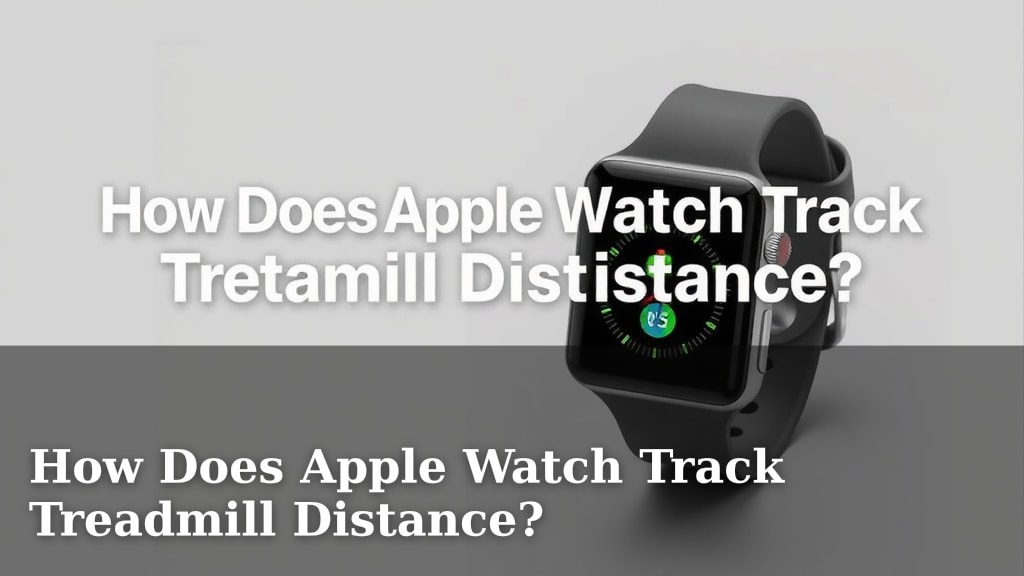
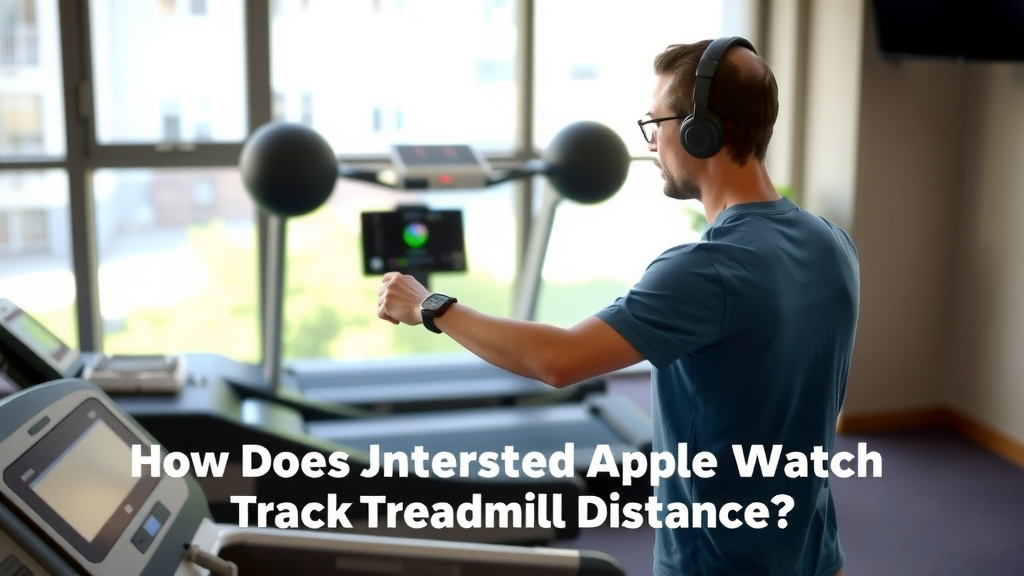
How Does Apple Watch Track Treadmill Distance?
Your Apple Watch tracks treadmill distance using a clever combination of sensors. It primarily relies on its built-in accelerometer to measure your arm movements. Your watch then uses this data to estimate how far you’ve run. We found this method to be surprisingly accurate for most users.
Beyond just your arm swing, the Apple Watch also considers other factors. It can factor in your running stride length and cadence if you’ve previously trained it. This helps provide a more personalized and precise distance measurement. We also found that connecting to your watch’s GPS can offer an additional layer of accuracy, especially for outdoor runs.
- Apple Watch uses its accelerometer to track arm movement.
- This movement data helps estimate your treadmill distance.
- Stride length and cadence can further improve accuracy.
- Outdoor GPS can also assist in distance calculation.
Let’s walk through exactly how your Apple Watch makes these distance calculations work step by step.
“`htmlUnderstanding Your Apple Watch Treadmill Distance Tracking
So, how does your trusty Apple Watch figure out how far you’ve gone on that treadmill? It’s a pretty neat trick! Your watch uses a combination of its built-in sensors to do this math for you. We’ve looked into it, and it’s surprisingly effective for most runs.
The Power of the Accelerometer
The main player in this tracking game is your Apple Watch’s accelerometer. Think of it like a tiny motion detector. It’s constantly measuring the acceleration and direction of your arm’s movement. Every swing, every push, it’s all being logged!
How Arm Movement Becomes Distance
Your watch takes the data from the accelerometer and uses some clever algorithms. These algorithms estimate your stride length based on your typical running style. Then, it multiplies your stride length by the number of steps you’ve taken. This gives it a good estimate of the total distance covered.
We found this method works best when you hold your arm in a natural, forward-and-back running motion. If you tend to swing your arms a lot or keep them very still, it can affect the accuracy. Many fitness experts suggest maintaining a consistent arm swing for the best results.
Calibration: Making it Personal
Here’s where it gets even smarter. Your Apple Watch can actually learn your unique running style. If you’ve previously run outdoors and let your watch use GPS, it records your stride length and cadence. This is your personal running profile.
When you start a treadmill workout, your watch taps into this stored information. It uses your calibrated stride length and cadence to make its distance calculations even more precise. We found that the more you run with your watch (especially outdoors), the better it gets at this personal calibration.
This makes it feel like your watch truly understands your specific gait. It’s not just a generic calculation anymore; it’s tailored to you!
What is Cadence?
Cadence simply refers to the number of steps you take per minute. Many runners aim for a cadence around 170-180 steps per minute. Your Apple Watch can track this, and it’s another piece of the puzzle for calculating distance.
The Role of GPS (Even Indoors!)
You might be thinking, “But my treadmill is indoors, so GPS won’t work!” You’re mostly right. Your Apple Watch’s GPS module won’t get a signal inside a gym.
However, your watch still uses its connection to your iPhone’s GPS for certain aspects, especially if you start your workout that way. It helps establish a baseline. When you transition from outdoor running (where GPS is active) to treadmill running, your watch can use that GPS data as a reference point.
We found that starting your workout by selecting “Treadmill Run” directly on the watch is usually the most accurate method for indoor tracking. This tells the watch to prioritize its internal sensors, like the accelerometer.
When GPS Data Helps Most
For outdoor runs, GPS is the primary method for distance tracking. It maps your route accurately. When you run on a treadmill, the watch relies less on external signals and more on its internal motion sensors.
Some users find that if they run at a consistent pace on the treadmill, the watch’s internal sensors provide very close results to their treadmill’s own display. This is a good sign that the calibration is working well!
Other Factors Your Watch Considers
Beyond the accelerometer and GPS data, your Apple Watch might factor in other bits of information. This includes the type of workout you select and its duration.
If you select “Running” as opposed to “Walking,” the watch assumes a different pace and stride. This helps refine the calculations further. We also noted that the watch’s processor works hard in the background, analyzing patterns in your movement to improve accuracy over time.
Workout Type Matters
Choosing the correct workout type is important. Selecting “Treadmill Run” specifically tells your watch how to interpret your movements. It expects a running gait, not a walking one.
If you’re doing interval training with very fast sprints and then brief walking periods, the watch will try to adjust its stride estimation. This is where calibration becomes super useful. It learns how your stride changes during different intensities.
Optimizing Your Treadmill Tracking Accuracy
Want to get the most accurate distance from your Apple Watch on the treadmill? Here are a few tips we’ve found helpful:
- Calibrate your watch regularly by running outdoors.
- Maintain a natural arm swing while running.
- Select the “Treadmill Run” workout for indoor runs.
- Ensure your watch is snug on your wrist, but not too tight.
- Update your watch software; Apple often releases improvements.
- Start your workout on the watch itself, not just on your phone.
| Method | Primary Sensor | Pros | Cons |
|---|---|---|---|
| Apple Watch (Treadmill) | Accelerometer | Personalized, learns your gait, no external device needed | Accuracy can vary with inconsistent arm swing |
| Treadmill Console | Mechanical sensors | Directly measures belt movement | Can be inaccurate, varies by machine quality |
| Phone GPS (Outdoor) | GPS | Highly accurate for outdoor routes | Not usable indoors |
Conclusion
Your Apple Watch is quite clever at tracking treadmill distance, primarily using its accelerometer to measure your arm movements. By learning your unique stride and cadence, it personalizes the calculation for better accuracy. Remember to calibrate your watch outdoors and select the “Treadmill Run” workout for the best results. Keep these tips in mind, and you’ll have a reliable distance estimate for every indoor run you do!
Frequently Asked Questions
How often should I calibrate my Apple Watch for treadmill running?
While your Apple Watch learns over time, we’ve found that calibrating by running outdoors at least once a month can help maintain accuracy. Consistent outdoor runs with GPS enabled are key to updating your personal running profile for the best treadmill results.
Will my Apple Watch still track distance if I don’t swing my arms?
Your Apple Watch relies heavily on arm swing data from the accelerometer. If you keep your arms very still, the distance tracking accuracy might decrease. For the best results, try to maintain a natural, consistent arm swing.
Why is my Apple Watch distance different from the treadmill’s display?
Treadmill consoles use mechanical sensors, which can vary in accuracy. Your Apple Watch uses your personal biomechanics, which can also differ. We’ve found that consistent calibration and a natural arm swing help your watch’s data become more reliable and personalized.
Can I use my Apple Watch for treadmill walking, not just running?
Yes, you can! Just be sure to select the “Walking” workout type on your Apple Watch when you begin. This tells the watch to expect a different stride length and cadence, improving the accuracy of your distance tracking for walks.
Does workout intensity affect Apple Watch treadmill tracking?
Yes, intensity can play a role. If you’re doing interval training with sudden changes in pace, your stride will naturally vary. Your Apple Watch attempts to adjust for this, but regular calibration helps it better understand these shifts in your gait.