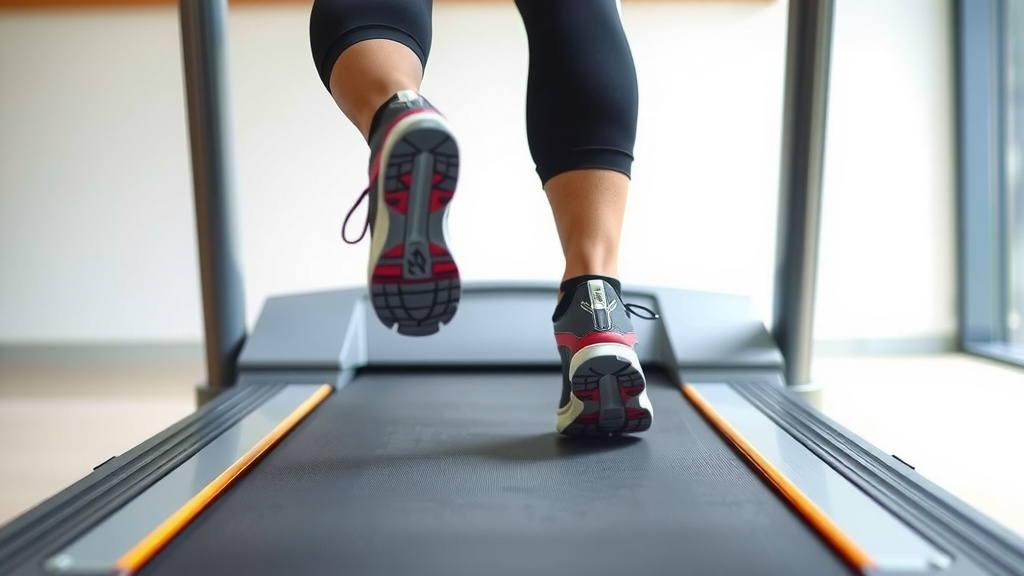
Treadmill Speed for a 9 Minute Mile Pace
To maintain a 9-minute mile pace on a treadmill, you’ll need to set your speed to 6.7 miles per hour. This speed is achievable for many runners and walkers. It requires a brisk, consistent effort, making it a great target for improving your endurance and cardiovascular health.
Hitting a 9-minute mile means covering one mile in exactly nine minutes. On a treadmill, this translates to a specific speed setting. Many people find this pace to be a solid middle ground – not a full sprint, but certainly not a casual stroll. It’s a pace that can help you build speed and stamina effectively.
- A 9-minute mile pace on a treadmill is 6.7 mph.
- This speed is a good target for improving fitness.
- It’s a sustained effort, not a full sprint.
- Consistency is key to maintaining this pace.
Ready to see how this treadmill speed feels? Let’s get into the details of setting up your treadmill and what to expect when aiming for that 9-minute mile!
Achieving a 9-Minute Mile Pace on Your Treadmill
So, you want to hit that 9-minute mile mark on your treadmill. That’s a fantastic goal! It translates to a steady speed that’s excellent for building cardiovascular fitness and endurance. We’ve already covered that this pace is about 6.7 miles per hour (mph). Now, let’s dive into how you can comfortably and effectively achieve and maintain this speed during your workouts.
Understanding Treadmill Speed Settings
Treadmills are pretty straightforward when it comes to speed. You’ll typically see buttons to increase or decrease the speed, often in increments of 0.1 mph. For a 9-minute mile, you’re aiming for that 6.7 mph mark. This isn’t a speed that requires a full sprint for most people. Instead, it’s a brisk, purposeful pace that feels challenging but sustainable for a decent duration.
Setting Up Your Treadmill for Success
Before you even start your workout, a little preparation goes a long way. You want to feel comfortable and safe. Make sure the treadmill is on a level surface, and you’ve got a good grip on the handrails initially if you need them.
The Initial Speed Adjustment
Start your treadmill at a slower pace, maybe a brisk walk around 3.0-4.0 mph. This allows your body to warm up. Once you feel ready, begin increasing the speed gradually. You can add 0.5 mph at a time until you get close to your target.
Finding Your Rhythm
When you reach 6.7 mph, take a moment. How does it feel? Is it too fast? Too slow? Most people find this speed feels like a very fast walk or a light jog. It’s the kind of pace where you can still hold a conversation, but it’s getting a bit breathy. Many fitness experts suggest this pace is ideal for improving aerobic capacity (Mayo Clinic).
What Does 6.7 mph Feel Like?
Imagine you’re walking home from the grocery store, but you’re running a little late. You pick up the pace, your arms are swinging, and you’re moving with purpose. That’s a good way to visualize 6.7 mph. It’s faster than a casual stroll but not quite a full-out run for most.
The Impact on Your Body
At this speed, your heart rate will likely increase significantly. You’ll start to feel your lungs working, and your leg muscles will engage more actively. This is exactly what you want for cardiovascular improvement. You’re challenging your heart and lungs to work harder, which makes them stronger over time.
Can You Talk at This Pace?
You might be able to speak in short sentences. If you try to tell a long story, you’ll probably find yourself gasping for air. This “talk test” is a common way to gauge exercise intensity. For a 9-minute mile pace, it’s right on the edge of moderate to vigorous activity, depending on your current fitness level (CDC).
Strategies for Maintaining Your 9-Minute Mile Pace
Hitting 6.7 mph is one thing; holding it for a full mile (or longer!) is another. Consistency is key. Here are some tips to help you sustain that pace.
Warm-Up and Cool-Down are Non-Negotiable
Never jump straight into your target speed. A proper warm-up prepares your muscles and cardiovascular system. Start with 5-10 minutes of walking and gradually increasing speed. After your main workout, don’t just stop. Cool down with 5-10 minutes of walking to allow your heart rate to return to normal. This helps prevent muscle soreness and stiffness.
Interval Training Can Help
If holding 6.7 mph for a whole mile feels too daunting at first, try interval training. Alternate between your target speed and a recovery pace. For example, run at 6.7 mph for 1 minute, then slow down to 4.0-5.0 mph for 1-2 minutes. Repeat this cycle. Over time, you’ll find you can hold the faster pace for longer intervals.
Focus on Form and Breathing
Good posture makes a difference. Stand up tall, keep your shoulders relaxed, and engage your core. For breathing, try to establish a rhythm. Many runners find a 2:2 pattern works well – inhale for two steps, exhale for two steps. This helps you get enough oxygen and maintain your pace without feeling too strained. Proper form can also help prevent injuries (Cleveland Clinic).
Listen to Your Body
While pushing yourself is good, it’s also important to know your limits. If you feel sharp pain, dizziness, or extreme fatigue, slow down or stop. It’s okay to adjust the speed based on how you feel each day. Some days you’ll feel stronger than others, and that’s perfectly normal.
Adjusting for Incline
Many treadmills have an incline feature. While the 6.7 mph speed is typically calculated on a flat surface (0% incline), you might choose to add a slight incline (like 1-2%) to increase the challenge. Be aware that even a small incline will make 6.7 mph feel harder. You may need to adjust your speed slightly down if you add incline.
Tracking Your Progress
Most treadmills have a display that shows your speed, distance, and time. Use this to monitor your pace. Some treadmills even have pre-programmed workouts designed to help you reach specific speed or endurance goals. Keeping a workout log can also be motivating. Note your speed, duration, and how you felt.
A Quick Checklist for Your 9-Minute Mile Workout:
- Start treadmill at a slow pace for warm-up.
- Gradually increase speed to 6.7 mph.
- Maintain good posture and a steady breathing rhythm.
- Listen to your body and adjust if needed.
- Cool down with a slow walk.
- Track your distance and time to monitor progress.
Is 6.7 mph Sustainable for Long Distances?
For many, 6.7 mph is a pace that can be maintained for a mile or two, especially with consistent training. If your goal is to run longer distances at this pace, you’ll need to build up your endurance gradually. This might involve gradually increasing the duration you can hold this speed, rather than focusing solely on speed itself. Consistency is more important than intensity when building endurance. If holding 6.7 mph for a whole mile feels too daunting, remember that consistent training is key to improving endurance.
Using the Treadmill for Varied Workouts
Don’t feel like you have to stick to the exact same workout every time. You can incorporate your 9-minute mile pace into different types of training. For instance, you could do one mile at 6.7 mph and then a longer, slower run. Or, use short bursts of 6.7 mph within a longer endurance session. Variety keeps things interesting and challenges your body in new ways.
| Pace | Speed (mph) | Time for 1 Mile |
|---|---|---|
| 12 min/mile | 5.0 mph | 12 minutes |
| 10 min/mile | 6.0 mph | 10 minutes |
| 9 min/mile | 6.7 mph | 9 minutes |
| 8 min/mile | 7.5 mph | 8 minutes |
| 7 min/mile | 8.6 mph | 7 minutes |
Conclusion
You’ve learned that hitting a 9-minute mile on your treadmill means setting your speed to 6.7 mph. This pace offers a great balance for improving your fitness without being an all-out sprint. Remember to always warm up properly and cool down afterward. If maintaining 6.7 mph feels challenging, interval training can be a fantastic strategy to build your endurance. Focus on your form and breathing to make your workouts more effective and enjoyable.
Your next step is to try it out! Lace up your shoes, hop on the treadmill, and set your speed to 6.7 mph for a short interval. See how it feels and start incorporating this pace into your regular fitness routine. Consistent effort is your key to success!
Frequently Asked Questions
Is 6.7 mph a fast speed for a treadmill?
For many individuals, 6.7 mph is considered a brisk pace, often falling between a fast walk and a light jog. It’s a speed that requires a good level of energy and cardiovascular effort but is typically sustainable for a mile or more with regular training. It’s a great target for improving your aerobic fitness.
How can I tell if 6.7 mph is the right pace for me?
You’ll know 6.7 mph is about right if you can maintain it for a decent duration, like a mile, but you’re definitely working. You should be able to speak in short sentences but not hold a long conversation. If you feel completely out of breath or can’t even talk a little, it might be a bit too fast for now. Listen to your body and adjust as needed.
What if I can’t run at 6.7 mph for a whole mile yet?
That’s perfectly normal when you’re starting! Instead of trying to run a full mile at that speed immediately, try using interval training. Alternate between running at 6.7 mph for shorter bursts (like 30 seconds to 1 minute) and then slow down to a recovery pace for a minute or two. Gradually increase the time you spend at 6.7 mph as you get fitter.
Does incline affect the 9-minute mile pace?
Yes, adding an incline to your treadmill workout will make running at 6.7 mph feel more challenging. Even a small incline of 1-2% increases the effort your body needs to exert. If you’re using an incline, you might find you need to slightly decrease your speed from 6.7 mph to maintain a similar perceived exertion level.
How often should I aim to run at 6.7 mph?
Consistency is key for improvement. Aim to incorporate your 9-minute mile pace (6.7 mph) into your workouts 2-3 times per week. Allow for rest days or other types of workouts in between to prevent overtraining and allow your body to recover. As you get stronger, you can gradually increase the duration you hold this pace.