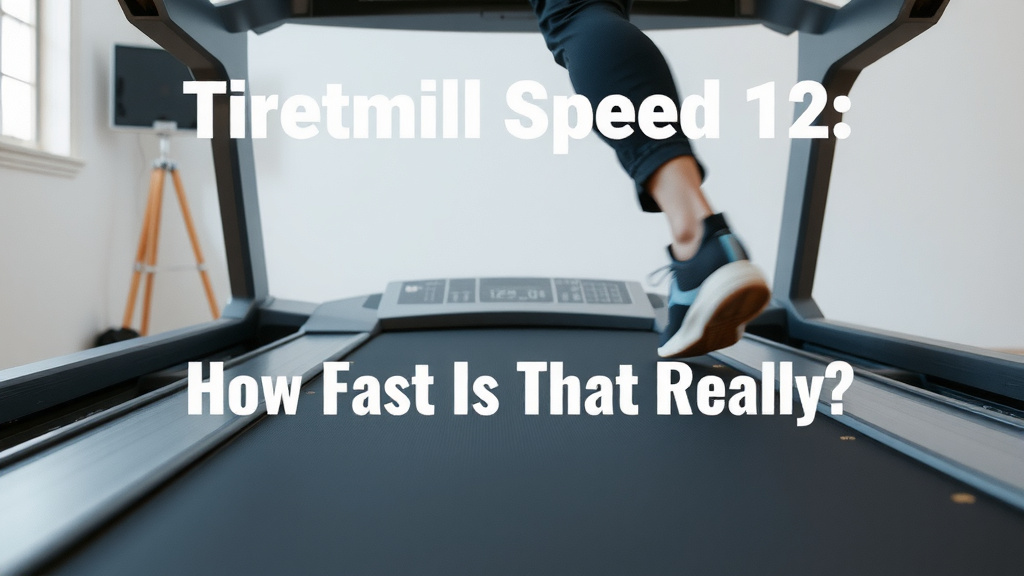
Treadmill Speed 12: How Fast is That Really
Speed 12 on a treadmill feels like a very fast sprint for most people. It’s typically around a 5-minute mile pace. Many fitness trackers and treadmills consider this speed challenging, even for seasoned runners. It requires significant effort and good cardiovascular fitness.
Reaching and maintaining speed 12 means you’re pushing your limits. It’s a pace that can be used for short, intense bursts of running or for very fit individuals tackling longer distances. Don’t worry if it feels tough; it is! It’s a speed that burns a lot of calories quickly.
- Speed 12 is a fast sprint pace.
- It’s roughly a 5-minute mile.
- It’s a challenging speed for most.
- Great for short, intense workouts.
Let’s break down what speed 12 really means for your workout and how you can tackle it.
What Does Treadmill Speed 12 Actually Mean?
So, you’ve seen “Speed 12” on a treadmill and wondered what that really translates to. Let’s clear the air: it’s fast. Really fast. We’re talking about a pace that most people can only sustain for a very short burst. Think of it as your all-out sprint zone. For reference, a 5-minute mile pace is about 12 mph, and that’s a pace many competitive runners aim for. So, if you’re hitting speed 12, you’re operating at a serious level of intensity.
It’s not a speed you’ll find yourself casually jogging at. It demands a lot from your body. Your heart rate will jump up quickly. Your legs will be moving at a rapid pace. Your breathing will become much heavier. Most standard treadmill recommendations suggest that speeds above 10 mph are for advanced runners or sprinters. Speed 12 sits squarely in that category.
Breaking Down the Numbers: Speed vs. Pace
Treadmills typically display speed in miles per hour (mph). So, speed 12 means 12 miles per hour. This is the direct measurement of how fast the belt is moving beneath you. When we talk about pace, we’re usually referring to how long it takes to cover a mile. To figure out the pace for 12 mph, we do a little math:
| Treadmill Speed (mph) | Pace (Minutes Per Mile) |
|---|---|
| 12 mph | 5:00 (5 minutes, 0 seconds) |
| 10 mph | 6:00 (6 minutes, 0 seconds) |
| 8 mph | 7:30 (7 minutes, 30 seconds) |
| 6 mph | 10:00 (10 minutes, 0 seconds) |
As you can see, hitting 12 mph means you’re running a 5-minute mile pace. This is a benchmark for many runners. It’s a strong indicator of good cardiovascular fitness and leg speed. If your treadmill shows speed 12, and you can even hover around it for 30 seconds, you’re doing something impressive.
Who is Speed 12 For?
Treadmill speed 12 isn’t for everyone, and that’s perfectly okay. It’s a challenging speed that requires a solid foundation of fitness. Let’s talk about who might be using it:
Elite and Advanced Runners
For competitive runners, sprinters, or those training for high-level events, speed 12 might be a specific interval pace. They might use it for short, intense sprints during interval training sessions. This helps them build speed, power, and improve their overall performance. These individuals have likely spent years developing their running endurance and strength.
Fit Individuals Doing High-Intensity Interval Training (HIIT)
Even if you’re not a competitive runner, if you have a good level of fitness, speed 12 can be a part of your HIIT routine. HIIT workouts involve short bursts of maximum effort followed by brief recovery periods. A 15-30 second sprint at speed 12, followed by walking or jogging recovery, can be a very effective way to boost your metabolism and burn calories. Many fitness professionals suggest this type of training for its efficiency (National Institutes of Health).
People Testing Their Limits
Some individuals might hop on a treadmill and push it to speed 12 just to see if they can. This is a great way to test your physical limits and see what you’re capable of. It’s important to do this safely, with a spotter or in a controlled environment, especially if you’re not used to running at such high speeds. We’re not saying you should make this your daily run, but it’s a fun challenge now and then.

Why is Speed 12 So Challenging?
There are several reasons why this speed feels so demanding:
Stride Length and Frequency
At 12 mph, your legs have to move incredibly quickly. Your stride frequency (how many steps you take per minute) and stride length (how far your feet land from your body) both need to be optimized. This requires a lot of coordination and power from your muscles. Your hamstrings, quads, and calves are working overtime. It’s a biomechanical challenge.
Cardiovascular Demand
Your heart and lungs have to work at a very high capacity to supply oxygen to your working muscles. This means your heart rate will likely be in your maximum or near-maximum zone. You’ll be breathing very deeply and rapidly to get enough oxygen. Research consistently shows that high-intensity exercise, like sprinting, significantly boosts cardiovascular health (CDC).
Impact and Injury Risk
Running at higher speeds increases the impact forces on your joints, bones, and muscles. Your body needs to be strong enough to withstand this pounding. Proper form is absolutely essential to minimize the risk of injury. Without good technique, you’re more likely to experience strains or sprains.
How to Safely Approach Speed 12
Thinking about hitting speed 12? That’s awesome! But let’s make sure you do it the smart way. Your safety and well-being are the top priorities.
Build a Solid Running Base
Before you even think about sprinting at 12 mph, ensure you have a comfortable and consistent running routine. Can you comfortably run for 30 minutes at a 10 mph pace? If not, focus on building up your endurance first. A strong aerobic base is the foundation for all faster running.
Incorporate Interval Training
Gradually introduce faster running into your workouts. Start with shorter bursts at slightly lower speeds. For example, try running at 9 or 10 mph for 30 seconds, then recover. As you get stronger, you can increase the speed and duration of these intervals. This helps your body adapt to the demands of faster running.
Focus on Proper Form
Good running form is critical at high speeds. Keep your body upright, with a slight forward lean from the ankles. Your arms should swing forward and back, not across your body. Try to land mid-foot, directly beneath your body, rather than overstriding. Many experts suggest practicing good form even at slower paces to make it automatic.
Listen to Your Body
This is perhaps the most important tip. If you feel pain, stop. If you feel excessively fatigued, ease up. Pushing too hard, too soon, is a recipe for injury. It’s okay to try speed 12 for just a few seconds. It’s not a race to see how long you can hold it.
Consider these steps before attempting speed 12:
- Warm up thoroughly for at least 5-10 minutes.
- Ensure you have a comfortable running base.
- Practice good running form regularly.
- Start with short bursts at high speeds.
- Cool down and stretch afterward.
- Don’t push through pain.
Conclusion
So, you’ve learned that treadmill speed 12 is a serious sprint pace, roughly equivalent to a 5-minute mile. It’s a challenging speed designed for those with a solid fitness base or for short bursts during high-intensity training. Remember, reaching speed 12 isn’t about how long you can maintain it, but about pushing your limits safely and effectively. Always prioritize proper form and listen to your body. Ready to test yourself? Start by gradually incorporating faster intervals into your routine and see what you can achieve safely.
Frequently Asked Questions
Can I sprint at speed 12 every day?
No, sprinting at speed 12 every day is generally not recommended. This intense pace requires significant recovery for your muscles and cardiovascular system. Daily high-intensity sprints can increase your risk of injury and overtraining. It’s best reserved for specific interval training sessions a couple of times a week.
How do I know if I’m ready to try speed 12?
You’re likely ready to try speed 12 if you can comfortably run for 30 minutes at a 9-10 mph pace and have been consistently incorporating interval training into your routine. Your body should feel strong and capable of handling higher impacts. If you’re unsure, it’s always best to consult with a fitness professional.
What should I do immediately after running at speed 12?
Immediately after a sprint at speed 12, you should engage in active recovery. This means slowing down to a brisk walk or very light jog for several minutes. This helps your heart rate gradually return to normal and can aid in muscle recovery. Follow this with some gentle stretching.
Is speed 12 the same as a 12 mph treadmill setting?
Yes, on most treadmills, “speed 12” refers directly to a setting of 12 miles per hour (mph). Treadmills typically display speed in mph, so speed 12 means the belt is moving at 12 miles per hour. This translates to a 5-minute mile pace.
What are the benefits of incorporating speed 12 into my workouts?
Incorporating short bursts at speed 12 can significantly boost your cardiovascular fitness, improve your running speed and power, and increase calorie burn in a shorter amount of time. It’s an excellent tool for anyone looking to enhance their athletic performance and push their fitness boundaries.