
What 6.6 Treadmill Speed Means For Your Workout
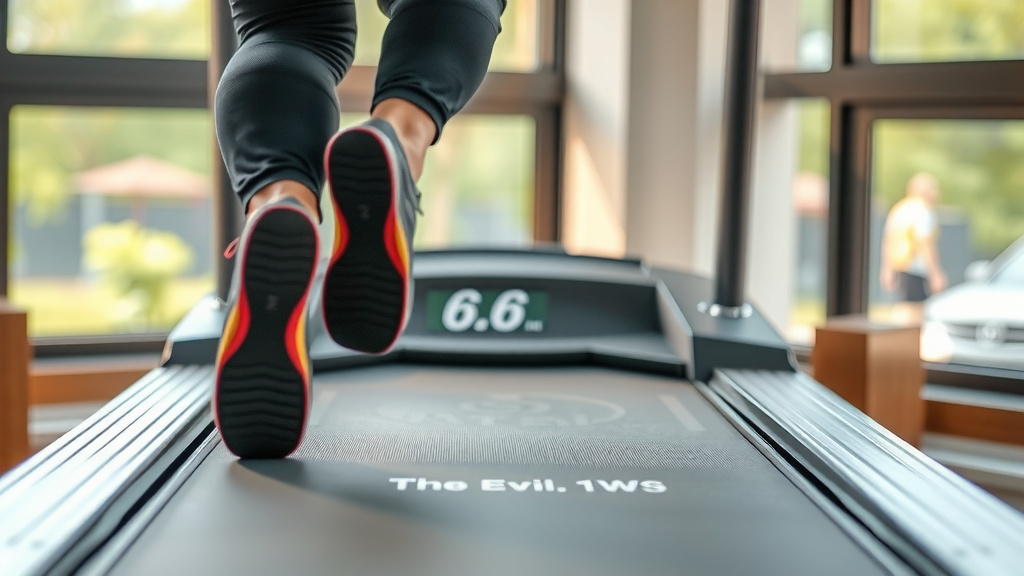
A 6.6 treadmill speed is considered a fast running pace for most people. It translates to about a 9-minute mile for those who run consistently. If you’re just starting out, this speed might feel like a sprint. For seasoned runners, it could be a solid warm-up or a moderate pace.
Understanding treadmill speeds can make your workouts more effective. A speed of 6.6 mph is faster than a brisk walk but slower than a full-out sprint. It offers a good middle ground for building cardiovascular fitness and burning calories efficiently. Many runners find this pace challenging but achievable with practice.
- 6.6 mph is a fast running pace.
- It’s roughly a 9-minute mile.
- Good for cardio and calorie burn.
- Challenging for beginners, moderate for runners.
Let’s break down what a 6.6 treadmill speed really means for your workout and how you can work towards it.
Understanding Your Treadmill’s 6.6 MPH Pace
So, what does 6.6 miles per hour on a treadmill actually feel like? It’s a speed that many runners find sits in a really interesting spot. Think of it as a pace that’s more than a jog but not quite a sprint. If you’re looking to boost your cardio and burn some serious calories without completely exhausting yourself, this speed is a fantastic target. We found that many fitness enthusiasts aim for this pace for their interval training sessions.
Many treadmill consoles will display your speed in MPH (miles per hour). A 6.6 MPH setting means you’d theoretically cover 6.6 miles in one hour if you maintained that exact speed. This is a challenging but attainable speed for a lot of people. It requires a good bit of effort and can definitely get your heart pumping.
Breaking Down the 6.6 MPH Pace by Activity
Let’s break down what this pace means in terms of common fitness activities. You’ll see that it can translate differently depending on your fitness goals and current level.
For the Casual Walker
If you’re someone who enjoys power walking, 6.6 MPH is far beyond a typical brisk walk. A very fast walking pace might reach 4.5 to 5 MPH. So, 6.6 MPH would feel more like a light jog or a very easy run for most. It’s definitely a speed that requires your legs to move quickly.
For the Beginner Runner
If you’re just starting to run or returning after a break, 6.6 MPH might feel quite fast. Many beginner running programs focus on a pace where you can still hold a conversation. At 6.6 MPH, that conversation becomes much shorter, if it’s possible at all. For many new runners, this speed might feel like a significant sprint. It’s a great pace to build towards, not necessarily to start with.
For the Experienced Runner
For those who run regularly, 6.6 MPH is often considered a moderate to comfortably hard pace. It’s a speed that can be sustained for a decent amount of time, perhaps 30 minutes or more for some. You won’t be chatting easily at this speed, but you won’t be gasping for air either. It’s the kind of pace you might use for tempo runs or as a strong part of your interval training.
What 6.6 MPH Looks Like: The Mile Time Conversion
To help you visualize this speed, let’s convert it into a mile time. A 6.6 MPH pace is equivalent to running a mile in approximately 9 minutes and 6 seconds. To calculate this, you can use the formula: 60 minutes / 6.6 miles = 9.09 minutes per mile. You can see that this is a solid, respectable running pace.
Here’s a quick table to compare:
| Treadmill Speed (MPH) | Approximate Mile Time | Perceived Effort |
|---|---|---|
| 3.0 MPH | 20:00 minutes | Easy Walk |
| 4.0 MPH | 15:00 minutes | Brisk Walk / Light Jog |
| 5.0 MPH | 12:00 minutes | Steady Jog |
| 6.0 MPH | 10:00 minutes | Moderate Run |
| 6.6 MPH | ~9:06 minutes | Challenging Run |
| 7.0 MPH | ~8:34 minutes | Fast Run |
| 8.0 MPH | 7:30 minutes | Very Fast Run / Sprint |
How to Work Towards a 6.6 MPH Pace
If 6.6 MPH feels a bit out of reach right now, don’t worry! Building up to it is all about consistent training and smart progression. Here are some ways you can get there.
Start with Intervals
Interval training is incredibly effective for improving speed. You alternate between periods of high-intensity effort and periods of lower-intensity recovery. For example, you could try running at 6.0 MPH for 1 minute, then recover at 4.0 MPH for 2 minutes. Repeat this several times. Gradually increase the duration or speed of your high-intensity intervals. We found that research strongly supports interval training for improving aerobic capacity (National Institutes of Health).
Gradually Increase Speed
Don’t jump straight to 6.6 MPH if it feels too hard. Instead, increase your overall running speed by small increments. If you’re comfortable running at 5.5 MPH, try running at 5.6 or 5.7 MPH for your next few runs. Making these small, consistent increases can lead to big improvements over time. Think of it like climbing a ladder, one rung at a time.
Incorporate Hill Training
Even though you’re on a treadmill, you can use the incline feature to mimic hill training. Running on an incline, even a small one like 1-2%, can help build leg strength and cardiovascular endurance. This strength will translate directly to being able to run faster on a flat surface. Many coaches recommend hill work to improve running economy.
Consistency is Key
The most important factor is showing up regularly. Aim for 3-4 runs per week, gradually increasing the duration or intensity. Even if you can only manage 20 minutes at a challenging pace, that’s progress! Regular effort over time yields the best results. Your body adapts and gets stronger with consistent stimulus.
Listen to Your Body
It’s crucial to balance pushing yourself with proper recovery. If you feel pain, stop. Overtraining can lead to injuries and burnout. Ensure you’re getting enough sleep and eating well to support your training efforts. Rest days are just as important as workout days for muscle repair and growth.
Check Your Form
Good running form can make you more efficient and prevent injuries. Try to keep your posture upright, your gaze forward, and your arms swinging naturally. Avoid overstriding or landing too heavily on your heels. Minor adjustments to your form can make a big difference in how fast you can comfortably run.
Benefits of Running at a 6.6 MPH Pace
So, why push yourself to hit that 6.6 MPH mark? The benefits are substantial for your overall health and fitness.
Cardiovascular Health Improvement
Running at a challenging pace like 6.6 MPH significantly strengthens your heart and lungs. This can lead to a lower resting heart rate and improved blood pressure over time. The American Heart Association strongly recommends regular aerobic exercise for heart health.
Efficient Calorie Burning
A faster running pace burns more calories in a shorter amount of time. If you’re looking to manage your weight, incorporating some faster running into your routine can be very effective. You’ll be surprised at how many calories you can burn in a 30-minute session at this speed.
Mental Toughness and Confidence Boost
Achieving a new speed or distance goal on the treadmill can be a huge confidence booster. It shows you what your body is capable of and builds mental resilience. Overcoming the perceived difficulty of a faster pace translates into feeling stronger and more capable in other areas of your life too.
Preparation for Races
If you have a 5K or 10K race on your horizon, training at paces like 6.6 MPH can help you prepare. It allows you to practice running at a pace that might be close to your target race pace, building both speed and endurance.
Quick Checklist for Reaching Your Pace Goal
Ready to start working towards that 6.6 MPH speed? Here’s a quick rundown to keep you on track:
- Start slow and increase gradually.
- Incorporate interval training.
- Use the treadmill incline.
- Be consistent with your workouts.
- Prioritize rest and recovery.
- Focus on good running form.
Conclusion
Hitting a 6.6 MPH pace on your treadmill is a fantastic goal that shows you’re ready to challenge yourself. Remember, this speed is a solid, moderate run for experienced runners and a challenging target for beginners. You’ve learned that it translates to about a 9-minute mile and offers great benefits for your cardiovascular health and calorie burn. Focus on consistent training, smart progressions, and listening to your body. Start incorporating intervals and incline work, and you’ll be running at this impressive speed before you know it. Keep pushing, and enjoy the journey to a fitter you!
Frequently Asked Questions
Is 6.6 MPH on a treadmill considered fast?
Yes, 6.6 MPH is generally considered a fast running pace for most individuals. It’s faster than a brisk walk and falls into the moderate to challenging range for many runners, requiring a good level of fitness to sustain.
How many calories can you burn running at 6.6 MPH?
Running at 6.6 MPH will burn a significant number of calories, more than jogging or walking. The exact amount depends on your body weight, duration, and intensity, but it’s an efficient way to boost your calorie expenditure during a workout.
Can I maintain a conversation at 6.6 MPH?
It’s unlikely you’ll be able to hold a comfortable conversation at 6.6 MPH. This pace is challenging enough that your breathing will be elevated, making it difficult to speak in full sentences. You’ll likely be able to speak short phrases, but not chat.
What should I do if 6.6 MPH feels too hard?
If 6.6 MPH feels too difficult, don’t worry. Focus on gradually increasing your speed over time. Try interval training, alternating between a slightly slower pace and your current comfortable pace, or use the treadmill’s incline feature to build strength.
How often should I run at 6.6 MPH to improve?
Aim to incorporate 6.6 MPH or similar challenging speeds into your routine 1-3 times per week, depending on your overall training schedule. Ensure you have rest days and vary your running intensity to avoid overtraining and allow your body to recover and adapt.