
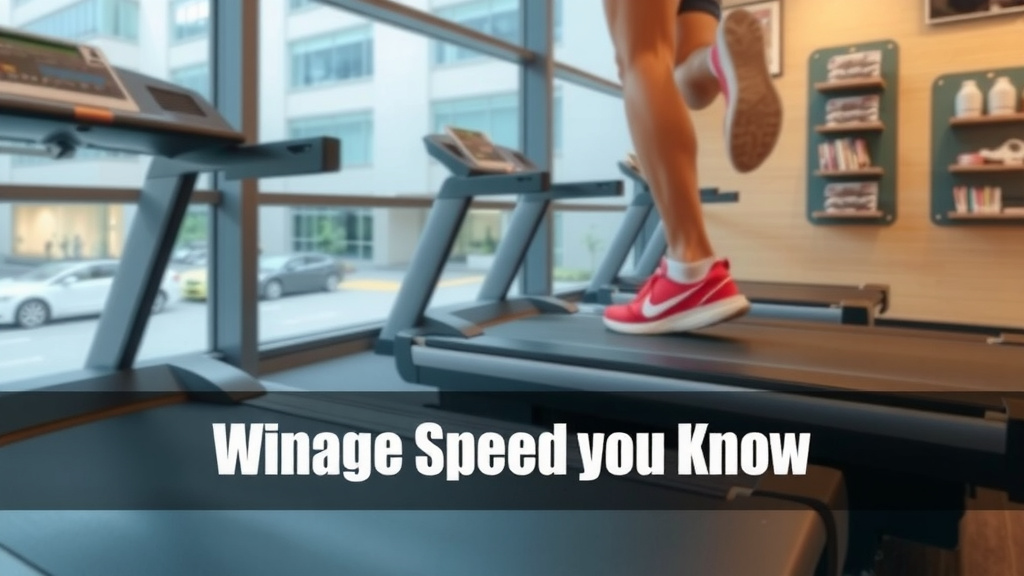
Treadmill Speed for Running: What You Need to Know
To run effectively on a treadmill, you’ll need a speed that matches your pace. For most people, this means a treadmill that can go at least 8 to 10 miles per hour. This range covers a brisk jog to a comfortable running speed for many users. It’s important to find a treadmill that can safely accommodate your running style.
While many treadmills offer speeds up to 12 mph or higher, understanding your personal needs is key. A treadmill speed of 6 mph might be sufficient for power walking or light jogging. However, if you’re aiming for serious training or sprinting, you’ll want to ensure the machine can handle speeds that push you safely. We found that the right speed is highly personal.
- Most runners need a treadmill that reaches 8-10 mph.
- Faster speeds are available but not always necessary.
- Consider your personal running pace.
- Walking and jogging require lower speeds.
Below, we’ll break down treadmill speed needs for various activities and fitness levels, helping you choose the right machine for your home workouts.
Setting Your Treadmill’s Speed: What’s Your Pace?
Figuring out the right treadmill speed for you is less about the machine and more about your own stride. Think of it like finding the right gear on a bike. Too slow, and you’re not getting a good workout. Too fast, and you might stumble.
Understanding Treadmill Speed Metrics
Treadmills typically measure speed in miles per hour (MPH). This is pretty straightforward, right? You’ll see a dial or buttons to adjust the belt’s speed. It’s important to know what MPH feels comfortable for your intended workout.
Speed for Power Walking
If your goal is a brisk walk, you probably won’t need top speeds. We found that a speed of 3 to 4 MPH is great for a good, brisk walk. This mimics a lively pace you might use when walking around town. It gets your heart rate up without feeling like a run.
Speed for Jogging
Ready to pick up the pace a bit? Jogging typically starts around 4.5 to 6 MPH. Many people find this speed range comfortable for a light jog. It’s a nice step up from walking. You’ll feel your breathing increase and your muscles work a little harder.
Speed for Running
Now, let’s talk about running. Most casual runners will find speeds between 6.5 and 8 MPH to be in their sweet spot. This is where you start to feel like you’re really running. It’s a sustained pace that builds endurance.
Speed for Faster Running and Sprints
Are you training for a race or just love to sprint? Many treadmills can go up to 10, 12, or even 15 MPH. For most home users, speeds above 8 MPH are often unnecessary. However, if you’re a serious runner or sprinter, you’ll want a machine that can comfortably handle these higher speeds without feeling strained.
Factors Influencing Your Ideal Treadmill Speed
Your ideal treadmill speed isn’t set in stone. Several things can influence what feels right for you on any given day. Let’s look at what matters most.
Your Current Fitness Level
This is probably the biggest factor. If you’re just starting out, a jogging pace might feel like a sprint! It’s perfectly okay to start slow. As your fitness improves, you can gradually increase the speed. Research from the CDC suggests starting with moderate-intensity exercise (like brisk walking) and building from there (CDC).
Your Running Goals
What are you hoping to achieve with your treadmill workouts? Are you training for a 5K? Trying to lose weight? Or just looking to maintain a healthy lifestyle? Your goals will dictate the intensity and, therefore, the speed you need. A training plan often specifies target paces.
Endurance Training
For building stamina, you’ll want to sustain a comfortable running pace for a longer duration. This usually means speeds between 6 to 8 MPH for most people. The key here is consistency over speed.
Interval Training (HIIT)
This is where higher speeds come into play. High-Intensity Interval Training involves short bursts of maximum effort followed by recovery periods. You might need speeds of 9 to 12 MPH or even higher during the high-intensity phases. This type of training is tough but very effective for improving speed and cardiovascular health.
Your Natural Gait and Stride Length
Everyone runs a little differently. Some people have a longer stride and might naturally cover more ground at a lower cadence (steps per minute). Others have a shorter, quicker stride. Your natural gait will affect how fast you feel you’re moving at a given MPH setting.
Treadmill Speed Recommendations: A Quick Guide
To make it easy, here’s a quick rundown of what speeds might work for different activities. Remember, these are general guidelines, and you should always listen to your body!
| Activity | Typical Speed Range (MPH) | Notes |
|---|---|---|
| Brisk Walking | 3.0 – 4.5 | Engaging, good for warm-ups and recovery. |
| Power Walking / Light Jogging | 4.5 – 6.0 | A step up, gets the heart rate going. |
| Running | 6.0 – 8.0 | Comfortable pace for many recreational runners. |
| Faster Running | 8.0 – 10.0 | For building speed and challenging yourself. |
| Sprinting / High-Intensity Intervals | 10.0+ | Requires a robust machine and advanced fitness. |
What About Incline?
Don’t forget about incline! Adding incline can make your treadmill workout much more challenging, even at lower speeds. Walking or running uphill at a 2-4% incline can mimic outdoor running conditions. It also engages different leg muscles. So, if your treadmill has an incline feature, use it!
Speed vs. Incline: Which is Better?
Many experts suggest that combining speed and incline is the most effective way to get a well-rounded workout. For instance, a moderate speed with a significant incline can provide a similar calorie burn to a faster speed with no incline. This can be easier on your joints, too (Cleveland Clinic).
Choosing a Treadmill with the Right Speed Capabilities
When you’re shopping for a treadmill, check the maximum speed it offers. For most people, a treadmill that goes up to 10 MPH is more than enough. If you’re a very fast runner or plan on doing a lot of sprint intervals, look for models that go up to 12 MPH or higher.
Important Considerations
Beyond just the top speed, consider these points:
- Motor Power: A stronger motor handles sustained higher speeds better.
- Durability: Make sure the treadmill is built to last, especially if you’ll be running frequently.
- Smoothness: Does the belt speed up and slow down smoothly?
Your Treadmill Speed Checklist
Here’s a quick checklist to help you decide what speed you really need:
- Assess your current fitness level.
- Define your primary workout goals.
- Consider if you’ll be walking, jogging, or running.
- Think about incorporating interval training.
- Check the maximum speed of treadmills you’re considering.
- Remember that incline can add intensity too!
Conclusion
Finding the right treadmill speed for your workouts is all about understanding your personal pace and fitness goals. While many treadmills offer speeds beyond what most recreational runners need, aiming for a machine that comfortably reaches 8 to 10 miles per hour covers a wide range of activities, from brisk walking to challenging runs.
For serious training or sprinting, you might need even higher speeds, but always ensure the treadmill has a powerful motor and durable build to support it. Remember to consider incline, too, as it can significantly boost intensity. Your next step is to assess your current fitness and goals, then look for a treadmill that safely accommodates your journey.
Frequently Asked Questions
What is the minimum speed I need on a treadmill for running?
For most people looking to run, a treadmill speed of at least 6.0 to 8.0 MPH is generally recommended. This range allows for a comfortable and sustainable running pace that many recreational runners find effective for cardiovascular health and endurance.
Do I really need a treadmill that goes up to 12 MPH?
Most home users do not need a treadmill that reaches 12 MPH. Speeds between 8 to 10 MPH are usually sufficient for faster running and interval training. Only very advanced runners or sprinters aiming for maximum effort would benefit from such high speeds.
How fast should my treadmill be for walking?
If you’re primarily interested in walking, a treadmill speed between 3.0 to 4.5 MPH is typically adequate. This allows for a brisk pace that can still provide a good cardiovascular workout and engage your muscles effectively.
Can incline make up for lower treadmill speed?
Yes, incline can significantly increase workout intensity even at lower speeds. Running or walking at a moderate speed with a 2-4% incline can mimic the effort of running faster on a flat surface and engage different muscle groups.
How does my natural running stride affect treadmill speed needs?
Your natural gait and stride length play a role in perceived speed. If you have a longer stride, you might cover more ground at a lower cadence. Conversely, a shorter stride might require a higher cadence to reach the same MPH, so focus on what feels comfortable and challenging for you.
One Comment