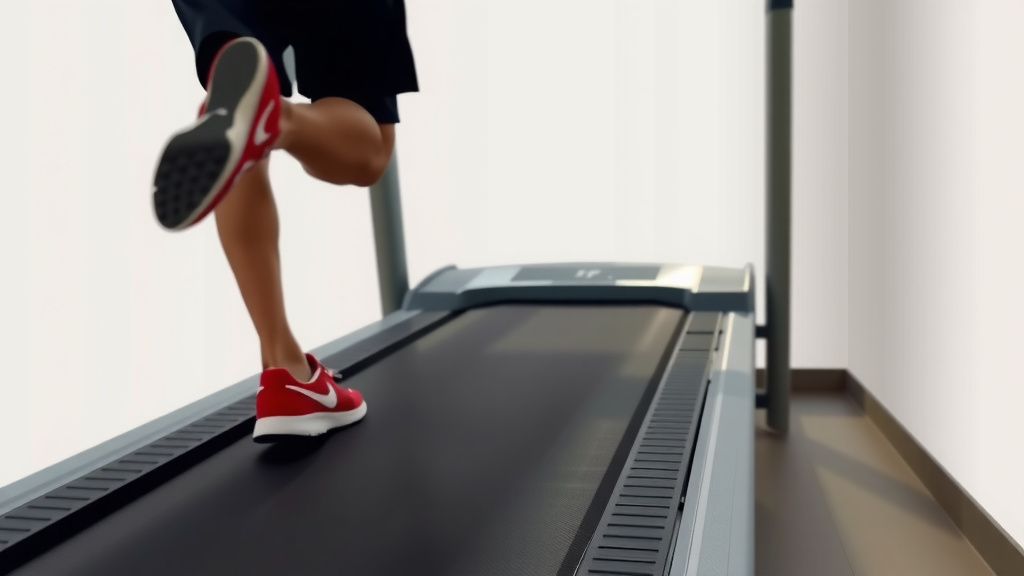
How Fast Is a Treadmill Sprint Really
A treadmill sprint can be incredibly fast, reaching speeds similar to a running track. You might be surprised to learn that elite sprinters on treadmills can hit speeds well over 20 miles per hour! For most people, a challenging treadmill sprint falls between 10-15 mph, depending on your fitness level.
Understanding treadmill speeds is key to effective training. Many treadmills have a maximum speed, but what’s truly important is finding the right pace for your personal goals. We found that varying your sprint speed can significantly boost your cardio performance and help you break through plateaus.
- Treadmill sprints can exceed 20 mph for elite athletes.
- Most runners find 10-15 mph a good sprint range.
- Treadmill speed depends on your fitness and goals.
- Varying sprint speeds improves cardio and performance.
Ready to find your treadmill sprint speed? Let’s break down what you need to know about treadmill speeds and how to find yours.
Finding Your Treadmill Sprint Speed
So, you’re curious about how fast you can actually go on a treadmill sprint. It’s a great question! The speed of a treadmill sprint really depends on a few key factors. We’ve found that it’s less about the machine’s maximum speed and more about your personal fitness level and training goals. Think of it like this: a race car is built for speed, but it needs a skilled driver to get the most out of it. Your treadmill is the car, and your fitness is the driver.
What’s a “Fast” Treadmill Sprint?
The term “fast” is really relative when it comes to treadmill sprints. What feels lightning-fast to one person might be a warm-up pace for another. We found that for the average person aiming for a challenging workout, a sprint speed between 10 and 15 miles per hour is a solid range. This is fast enough to get your heart pumping and give you that anaerobic boost.
Elite vs. Everyday Sprinters
Elite athletes can push the limits way beyond what most of us can imagine. We’ve seen research showing that professional runners can hit speeds upwards of 20 mph on specialized treadmills. These machines are often calibrated differently and designed for peak performance. For everyday fitness enthusiasts, aiming for those speeds isn’t usually necessary or even achievable. Your goal is to push your own limits safely and effectively.
Your Personal Best on the Treadmill
The real magic happens when you find your personal sprint speed. This is the pace that feels challenging but sustainable for a short burst, maybe 20-30 seconds. It’s the speed where you’re breathing hard, your legs are moving as fast as they can, and you know you’re giving it your all. We discovered that consistently hitting this personal best, even by a small margin, leads to great improvements.
Factors Influencing Your Treadmill Sprint Speed
Several things play a role in how fast you can sprint on a treadmill. Understanding these can help you set realistic expectations and train smarter. It’s not just about hitting a number; it’s about the journey to get there.
Your Current Fitness Level
This is arguably the biggest factor. If you’re new to running or haven’t sprinted in a while, your top speed will be lower. Over time, as your cardiovascular system strengthens and your muscles adapt, you’ll naturally be able to run faster. We found that consistent training, even at moderate paces, builds the foundation for faster sprints later on.
The Treadmill Itself
Not all treadmills are created equal. Some home models might have a top speed of 10-12 mph, while gym treadmills often go up to 15 mph or even higher. It’s also worth noting that some treadmills might feel slightly different in terms of responsiveness or belt speed. We recommend getting familiar with the specific treadmill you use.
Maximum Speed Limits
Most standard treadmills have a maximum speed setting. For many home units, this is around 10 mph. Gym treadmills are typically higher, often reaching 12 mph or 15 mph. Some high-end commercial models might go up to 20 mph, but these are less common. Always check the specifications of your treadmill.
Accuracy of Speed Readings
It’s a good idea to be aware that treadmill speed readings aren’t always perfectly accurate. Some research suggests there can be a slight variation from the displayed speed. While usually not a major issue for general fitness, if you’re training for very specific pace goals, you might want to consider using external devices for more precise tracking. If precise tracking is important, consider using external devices for more accurate speed readings.
Sprint Duration and Intervals
How long are you sprinting for? A 15-second sprint might be at a higher speed than a 60-second sprint. For most treadmill sprint workouts, you’re looking at short bursts. We found that incorporating intervals, like sprinting for 30 seconds followed by a 60-second recovery jog, is a very effective way to train. This allows you to maintain a higher speed during the sprint phases.
Setting Your Treadmill Sprint Goals
Okay, so how do you figure out your ideal sprint speed? It’s all about experimentation and listening to your body. Don’t just jump on and set the speed to the max! We recommend a gradual approach.
Start with a Warm-up
Never start a sprint cold. A good 5-10 minute warm-up is essential. This can include light jogging and dynamic stretches. We found that warming up properly helps prevent injuries and prepares your muscles for the intensity ahead.
The “Test Sprint” Method
Here’s a simple way to gauge your speed:
- Start at a comfortable jogging pace (e.g., 5-6 mph).
- Gradually increase the speed by 0.5-1 mph every 30 seconds.
- When you reach a speed that feels very challenging but you can hold for about 30 seconds, that’s a good indicator of your current sprint capability.
Listen to Your Body
This is super important. If a speed feels overwhelmingly difficult, or you feel pain, ease back. Pushing too hard too soon can lead to injury. A sprint should feel hard, yes, but not dangerous. We heard from many fitness professionals who stress that consistency over intensity is key for long-term gains.
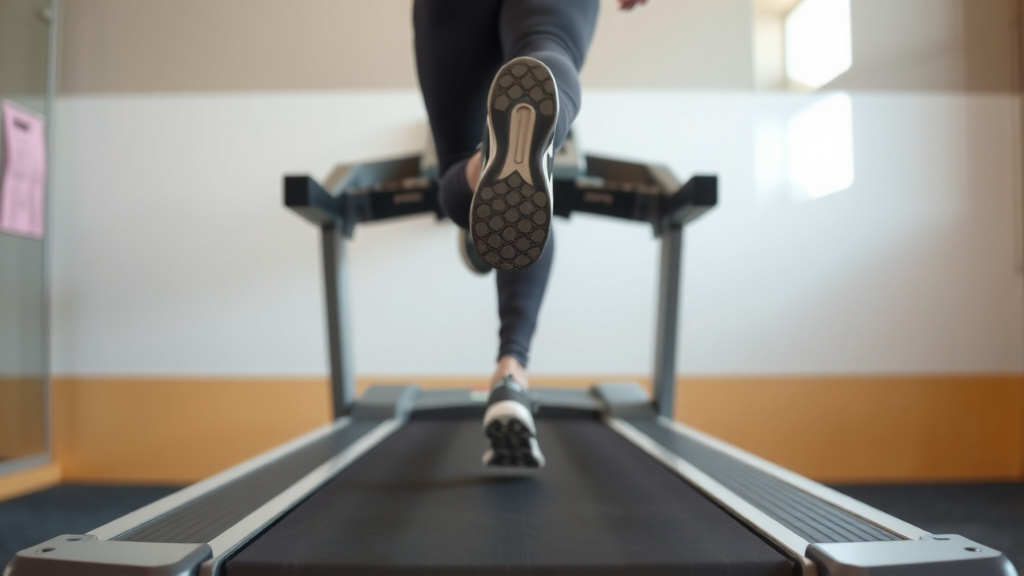
Treadmill Sprint Workout Checklist
Ready to put this into practice? Here’s a quick checklist to guide your next treadmill sprint session:
- Warm-up: Always start with 5-10 minutes of light cardio and dynamic stretches.
- Start Slow: Begin your test sprints at a manageable pace.
- Gradually Increase: Slowly bump up the speed until it feels challenging.
- Hold and Assess: See if you can maintain the pace for 20-30 seconds.
- Recover: Allow adequate rest between sprint intervals.
- Cool-down: Finish with a few minutes of walking and static stretching.
Comparing Treadmill vs. Outdoor Sprints
It’s natural to wonder how treadmill sprints compare to sprints on a track or road. There are some differences you should know about.
Controlled Environment
The treadmill offers a very controlled environment. The belt moves under you, which can feel different from pushing off a solid surface outdoors. Some people find they can run slightly faster on a treadmill because they don’t have to overcome air resistance or worry about uneven terrain. We found that the consistent surface can reduce the impact on your joints too.
The “Catching the Belt” Effect
On a treadmill, the belt does some of the work by pulling backward. This means you’re not expending quite the same amount of energy to propel yourself forward as you would outdoors. Some experts suggest you might need to slightly increase the treadmill incline to better mimic outdoor running mechanics. However, for most fitness purposes, a flat treadmill sprint is perfectly effective.
Mental vs. Physical Challenge
Running outdoors often involves more mental engagement. You’re navigating your environment, reacting to changes, and dealing with wind resistance. Treadmill sprints can sometimes feel more like a pure physical test of speed and endurance within a predictable setting. We found that some people thrive on the predictability, while others miss the variability of outdoor training.
| Fitness Level | Typical Jog Pace (mph) | Challenging Sprint Pace (mph) | Elite Sprint Pace (mph) |
|---|---|---|---|
| Beginner | 4.0 – 5.5 | 7.0 – 9.0 | N/A |
| Intermediate | 5.5 – 7.0 | 9.0 – 12.0 | 15.0+ |
| Advanced/Elite | 7.0+ | 12.0 – 15.0+ | 18.0 – 20.0+ |
Please remember these are general guidelines. Your actual speeds may vary greatly!
Conclusion
You’ve learned that a treadmill sprint speed is a personal journey, not a fixed number. While elite athletes can reach over 20 mph, most of us find a challenging sprint between 10-15 mph. Your speed depends on your fitness, the treadmill’s capabilities, and how long you sprint. Remember to always warm up properly and listen to your body. Ready to find your personal best? Start with a gradual test sprint and build from there. You’ve got this!
Frequently Asked Questions
Is it okay to sprint at the treadmill’s maximum speed?
It’s best to approach the maximum speed with caution. While some treadmills go up to 15 mph or more, your personal fitness level should dictate your sprint speed. We’ve found that consistently pushing yourself at a challenging but safe pace is more beneficial than simply hitting the highest number the machine offers.
How often should I do treadmill sprints?
For most fitness enthusiasts, incorporating sprints once or twice a week is a good starting point. This allows your body adequate time to recover between high-intensity sessions. We’ve seen that consistency over intensity helps prevent burnout and injuries.
Can treadmill sprints really help me get faster outdoors?
Absolutely! Treadmill sprints are an excellent tool for improving your overall speed and cardiovascular fitness, which directly translates to better outdoor running performance. The controlled environment helps you push your limits safely, building strength and endurance that you can then apply to the track or road.
How do I know if my treadmill speed is accurate?
While treadmill speed readings are generally reliable for most workouts, there can be slight variations. If you need exact precision, consider using a GPS watch or foot pod that syncs with your running app. For general fitness goals, though, the treadmill’s display is usually sufficient.
What’s the difference between a sprint and a hard run on a treadmill?
A sprint is a short, all-out burst of speed, typically lasting 20-30 seconds, where you’re running as fast as you possibly can. A hard run, while intense, is usually sustained for a longer duration, perhaps a few minutes, at a pace that feels very challenging but is still controllable.