Treadmill Speed for Weight Loss: Find Your Pace
To lose weight on a treadmill, aim for a pace that keeps your heart rate in the fat-burning zone. Many experts suggest a brisk walking or light jogging speed, typically between 3 to 4.5 mph. The key is consistency and maintaining an effort level where you can talk but not sing. Burning more calories than you consume is the goal.
Finding the right treadmill speed for weight loss involves understanding your personal fitness level and your body’s response. It’s less about a magic number and more about creating a sustainable calorie deficit. Think of it as a marathon, not a sprint! We found that a moderate intensity workout for at least 30 minutes is highly effective.
- Focus on consistent calorie burning.
- Brisk walking or light jogging is often best.
- Listen to your body and adjust pace.
- Aim for at least 30 minutes of exercise.
Ready to lace up? Let’s figure out the perfect pace for your weight loss journey right now.
Finding Your Weight Loss Pace on the Treadmill
So, you’re ready to hit the treadmill and shed some pounds. That’s fantastic! But what’s the sweet spot for speed? We’ve found that for effective weight loss, the ideal treadmill speed often hovers around a pace that feels like a brisk walk or a light jog. This typically translates to speeds between 3 to 4.5 miles per hour (mph). The real magic happens when you find a speed that challenges you just enough to burn calories without feeling completely wiped out.
Understanding Your Target Heart Rate Zone
To really nail your weight loss efforts, it’s helpful to understand your heart rate. Many fitness experts recommend aiming for your fat-burning zone. This is generally considered to be about 60% to 70% of your maximum heart rate. Why this zone? Research suggests that at this intensity, your body is more likely to tap into fat stores for energy. It’s a sweet spot where you’re burning a good amount of calories, including a higher proportion from fat, while still being able to sustain the exercise for a decent duration.
Calculating Your Maximum Heart Rate
How do you find that magic number? A simple, though not exact, way to estimate your maximum heart rate is to subtract your age from 220. For example, if you’re 30 years old, your estimated maximum heart rate would be 190 beats per minute (bpm). From there, you can calculate your target zone. For a 30-year-old, 60% would be 114 bpm, and 70% would be 133 bpm. So, your target range would be roughly 114-133 bpm (CDC).
Using a Heart Rate Monitor
Many treadmills have built-in heart rate sensors, or you might have a fitness tracker. These can be super helpful tools to keep you in your target zone. However, remember these are estimates. The “talk test” is often just as effective, if not more so, for many people.
The “Talk Test”: Your Personal Pace Guide
Ever heard of the “talk test”? It’s a wonderfully simple way to gauge your effort. When you’re on the treadmill, you should be able to hold a conversation. If you’re gasping for air after every few words, you’re probably going too fast. If you can belt out a song, you might need to pick up the pace a bit. The sweet spot is being able to talk comfortably but not sing. We found this method aligns well with maintaining a moderate intensity for sustained workouts.
Why Moderate Intensity Works Best
Moderate intensity exercise, like brisk walking or light jogging, is often recommended for weight loss because it allows you to exercise for longer periods. If you push yourself too hard initially, you might only last 10 minutes. Sustained effort is key to burning a significant number of calories. Research indicates that longer durations of moderate-intensity activity can be very effective for calorie expenditure (NIH).
How Long Should You Treadmill for Weight Loss?
Speed is only one piece of the puzzle. Duration is equally, if not more, important. Aiming for at least 30 minutes of continuous treadmill time is a great starting point. If you’re just beginning, don’t feel pressured to hit 30 minutes right away. You can start with 15 or 20 minutes and gradually increase your time as your stamina improves. Consistency over intensity is often the winning strategy.
Building Up Your Endurance Gradually
Think of it like building a house. You wouldn’t start with the roof, right? You build a strong foundation first. Similarly, start with shorter durations and a comfortable pace. As you get fitter, you can increase both your speed and the length of your workouts. A common recommendation is to add 5-10 minutes to your sessions each week, or gradually increase your speed.
Incorporating Interval Training
Once you’ve built a solid base, consider adding interval training. This involves alternating between periods of higher intensity (faster pace or incline) and lower intensity recovery periods. For example, you could jog at a faster pace for 1 minute, then walk briskly for 2 minutes, repeating this cycle. Interval training can be very effective for boosting calorie burn in a shorter amount of time and improving your overall fitness (Mayo Clinic). It keeps your body guessing and can prevent workout plateaus.
Treadmill Workouts for Effective Calorie Burn
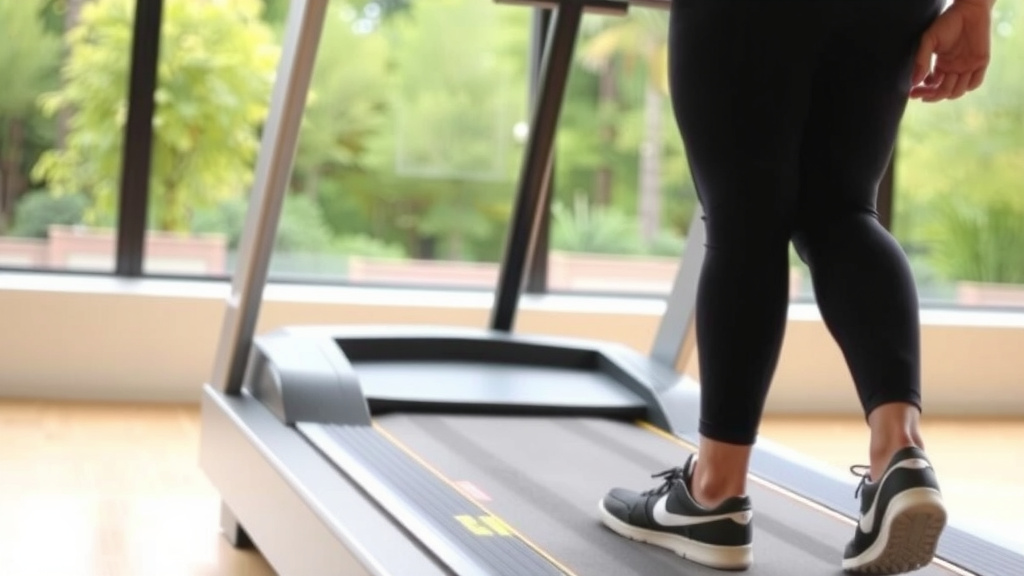
To maximize your weight loss results, variety is your friend. While a steady pace is good, mixing things up can prevent boredom and challenge your body in new ways. Consider these workout structures:
- Steady State Cardio: Maintain a consistent pace within your target heart rate zone for 30-60 minutes.
- Incline Walking: Increase the incline to make your walk more challenging and burn more calories. You can maintain a brisk walking pace while the incline does the hard work.
- Interval Training: As mentioned, alternate between high and low intensity intervals. This is great for boosting your metabolism.
Sample Treadmill Workout Structure
Here’s a basic structure you can adapt. Remember to warm up for 5 minutes with a light walk and cool down for 5 minutes with a slow walk.
| Phase | Duration | Intensity | Description |
|---|---|---|---|
| Warm-up | 5 minutes | Light | Slow walk to prepare muscles. |
| Steady Pace | 20 minutes | Moderate (Fat-Burning Zone) | Brisk walk or light jog at a consistent speed. |
| Intervals | 15 minutes | High/Low | Alternate 1 min fast pace/high incline with 2 min recovery walk. Repeat 5 times. |
| Cool-down | 5 minutes | Very Light | Slow walk to bring heart rate down. |
Listen to Your Body Above All Else
While these guidelines are helpful, the most important thing is to listen to your body. If you feel pain, stop. If you’re consistently exhausted, you might be pushing too hard. Adjust your speed, incline, or duration based on how you feel each day. Your weight loss journey is a marathon, not a sprint. Celebrate your consistency and enjoy the process!
Conclusion
You’ve got the blueprint for treadmill weight loss! Remember, the fastest way to see results isn’t about sprinting on the treadmill. It’s about finding that sweet spot of moderate intensity, like a brisk walk or light jog, that keeps you in your fat-burning zone. Aim for at least 30 minutes, but listen to your body and build up gradually. Consistency is your superpower here. So, lace up those shoes, set a pace you can sustain, and get ready to reach your weight loss goals, one steady stride at a time. Your journey starts now!
Frequently Asked Questions
What if I can’t run? Can I still lose weight on the treadmill?
Absolutely! You don’t need to run to lose weight on the treadmill. Brisk walking, especially with an incline, can be incredibly effective for burning calories and improving fitness. Focus on maintaining a pace that elevates your heart rate into the fat-burning zone and allows you to exercise for a sustained period. Consistency is key, no matter your speed.
How often should I use the treadmill for weight loss?
Aim for consistency! Most experts recommend using the treadmill for weight loss at least 3 to 5 times per week. If you’re just starting, begin with fewer days and shorter durations, gradually increasing as your stamina builds. Listen to your body and allow for rest days to prevent burnout and injury.
Can I lose weight if I only use the treadmill for 10-15 minutes a day?
While any movement is better than none, 10-15 minutes on the treadmill might not be enough to create a significant calorie deficit for most people aiming for weight loss. Aiming for at least 30 minutes of moderate-intensity exercise is generally more effective. If time is a constraint, consider increasing the intensity during those shorter sessions or adding incline.
Does the treadmill incline matter for weight loss?
Yes, the incline absolutely matters! Increasing the incline on your treadmill turns a regular walk into a more challenging workout, engaging more muscles and burning more calories without necessarily increasing your speed. It’s a fantastic way to boost your calorie expenditure and build lower body strength.
How long will it take to see weight loss results from using the treadmill?
The timeline for seeing weight loss results can vary greatly depending on your starting weight, diet, consistency, and the intensity of your workouts. Generally, you can expect to start noticing changes after a few weeks of consistent effort. Remember, sustainable weight loss is a gradual process, so be patient with yourself and celebrate small victories along the way.