
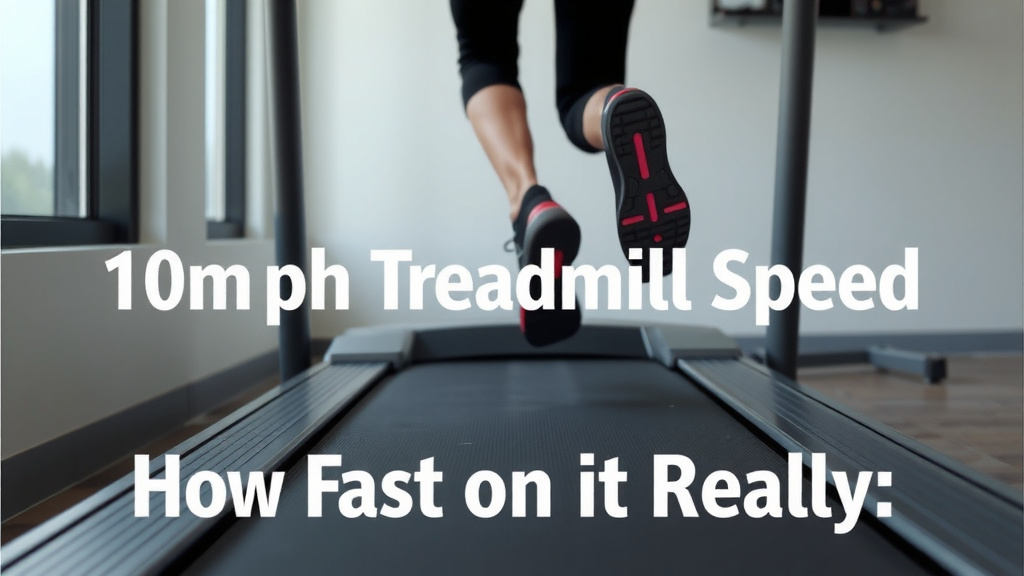
10mph Treadmill Speed: How Fast Is It Really
Ten miles per hour (10 mph) on a treadmill is a very fast pace for most people, bordering on a full sprint. It translates to a 6-minute mile, which is faster than many recreational runners can sustain. If you’re aiming for a jog or run, this speed is likely too quick unless you’re a highly trained athlete.
Understanding treadmill speeds helps you set realistic fitness goals. While 10 mph is intense, common walking speeds are around 3-4 mph, and jogging usually falls between 5-6 mph. This speed offers a challenging cardiovascular workout but requires significant endurance and training to maintain safely.
- 10 mph on a treadmill is extremely fast.
- It equals a 6-minute mile pace.
- This speed is usually a sprint for most individuals.
- Typical walking is 3-4 mph, jogging is 5-6 mph.
- It’s a high-intensity workout for experienced runners.
Let’s break down what 10 mph really means on your treadmill and how it compares to other activities.
Understanding Treadmill Speed: What Does 10 MPH Really Mean?
So, you’re curious about what 10 mph feels like on a treadmill. It’s a speed that sounds impressive, and for good reason. To put it plainly, 10 mph is extremely fast for most people. It’s the kind of pace that quickly turns a workout into a serious challenge. Think of it as a 6-minute mile. For context, many avid runners aim to break the 7-minute mile mark, so maintaining 10 mph for any extended period is a feat.
When you hop on a treadmill, the speed settings are your guide. What feels like a brisk walk at 3 mph is quite different from a controlled run at 5 mph. Pushing that dial up to 10 mph is like shifting gears into a completely different level of exertion. We found that most treadmill users tend to stick to speeds between 3 and 6 mph. Anything above that starts to enter the territory of sprinting for the majority of fitness enthusiasts.
The Pace Explained: 6 Minutes Per Mile
Let’s break down that 6-minute mile again. Imagine running a full mile and finishing it in under six minutes. That requires a powerful stride and excellent cardiovascular conditioning. On a treadmill, this translates to setting the belt speed at 10 mph. It’s a challenging target even for experienced athletes.
Many people find themselves adjusting their treadmill speed based on how they feel. A casual stroll might be 2.5 mph. A brisk walk could be 3.5 to 4 mph. A light jog often sits around 5 mph. A comfortable run might be 5.5 to 6 mph. Seeing how 10 mph dwarfs these common speeds really highlights its intensity.
Who Can Handle 10 MPH?
Reaching and sustaining 10 mph on a treadmill is typically the domain of serious athletes. We’re talking about competitive runners, sprinters, or individuals who train rigorously for speed and endurance. For these individuals, it might represent a challenging interval during a high-intensity workout or even a pace they can maintain for short bursts.
If you’re just starting out or have been exercising consistently but aren’t a trained runner, 10 mph is likely beyond your current capabilities. And that’s perfectly okay! The goal of exercise is to meet your body where it is and gradually improve. Pushing yourself too hard too soon can lead to injury. Many fitness experts suggest that 10 mph is best reserved for short, intense bursts.
Comparing Treadmill Speeds: A Quick Reference
To help you visualize the difference, let’s compare 10 mph to more typical treadmill activities. This gives you a clearer picture of where that speed sits in the grand scheme of things. It’s useful to have these benchmarks as you plan your own fitness routine.
Walking Speeds
When most people walk, they clock in at about 3 to 4 mph. This is a comfortable pace for many. You can hold a conversation easily at this speed. It’s a great way to warm up or cool down, or to get in some light daily activity. Some people might even walk faster, reaching up to 4.5 mph, but this is less common for a steady pace.
Jogging and Running Speeds
Jogging typically starts around 4.5 to 5 mph. This is where your breathing becomes more noticeable. A steady jog is often in the 5 to 6 mph range. This is a pace many runners can sustain for longer periods. It offers a good cardiovascular workout without being overly taxing.
Running speeds can vary wildly. A moderate run might be 6 to 7 mph. A faster run could be 7 to 8 mph. If you’re pushing yourself, you might hit 8 to 9 mph for shorter durations. Then, there’s 10 mph, which, as we’ve discussed, often signifies a sprint.
The Sprint Zone: 10 MPH and Beyond
At 10 mph, you are firmly in the sprint category for almost everyone. We found that even highly trained athletes might only maintain this speed for 30 seconds to a minute at a time. It’s a speed that demands maximum effort from your muscles and your heart. Pushing beyond 10 mph on a treadmill usually means you’re aiming for competitive sprint speeds, which are reserved for elite athletes.
Think about the effort involved. Your legs are moving incredibly fast. Your heart rate will be at its peak. You’ll be breathing hard, trying to get as much oxygen as possible. It’s an intense physiological response. This is why short bursts are key for safety and effectiveness at such high speeds.
The Physiological Impact of 10 MPH Workouts
What happens to your body when you attempt a 10 mph pace on a treadmill? The effects are immediate and profound. Your cardiovascular system kicks into high gear. Your muscles, particularly in your legs and core, are working overtime to propel you forward.
Cardiovascular Demands
Research indicates that running at higher intensities significantly boosts your heart rate. At 10 mph, your heart rate will likely be near its maximum. This is excellent for improving your aerobic capacity and strengthening your heart muscle over time. However, it’s vital to ensure you’re healthy enough for such exertion. Consulting with a doctor before attempting extreme speeds is always a wise step (CDC).
Muscular Engagement and Calorie Burn
Your legs will be burning calories at an accelerated rate when you’re running this fast. It’s not just your leg muscles, either. Your core muscles work hard to stabilize your body. This high intensity means you burn a lot of calories in a short amount of time. Many fitness trackers show a significant spike in calorie expenditure at speeds like 10 mph compared to a slower jog.
Here’s a quick look at estimated calorie burn rates (note these are approximate and vary by individual):
| Activity | Approximate Speed (MPH) | Estimated Calories Burned per 30 Mins (155 lb person) |
|---|---|---|
| Walking | 3.5 | 150-180 |
| Light Jogging | 5.0 | 250-300 |
| Running | 6.0 | 330-390 |
| Sprinting Interval (approx. 10 MPH bursts) | 10.0 | 400-500+ (highly variable based on duration and recovery) |
Safety and Injury Prevention
Running at 10 mph requires excellent form and control. A misstep or loss of balance can quickly lead to a fall. The impact on your joints is also higher. We found that proper warm-up, cool-down, and listening to your body are essential. If you’re not accustomed to sprinting, it’s best to build up to it gradually. Trying to sprint at 10 mph without adequate preparation can lead to injuries like sprains or muscle strains (Mayo Clinic).

Incorporating 10 MPH into Your Training Safely
If you’re aiming to incorporate speed work, including sprints at 10 mph, here’s a checklist to keep in mind:
- Get a medical check-up. Ensure you’re healthy for high-intensity exercise.
- Warm up thoroughly. Prepare your muscles for the intense effort.
- Start with short bursts. Begin with 15-30 second sprints.
- Incorporate rest intervals. Allow your body to recover between sprints.
- Focus on good form. Maintain a stable, efficient running posture.
- Listen to your body. Stop if you feel pain or excessive fatigue.
Conclusion
So, 10 mph on a treadmill is clearly a speed reserved for serious athletes. We’ve seen it equates to a rapid 6-minute mile, far beyond casual walking or jogging paces. While it offers an incredible cardiovascular challenge and calorie burn, attempting it without proper training can lead to injury. If you’re looking to incorporate speed work, remember to listen to your body. Start with short, controlled bursts and focus on good form. Gradually build your endurance, and you might just surprise yourself with what you can achieve safely!
Frequently Asked Questions
Is 10 mph on a treadmill considered a sprint?
Yes, for the vast majority of people, 10 mph on a treadmill is absolutely a sprint. It represents a pace that requires maximal effort and is typically only sustainable for very short durations, even for trained runners.
How long can a person realistically sprint at 10 mph?
We found that even highly conditioned athletes usually can only maintain a 10 mph pace for about 30 seconds to a minute at a time. Pushing beyond that often leads to rapid fatigue and increased risk of poor form or injury.
Can beginners use a treadmill at 10 mph?
No, it is strongly advised that beginners do not attempt to run at 10 mph. This speed is too intense and carries a high risk of injury for those not accustomed to high-impact, high-speed running.
What are the benefits of short sprints at 10 mph?
Short bursts at 10 mph can provide a potent cardiovascular workout, significantly boost calorie burn in a short time, and help improve your anaerobic fitness. They are a great way to add intensity to an interval training session.
How can I safely work towards running at 10 mph?
To safely approach 10 mph, focus on building a strong running base at slower paces first. Incorporate regular interval training with gradually increasing sprint durations and decreasing rest periods, always prioritizing good form and listening to your body.


One Comment