How Do Treadmills Calculate Calories?
Treadmills calculate calories burned using a combination of your personal information and the workout data they collect. They estimate calorie expenditure based on your weight, age, gender, and height, combined with factors like your speed, incline, and duration of exercise. It’s an educated guess, not a perfect measurement.
While treadmills provide a helpful estimate, it’s important to remember they aren’t medical devices. The accuracy can vary based on the specific model and the algorithms it uses. Your actual calorie burn might differ slightly from what the machine displays, but it’s a great tool for tracking your fitness progress.
- Treadmills use your stats (weight, age, etc.).
- They also track your workout (speed, incline, time).
- These factors combine to estimate calories.
- The display is an estimate, not an exact science.
- Accuracy can vary between different treadmill models.
Ready to learn the specifics? Let’s walk through exactly how your treadmill makes those calorie estimations step by step.
Understanding How Your Treadmill Tracks Calories
Ever wondered how that number on your treadmill display is calculated? It’s a fascinating blend of your personal details and the workout data. Think of it as a smart guess. Your treadmill uses a formula that takes into account what it knows about you and what you’re doing right now. This helps you get a general idea of your energy expenditure. It’s not a perfect science, but it’s a great tool for motivation and tracking progress.
The core of the calculation relies on basic physics and physiology. Your body uses energy to move. The harder you work, the more energy you burn. Your treadmill estimates this energy burn. It does this by measuring your movement and using your personal stats to adjust the estimate. We’ll break down these elements so you can understand the process better.
Your Personal Stats: The Foundation of the Estimate
Your treadmill needs to know a few things about you to get started. These are the personal details you input when you first set up the machine. They form the baseline for calculating how many calories you burn. Without this information, the treadmill wouldn’t have enough data points to make a reasonable estimate.
Weight: The Biggest Factor
Your body weight is probably the single most important factor in calorie calculation. Simply put, it takes more energy to move a heavier body than a lighter one. If two people run at the same speed and incline, the heavier person will burn more calories. This is because they have to work harder against gravity and inertia. It’s a fundamental principle of energy expenditure.
Research shows a direct correlation between body weight and calorie burn during exercise. For instance, a study published in the *Journal of Applied Physiology* found that heavier individuals expend more energy per unit of distance covered. Your treadmill uses your entered weight to scale its calorie calculations accordingly. So, ensuring your weight is accurate is key.
Age and Gender: Subtle Adjustments
While weight is the primary driver, your age and gender also play a role. These factors influence your Basal Metabolic Rate (BMR), which is the number of calories your body burns at rest. Generally, as people age, their metabolism tends to slow down slightly. Men also tend to have a higher muscle mass percentage than women, which can affect metabolic rate and calorie burn.
Treadmills use these demographic details to make minor adjustments to the calorie burn estimate. They aren’t the main components, but they help refine the overall calculation. Many fitness experts recommend inputting your correct age and gender for the most personalized estimate possible. It helps the machine paint a more accurate picture of your body’s energy needs.
Height: A Supporting Role
Your height contributes to your overall body composition and how efficiently your body moves. Taller individuals may have longer strides, which can influence the energy cost of running or walking. While not as impactful as weight, height can offer another piece to the puzzle for your treadmill’s algorithm.
The treadmill’s algorithm may use height to estimate factors like leg length or stride length. These, in turn, can affect the biomechanics of your movement. This helps it fine-tune the energy expenditure calculation. It’s another detail that allows for a more individualized calorie count.
Workout Data: What You’re Doing Matters
Once your treadmill knows about you, it needs to track what you’re doing. This workout data is the dynamic part of the calculation. It’s constantly changing as you exercise. The machine monitors your speed, the incline you set, and how long you’ve been working out.
Speed and Incline: The Intensity Indicators
The speed and incline are direct measures of your workout intensity. Running at 8 mph burns far more calories than walking at 3 mph. Similarly, running on a 5% incline demands more energy than running on a flat surface. Your treadmill measures your speed and incline and plugs them into its calorie-burning equation.
These two variables have a significant impact on how many calories you burn per minute. Many studies, including those from the Centers for Disease Control and Prevention (CDC), highlight the effectiveness of higher intensity workouts for calorie expenditure. When you increase your speed or incline, you are telling your body to work harder, thus burning more fuel. Your treadmill is designed to recognize this increased demand.
Duration: The Time Factor
The duration of your workout is straightforward. The longer you exercise, the more calories you burn. This is perhaps the most intuitive part of the equation. A 30-minute run will burn more calories than a 15-minute run, assuming all other factors are equal.
Your treadmill simply tracks how long you’ve been active. This time is multiplied by the estimated calorie burn rate per minute. The rate per minute is itself derived from your personal stats and your current speed and incline. So, a longer duration amplifies the calorie burn based on the intensity you’ve set.

The Underlying Algorithm: Putting It All Together
So, how does your treadmill take all this information and spit out a calorie number? It uses a mathematical formula, often called an algorithm. These algorithms vary from one treadmill manufacturer to another. Some are more sophisticated than others.
METs: A Standardized Measure
Many treadmill algorithms are based on the concept of Metabolic Equivalents (METs). A MET is a measure of the energy cost of physical activities. One MET is defined as the energy expenditure of sitting quietly. Different activities are assigned MET values based on their intensity. For example, brisk walking might be around 3.5 METs, while running at a moderate pace could be 8 METs or higher (National Institutes of Health).
The formula often looks something like this: Calories burned per minute = (METs x Body Weight in kg x 3.5) / 200. Your treadmill takes your personal stats, determines an approximate MET value based on your speed and incline, and then uses this formula. This provides a standardized way to estimate energy expenditure.
Accuracy and Limitations
It’s important to remember that this is an educated estimate. Treadmills don’t measure your exact calorie burn. They can’t directly measure your heart rate or oxygen consumption, which are more precise indicators. Factors like your individual metabolism, fitness level, and even how efficiently you run can affect your actual calorie burn. Many experts agree that treadmill calorie counts can be anywhere from 10-25% higher or lower than your true burn.
For example, if you have a very efficient running form, you might use less energy than the treadmill’s algorithm predicts. Conversely, if you’re carrying extra weight that isn’t reflected in your inputted stats, your burn might be higher. Think of the treadmill’s number as a helpful guide, not an absolute truth.
Checklist for Better Calorie Tracking
Want to make sure your treadmill’s calorie estimate is as accurate as possible? Follow these simple steps:
- Ensure your weight is updated regularly.
- Enter your correct age and gender.
- Make sure your height is entered accurately.
- Be honest about your incline and speed settings.
- Don’t rely solely on the treadmill’s number; consider your perceived exertion.
- If possible, use a heart rate monitor for a more personalized reading.
Conclusion
You’ve learned how your treadmill uses a smart combination of your personal details and real-time workout data to estimate calorie burn. Remember, factors like your weight, age, gender, height, speed, incline, and workout duration all play a part in its calculation. While these machines offer a fantastic tool for tracking your fitness journey and staying motivated, it’s essential to view the calorie count as an educated estimate rather than an exact science.
For the most accurate readings, always ensure your personal information is up-to-date on the machine. To truly understand your body’s energy expenditure, consider using a heart rate monitor alongside your treadmill. Keep up the great work on your fitness goals!
Frequently Asked Questions
Are treadmill calorie counts ever accurate?
Treadmill calorie counts are generally estimates, not precise measurements. Research suggests they can be off by 10-25% either way. They use algorithms based on your input and workout data, which can’t account for your unique metabolism or exercise efficiency.
Why is my weight so important for calorie calculation?
Your body weight is the biggest factor because it takes more energy to move a heavier mass. The treadmill uses your weight to scale the estimated effort required for your workout. Ensuring your weight is current helps make that estimate more relevant to you.
Can I get a more accurate calorie burn reading?
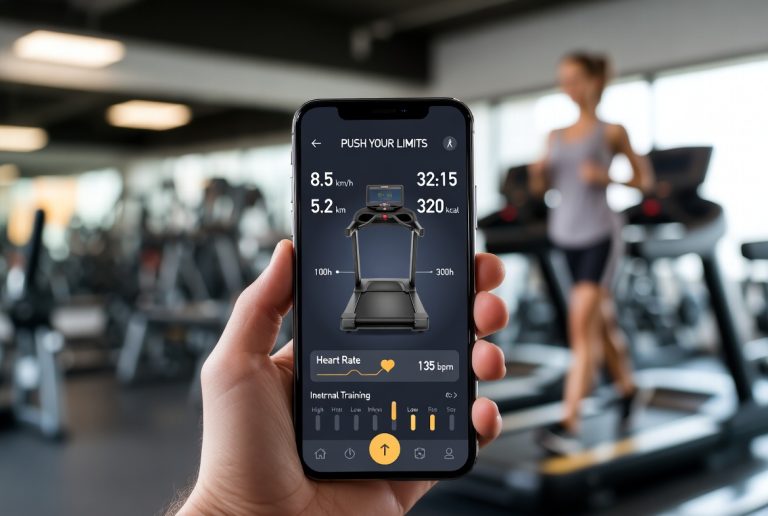
Yes, you can get closer to your actual burn by ensuring all your personal stats are correct and by using a heart rate monitor. Heart rate data provides a more direct physiological measurement of your exertion level than just speed and incline alone.
Does the type of treadmill affect calorie accuracy?
The specific model and the algorithms used by different manufacturers can influence accuracy. More advanced treadmills might have more sophisticated formulas, but all are still estimating. Newer models often use more complex algorithms than older ones.
Should I worry if my treadmill’s calorie count seems too high or too low?
Don’t get too hung up on the exact number. Use it as a consistent benchmark for your own progress. If the number consistently feels off, double-check your inputted stats, and consider your perceived exertion during the workout.
![5 Best Apple Watch App for Treadmill Running [In 2026]](https://homegymion.com/wp-content/uploads/2026/03/5-Best-Apple-Watch-App-for-Treadmill-Running-768x516.jpg)