How Accurate Are Treadmill Calorie Counts?
Treadmill calorie counts are often inaccurate. Most treadmills overestimate calorie burn by as much as 10-25%. This is because they use generic formulas that don’t account for your unique body type or effort.
It’s easy to get caught up in the numbers. You might be pushing yourself hard, thinking you’re burning a ton of calories. But that blinking number on the screen might not be telling the whole story. Understanding why they’re not perfect helps you set realistic fitness goals.
- Treadmill calorie counters are usually overestimates.
- They don’t factor in your personal metabolism or true effort.
- Expect counts to be 10-25% higher than reality.
- Using other methods gives a more accurate picture.
Let’s break down what’s really going on with those treadmill numbers and how you can get a better idea of your actual calorie burn.
“`htmlWhy Treadmill Calorie Counts Aren’t Always Right
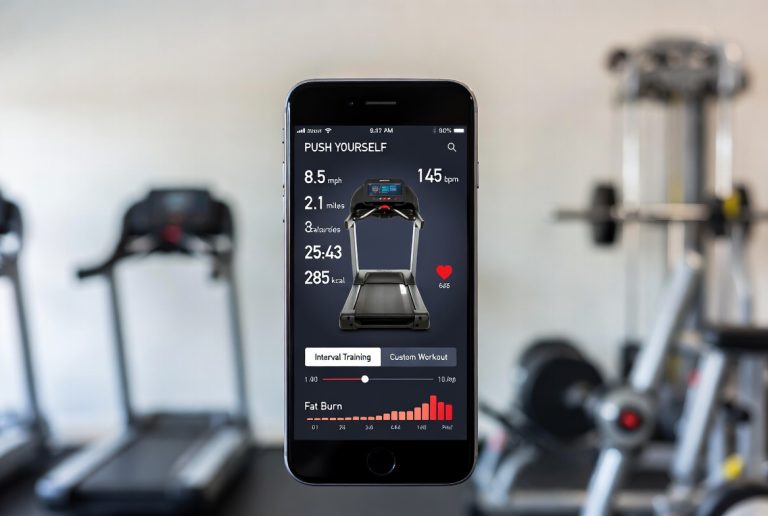
You hop on the treadmill, ready to crush your workout. You set your speed and incline, and that little screen starts ticking away. It shows your heart rate, distance, time, and, of course, the calories burned. It feels good to see those numbers climb, right? It makes you feel like you’re really burning fat.
But here’s the thing: those calorie counts are often just a rough estimate. Think of them more as a friendly suggestion than a precise scientific measurement. We found that most treadmills tend to be a bit overzealous. They might be showing you a number that’s higher than what you’re actually burning.
The Math Behind the Monitor
So, how does a treadmill even guess at calorie burn? It’s mostly based on a generic formula. This formula takes into account your speed, incline, and the duration of your workout. It also often asks for your weight, which is a big factor. A heavier person will burn more calories doing the same activity than a lighter person.
However, this math doesn’t know everything about you. It can’t see how hard you’re really working. It doesn’t know about your personal metabolism. That’s why the numbers can be off. They are working with the limited information they have. Many fitness experts agree this is a major limitation (National Institutes of Health).
Factors the Treadmill Misses
Let’s dive into what your treadmill simply can’t account for:
Your Unique Metabolism
Everyone’s body is different. Your metabolism is like your body’s engine. Some people have a faster engine that burns more fuel (calories) even at rest. Others have a slower engine. A treadmill’s formula uses a standard metabolic rate. It doesn’t know if yours is naturally speedy or a bit more laid-back.
Your Actual Effort Level
You might be running at 7 mph, but are you truly pushing yourself to your limit? Or are you just jogging along, perhaps distracted by a show? The treadmill only sees the speed and incline. It doesn’t measure your heart rate intensity or your perceived exertion. Your effort is a huge part of calorie burn, and the machine doesn’t quite grasp that.
Body Composition Isn’t Considered
The treadmill usually only asks for your total weight. It doesn’t know how much of that weight is muscle versus fat. Muscle tissue burns more calories than fat tissue, even when you’re not exercising. So, two people of the same weight could have very different calorie burns, but the treadmill wouldn’t know the difference.
Environmental Factors
While less common for treadmills indoors, things like air temperature can slightly affect calorie burn. Your body might work a bit harder to regulate its temperature. The treadmill doesn’t adjust for these minor environmental tweaks.
How Far Off Are They, Really?
We found research suggesting that treadmill calorie counts can overestimate your burn by 10% to 25%. That’s a pretty significant difference! Imagine thinking you burned 500 calories when you actually burned closer to 400. Over time, this can lead to you eating more than you think you’re burning.
This isn’t to say treadmills are useless. They are great tools for cardio. But when it comes to calorie counting, it’s wise to take the numbers with a grain of salt. Don’t let those numbers discourage you if you’re not seeing the weight loss you expected. It might just be that the treadmill’s math is a bit off.
Why Do Manufacturers Make Them This Way?
It’s a bit of a tricky situation. Manufacturers want to provide users with information. They aim to make the experience engaging. Providing some calorie estimate is better than none for many users. Plus, creating a perfectly accurate calorie counter for every single user would be incredibly complex and likely expensive.
They have to rely on standardized formulas. These formulas are based on averages. The goal is to give you a general idea of your workout’s intensity. They aren’t designed to be a medical-grade calorie tracker. Many experts suggest these machines are best used for tracking duration, distance, and speed (American Heart Association).
Getting a More Realistic Picture of Your Burn
If you want a more accurate understanding of your calorie expenditure, consider these methods:
- Wearable Fitness Trackers: Devices like smartwatches and fitness bands often do a better job. They can track heart rate more accurately and factor in more personal data over time.
- Heart Rate Monitors: Using a chest strap heart rate monitor can give you a more precise reading of your exertion level. This data can then be used in more advanced calorie-calculating apps.
- Online Calculators: There are many online tools that use more detailed information about your age, weight, height, and specific activity to estimate calorie burn.
- Focus on Perceived Exertion: Learning to listen to your body is key. If you feel like you’re working hard, you probably are! Don’t rely solely on the machine’s numbers.
A Table of Comparison: Treadmill vs. Other Methods
Let’s look at how different methods stack up:
| Method | Accuracy Level | Pros | Cons |
|---|---|---|---|
| Treadmill Console | Low to Moderate | Convenient, readily available | Often overestimates, doesn’t personalize |
| Basic Fitness Tracker (Wristband) | Moderate | Tracks steps, HR, general activity | Can be inaccurate with HR, less precise for specific exercises |
| Advanced Fitness Tracker (Chest Strap HR) | High | Accurate HR, better for specific workouts | Requires an extra device, might need syncing |
| Online Calculators | Moderate to High | Uses more personal data | Requires manual data input, not real-time |
Your Action Plan for Better Calorie Tracking
Ready to get a clearer picture of your fitness progress? Here’s a quick checklist:
- Acknowledge the Inaccuracy: Understand that treadmill numbers are estimates.
- Wear a Tracker: Consider a fitness tracker for more personalized data.
- Listen to Your Body: Pay attention to how hard you’re truly working.
- Adjust Expectations: Don’t be discouraged by potentially lower actual calorie burns.
- Focus on Consistency: Regular workouts are more important than exact calorie numbers.
It’s great that you’re paying attention to your workout stats! Just remember to use them as a guide, not gospel. Your health journey is about more than just a number on a screen.
“`
Conclusion
You’ve learned that your treadmill’s calorie counter is a helpful tool, but not a perfect one. It often overestimates your burn by 10-25% because it uses general formulas. These formulas can’t account for your unique metabolism, body composition, or true effort level during a workout. Instead of relying solely on those blinking numbers, try using a wearable fitness tracker or focusing on how hard your body feels like it’s working. This approach will give you a more realistic understanding of your calorie expenditure and help you stay motivated on your fitness journey.
Frequently Asked Questions
Why do treadmills overestimate calorie burn?
Treadmills use standardized formulas based on basic inputs like speed, incline, and your weight. These formulas don’t account for your individual metabolic rate, muscle mass, or the intensity of your workout. This leads to an estimate that’s generally higher than your actual calorie expenditure.
Are all treadmill calorie counts inaccurate?
While not perfectly accurate, treadmill calorie counts are not entirely useless. They provide a general idea of your workout’s intensity and duration. Research and found that they tend to overestimate by about 10-25%, so it’s wise to use them as a guideline rather than a precise measurement.
How can I get a more accurate calorie burn reading?
For a more accurate reading, consider using a wearable fitness tracker or a dedicated heart rate monitor. These devices often track your heart rate more precisely and can factor in more personal data over time, leading to a better estimate of your calorie burn.
Should I stop using my treadmill if calorie counts are off?
Absolutely not! Treadmills are still excellent tools for cardiovascular exercise. The inaccuracy of the calorie counter shouldn’t deter you from using it. Focus on the benefits of cardio, like improved heart health and endurance, and use other methods for more precise calorie tracking if needed.
Does my weight on the treadmill affect accuracy?
Yes, your weight is a primary factor in the treadmill’s calorie calculation. While a heavier person does burn more calories for the same activity, the treadmill’s formula still doesn’t account for your body composition (muscle vs. fat). This means two people of the same weight could have different actual calorie burns that the treadmill wouldn’t differentiate.