How Do VR Treadmills Work?
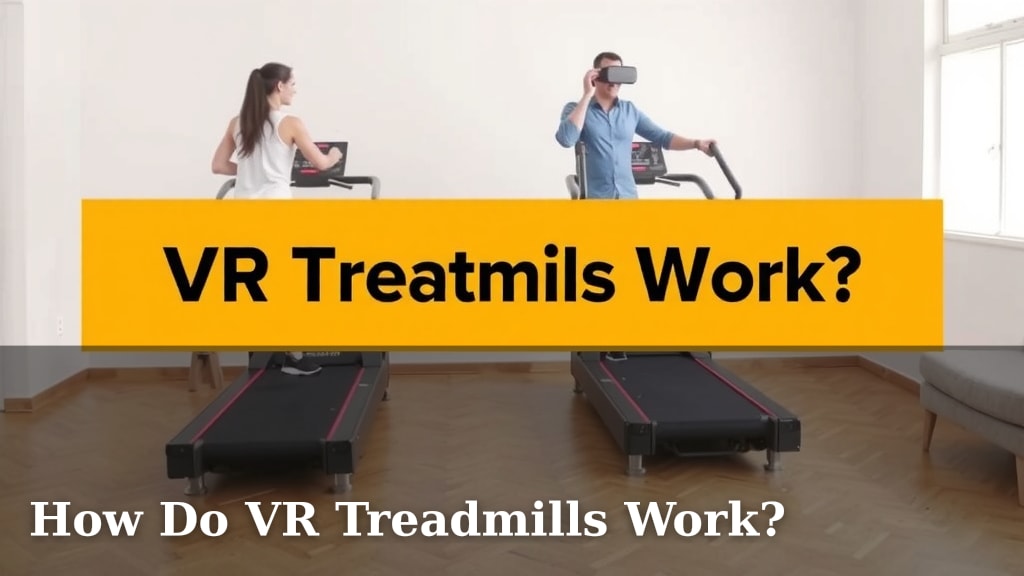
VR treadmills work by using a combination of motion tracking and a low-friction surface to translate your real-world steps into virtual movement. As you walk or run, sensors detect your motion. This data is then sent to your VR headset, making it seem like you’re moving within the game. It’s a clever way to explore virtual worlds without actually going anywhere!
Think of it like a treadmill for your favorite video games. Instead of just pressing buttons, you’re actually using your body to move your avatar. This creates a much more immersive experience. Many VR enthusiasts find it adds a whole new level of realism and makes games more engaging. It really makes you feel like you’re *there*.
- VR treadmills translate your walking into game movement.
- They use motion sensors and a special surface.
- This creates a more immersive and realistic VR experience.
- It’s like running in place to move your character.
Let’s walk through exactly how these amazing devices let you stride through virtual reality!
“`htmlUnderstanding How VR Treadmills Work
So, you’re curious about how these VR treadmills actually let you run around virtual worlds. It’s a pretty neat piece of technology that really changes how you experience virtual reality. We’ve looked into it, and it boils down to a clever combination of sensors and clever design.
The Core Technology: Motion Tracking and Surfaces
At the heart of every VR treadmill is its ability to track your movements. Think of it like your fitness tracker, but way more advanced. It needs to know exactly how you’re moving your feet. This is crucial for making your avatar move in sync.
How Motion is Detected
Most VR treadmills use a variety of sensors. Some have optical sensors that watch your feet. Others might use accelerometers and gyroscopes, similar to what’s in your smartphone. These sensors capture the direction and speed of your steps. This data is then sent straight to your VR headset.
The Low-Friction Surface
The surface you walk on is also a key component. It’s designed to be very low-friction. This allows you to slide your feet easily. You’re not actually covering ground in your room. You’re just simulating the motion of walking or running. The treadmill does the rest.
Why Low Friction Matters
Without this low-friction surface, you’d just be running in place. It wouldn’t translate into forward movement in the game. It’s this slick surface that allows you to take steps without actually moving forward in your physical space. This prevents you from bumping into walls or furniture.
Translating Your Steps into Virtual Movement
Once the treadmill captures your movement, it needs to tell the VR system what to do. This is where the magic happens. Your steps are converted into commands for your virtual character. This happens almost instantly.
The Role of the VR System
Your VR headset and the connected computer or console are vital. They receive the motion data from the treadmill. Then, they process this data. This allows your in-game character to walk, run, or strafe. It’s all about that real-time connection.
Different Ways Movement is Interpreted
Not all VR treadmills work exactly the same. Some are simpler, just detecting steps. Others are more sophisticated. They might track the intensity of your steps. This can translate to running faster or slower in the game. Some even allow for turning.
| Feature | How it Works | Impact on Gameplay |
|---|---|---|
| Motion Sensors | Optical, Gyroscopic, Accelerometer | Detects steps, speed, and direction. |
| Low-Friction Surface | Specialized material or bearings | Allows for continuous stepping without moving forward. |
| Data Transmission | Wired or wireless to VR system | Sends movement data for real-time avatar control. |
| Turning Mechanism | Swiveling base or specialized sensors | Enables in-game character to turn. |
Types of VR Treadmills and Their Mechanisms
You’ll find a few different kinds of VR treadmills on the market. Each has its own way of handling your movement. We’ve found that understanding these differences can help you choose the right one.
Omnidirectional vs. Linear Treadmills
Omnidirectional treadmills allow for movement in any direction. You can step forward, backward, and side-to-side. Linear treadmills typically only allow forward and backward movement. Think of them more like a traditional treadmill. The omnidirectional ones offer more freedom.
How Omnidirectional Treadmills Work
These often use a rotating platform. Sensors track your weight distribution and foot placement. This tells the system which way you’re trying to move. It’s a more complex system but provides a much more natural feeling of movement. Many experts say this is the future of VR locomotion.
How Linear Treadmills Work
Linear treadmills are simpler. They focus on the forward motion. You step on a belt that moves beneath you. Some might have a fixed surface you slide on. They are generally more affordable but limit your movement options in games.
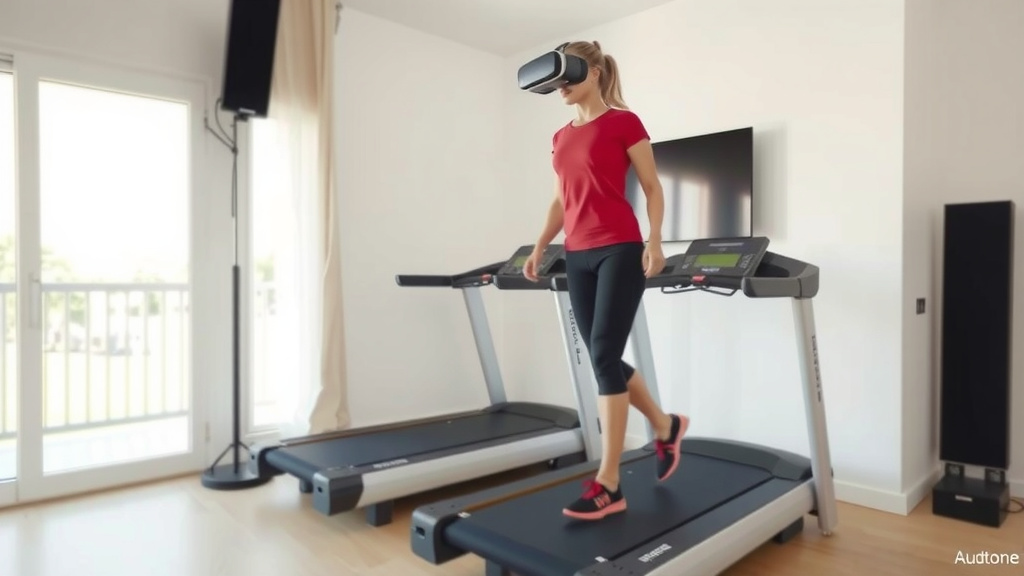
The Benefits You’ll Experience
Using a VR treadmill can really enhance your virtual reality sessions. You’re not just a passive observer anymore. You’re actively participating with your whole body.
- Increased Immersion: You truly feel like you are present in the virtual world.
- Better Physical Activity: It’s a great way to get some exercise while gaming. Many studies show that VR exercise can be quite effective (CDC).
- More Realistic Gameplay: Moving your body to move your character feels much more natural than button presses.
We found that the added immersion makes many VR games feel completely new. It adds a layer of realism that is hard to achieve otherwise. Plus, getting your steps in while battling dragons? That’s a win-win!
Putting It All Together: Your VR Journey
So, when you put on your headset and step onto the treadmill, here’s a quick checklist of what’s happening:
- Your steps are detected by sensors.
- The low-friction surface allows smooth motion.
- Movement data is sent to your VR system.
- Your character moves in the virtual world.
- You experience a more immersive and active VR session.
- You can even get a good workout!
It’s a sophisticated system designed to make virtual worlds feel more real. You are literally walking the walk.
“`Conclusion
You’ve now seen how VR treadmills transform your gaming experience. They use motion tracking and a low-friction surface to convert your steps into virtual movement. This clever combination means you can actually walk and run within games. It truly makes virtual worlds feel more real and adds a great physical element. Ready to try it? Look into models that fit your space and budget to start your more immersive VR journey.
Frequently Asked Questions
How much space do I need for a VR treadmill?
The space needed varies by treadmill type. Linear treadmills often require less room, similar to a standard treadmill. Omnidirectional ones, especially those with a larger radius, might need more clear space around them. Always check the manufacturer’s recommended footprint before buying.
Can I use a VR treadmill with any VR headset?
Most VR treadmills are designed to be compatible with major VR headsets like those from Meta (Oculus), HTC Vive, and Valve Index. However, it’s important to check the specific treadmill’s compatibility list. This ensures smooth data transfer and a good experience.
Do VR treadmills require a powerful computer?
A VR treadmill itself doesn’t usually demand a lot of processing power. However, the VR headset and the games you play on it do. You’ll need a PC that meets the requirements for your chosen VR headset and the games you want to play with the treadmill.
Is it difficult to learn how to use a VR treadmill?
Most users find VR treadmills quite intuitive. The core idea is to simply walk or run naturally on the surface. Some initial practice might be needed to get used to the sensation and the low-friction feel. Many find it becomes second nature quickly.
What kind of games work best with VR treadmills?
Games designed for exploration, adventure, and survival often benefit the most. Think open-world games, shooters, or even walking simulators. Games that require a lot of movement and spatial awareness become much more engaging. However, you can often remap controls for many different types of games.