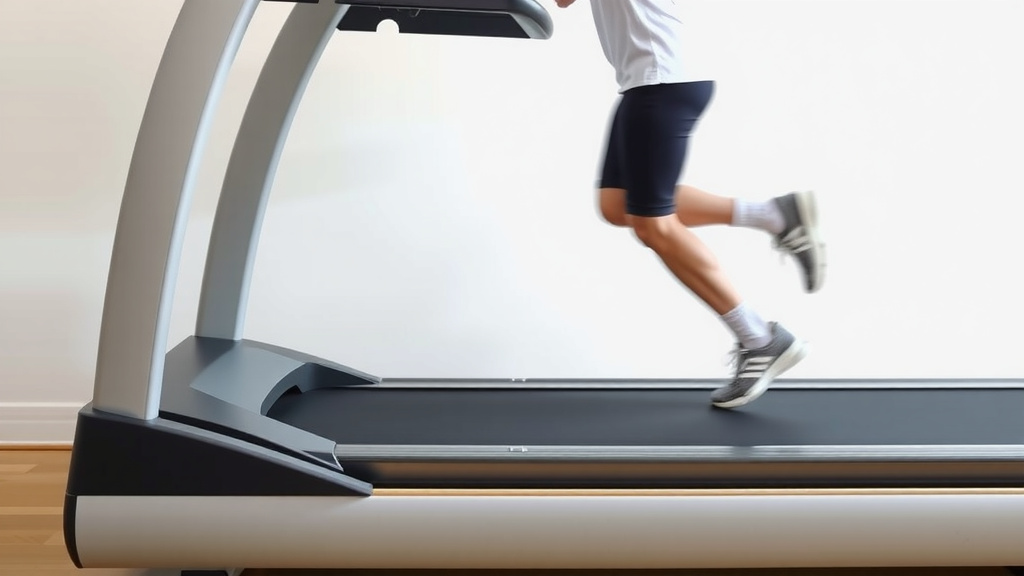
Treadmill Mile Pace: What’s Your Ideal Running Speed
The ideal treadmill mile time depends entirely on your fitness level and your goals. For an average person, a mile in 8 to 10 minutes is a good starting point. Elite runners might aim for under 5 minutes, while beginners might take 12 minutes or more. It’s more about what’s challenging yet sustainable for you.
Understanding your current pace helps you set realistic targets. Many find that a pace of 5.0 to 6.0 mph on the treadmill feels like a brisk walk or light jog. Pushing to 7.0 to 8.0 mph often enters the running zone for many. Track your progress to see how your speed improves over time.
- Average treadmill mile: 8-10 minutes.
- Elite runners aim for under 5 minutes.
- Beginners might aim for 12+ minutes.
- Pace depends on your fitness and goals.
- Track your speed to see improvements.
Ready to figure out your perfect treadmill mile pace? Let’s break down what influences your speed and how to find your sweet spot.
“`htmlFinding Your Ideal Treadmill Mile Pace
So, you want to know how fast you should be running a mile on the treadmill? The short answer is: it depends on you! There’s no single magical speed that works for everyone. Think of it like finding your favorite song – it’s personal. Your perfect pace is one that challenges your body without leaving you completely wiped out.
Understanding Treadmill Speed vs. Real-World Running
It’s interesting how treadmill speeds can feel a bit different from running outdoors. Many runners find that a treadmill’s steady surface and lack of wind resistance can make it feel easier. This means a pace that feels tough on the treadmill might be a warm-up jog outside. Conversely, some people find the confined space and the belt’s motion take some getting used to.
Treadmill Speed Settings Explained
Treadmills typically display speed in miles per hour (mph). You’ll usually see the speed adjust as you change the incline, but for this discussion, we’re focusing on the flat, zero-incline setting. This is where you’ll get the most consistent benchmark.
What Do Those Numbers Mean?
Let’s break down what these speeds might feel like for most people:
- 3.0 – 4.0 mph: This is generally a brisk walk. You can hold a conversation easily.
- 4.0 – 5.0 mph: This often feels like a light jog or a power walk. You might be slightly out of breath but can still talk in short sentences.
- 5.0 – 6.0 mph: For many, this range is a comfortable jogging pace. Talking becomes more difficult, requiring you to pause between words.
- 6.0 – 7.0 mph: This starts to feel like a faster run. Holding a conversation is tough.
- 7.0 – 8.0 mph: This is a solid running pace for most recreational runners. You’re definitely breathing hard here.
- 8.0+ mph: This speed is moving into faster territory, often considered a tempo run or even race pace for many.
Factors Influencing Your Mile Time
Your personal mile time isn’t just about willpower. Several factors play a role in determining how fast you can go. Let’s look at what influences your speed.
Your Current Fitness Level
This is the biggest driver. If you’re new to running, your pace will naturally be slower. Someone who runs regularly will have a quicker mile time. It’s not about being “good” or “bad”; it’s just about where you’re starting from. Aiming for a pace that makes you work, but isn’t impossible, is key.
Your Age and Health
As we get older, our bodies change. Recovery might take a bit longer, and our top speeds might decrease. Also, if you have any underlying health conditions, it’s always wise to consult with your doctor before pushing your limits. They can offer personalized guidance. The CDC recommends adults get at least 150 minutes of moderate-intensity aerobic activity per week, and running is a great way to meet that goal safely.
Your Goals
What are you hoping to achieve by running a mile on the treadmill? Are you training for a 5K? Trying to improve your cardiovascular health? Or maybe just looking to burn some calories? Your goals will dictate the intensity and speed you should aim for. For general fitness, a sustained, moderate pace is excellent. If you’re training for speed, you’ll need to incorporate faster intervals.
Treadmill Accuracy
It’s worth noting that not all treadmills are created equal. Some studies suggest that treadmill speed displays can vary by up to 10% from the actual speed (American College of Sports Medicine). So, if your treadmill says 6 mph, you might actually be running a bit faster or slower. Don’t stress too much about this, but keep it in mind.
How to Find Your Personal Best Treadmill Mile Pace
Ready to get a sense of your own pace? Here’s a simple way to find your current baseline and start setting goals.
The “Test Mile” Approach
This is your best bet for a starting point. Set the treadmill to a flat incline and a pace you think is a light jog. Start your watch or the treadmill’s built-in timer. Run or jog for one mile as steadily as you can. Record your time.
Don’t go all-out on your first try. The goal is to find a sustainable pace that you can maintain for the full mile. This initial time is your benchmark. From there, you can adjust. If it felt too easy, try increasing the speed slightly next time. If it felt too hard, ease up a bit.
Using a Treadmill Pace Calculator (and Why It’s Helpful)
If you’re not sure where to start with speeds, online pace calculators can be useful. You input your desired mile time (e.g., 8 minutes) and it tells you the required mph. For an 8-minute mile, that’s 7.5 mph (60 minutes / 8 minutes = 7.5 mph). A 10-minute mile is 6.0 mph. This gives you concrete numbers to plug into the treadmill.
Listen to Your Body: The Talk Test
A super simple way to gauge your effort is the “talk test.” As mentioned earlier:
- Easy Pace: You can sing or hold a full conversation.
- Moderate Pace: You can talk in short sentences but not sing. This is often the sweet spot for sustained cardio.
- Hard Pace: You can only say a few words at a time. This is great for speed intervals.
For a mile, you’re likely aiming for the moderate to hard pace, depending on your fitness. If you can’t speak more than a word or two, you’re probably pushing hard!
Structuring Your Treadmill Workouts for Improvement
Once you know your baseline, how do you improve? It’s all about smart training. Consistent effort is more important than one super-fast mile.
Interval Training on the Treadmill
This is a fantastic way to build speed and endurance. You alternate between high-intensity bursts and recovery periods. For example, you could:
- Warm-up for 5 minutes at 4.0 mph.
- Run at 7.0 mph for 1 minute.
- Jog at 5.0 mph for 2 minutes.
- Repeat the 7.0/5.0 cycle 4-5 times.
- Cool down for 5 minutes at 3.5 mph.
This type of workout helps your body adapt to higher speeds and recover more efficiently. Many fitness professionals suggest incorporating interval training to boost aerobic capacity (National Institutes of Health). Learn how to do interval training on a treadmill to boost your speed and endurance.
Tempo Runs and Steady State
Tempo runs are about maintaining a challenging but sustainable pace for a longer duration, like 20-30 minutes. This pace is usually one where you can speak in short phrases. Steady-state running is about maintaining a consistent, moderate pace for your entire workout, which is excellent for building your aerobic base.
Gradual Progression is Key
Don’t try to shave minutes off your mile time overnight. Small, consistent increases in speed or duration are the most effective and safest way to improve. Aim to increase your speed by just 0.1 or 0.2 mph each week, or add an extra minute to your faster intervals. Your body will thank you.
A Quick Checklist for Your Next Treadmill Session
Here’s a quick rundown to keep in mind for your next run:
- Know your current mile time.
- Set a realistic goal pace.
- Warm up properly before you start.
- Listen to your body – use the talk test.
- Consider incorporating intervals.
- Cool down and stretch afterward.
Finding your perfect treadmill mile pace is a journey, not a destination. Be patient with yourself, celebrate your progress, and enjoy the process of getting stronger and faster!
“`Conclusion
Finding your ideal treadmill mile pace is all about understanding your body and setting personal goals. Remember, the treadmill speed is a guide, not a strict rule. What matters most is finding a pace that challenges you appropriately, whether you’re aiming for fitness, speed, or just a good sweat session. Don’t get discouraged if your time isn’t what you initially hoped for. Focus on consistency and gradual improvements.
Your next step? Lace up, hop on the treadmill, and perform your own “test mile.” Use that as your baseline, and then apply the tips for structured workouts we’ve discussed to see your speed and endurance grow over time. Happy running!
Frequently Asked Questions
How can I tell if my treadmill speed is accurate?
You can do a simple test by using a stopwatch and measuring out 100 feet (or another known distance) on the treadmill belt. Set the treadmill to a specific speed, then count how long it takes you to cover that distance. Online calculators can help you convert that time into an estimated true speed. However, for most recreational runners, slight inaccuracies are unlikely to significantly impact progress.
Should I always run at the same speed for my mile?
Not necessarily! While establishing a baseline pace for your mile is helpful, varying your speed through interval training can lead to better results. Alternating between high-intensity bursts and recovery periods is a proven way to build both speed and cardiovascular endurance more effectively than just running at one steady pace.
Is running a mile on a treadmill the same as running outside?
Generally, no. Treadmills offer a consistent, flat surface with no wind resistance, which often makes them feel slightly easier than running outdoors at the same speed. Some people also find the moving belt and confined space feel different. You might need to adjust your outdoor pace to match your treadmill effort.
What if I can’t even jog a mile yet?
That’s perfectly okay! Start with what feels manageable, which might be a brisk walk or a walk-jog interval. Focus on completing the mile, even if it takes longer than 12 minutes. Gradually increase your walking or jogging intervals, or slightly increase your pace, as you get fitter. Consistency is more important than speed when you’re starting out.
How often should I run a mile on the treadmill to see improvement?
Aim for consistency rather than frequency. Incorporating a mile run or speed-focused workout into your routine 1-3 times per week is usually sufficient for most people looking to improve. Ensure you also include rest days and other forms of exercise to prevent overtraining and promote recovery.