Treadmill Speed Guide: How Fast Should You Run
The right treadmill speed for you depends on your fitness goals and current condition, not a single universal number. For general cardio, many experts recommend finding a pace where you can talk but not sing, often between 3.0 and 5.0 mph. If you’re aiming for a calorie burn, a slightly faster pace might be better. Conversely, if you’re recovering or building endurance, a slower, steady speed is key.
Finding your sweet spot means listening to your body and adjusting based on how you feel. What feels like a challenging but manageable effort for one person could be too much or too little for another. We’ve found that the best speed is one you can maintain consistently for your desired workout duration, avoiding strain while still providing a good cardiovascular challenge.
- Your ideal treadmill speed isn’t one-size-fits-all.
- Consider your fitness level and workout goals.
- A good rule of thumb: talk, but don’t sing.
- Listen to your body; adjust as needed.
- Consistency is more important than a specific number.
Let’s break down how to find that perfect speed for your treadmill workouts.
“`htmlFinding Your Perfect Treadmill Pace
So, you’re ready to hit the treadmill and aren’t sure where to start with speed? It’s totally understandable. There isn’t a magic number that works for everyone. Your ideal speed is a personal journey. We found that it really depends on your current fitness level and what you want to achieve with your workout.
Understanding the Variables: Your Fitness Level
Let’s be honest, someone who runs marathons will have a different pace than someone just starting out. Your body adapts over time. What feels challenging today might feel easy next month. We encourage you to be patient with yourself. It’s about progress, not perfection. Many experts suggest starting at a speed where you can comfortably hold a conversation (Centers for Disease Control and Prevention).
What Are Your Workout Goals?
Your speed should also align with what you’re trying to accomplish. Are you aiming to:
- Boost your cardiovascular health?
- Burn more calories?
- Train for a specific race?
- Recover from a tough workout?
- Simply get your steps in?
Each of these goals might call for a different pace. We’ll explore how each goal influences your ideal speed.
Speed Guidelines Based on Your Goals
For General Cardiovascular Health and Fitness
If your main aim is to keep your heart healthy and improve your overall fitness, you want a pace that elevates your heart rate. It should feel like a solid effort, but not leave you gasping for air. We found that many fitness professionals recommend the “talk test.” You should be able to speak in short sentences but not comfortably sing a song. This often falls between 3.0 and 5.0 mph for many people.
The Talk Test in Action
Imagine chatting with a friend. You can exchange ideas, but you might pause to take a breath between sentences. That’s the sweet spot for general cardio. If you’re huffing and puffing, slow it down. If you’re humming along easily, pick up the pace a bit. This keeps your heart working without overstressing it (Mayo Clinic).
Maximizing Calorie Burn
Want to really torch calories? You’ll likely need to increase your intensity. This means running at a pace that makes conversation much more difficult, if not impossible. We found that higher speeds and inclines significantly boost calorie expenditure. Think of it like pushing a heavier object – it takes more energy.
Speed vs. Incline for Calorie Burn
You have two main tools: speed and incline. Often, a moderate speed with a higher incline can be just as effective, or even more so, than a very fast, flat run. It also puts less impact on your joints. Research suggests that incorporating intervals of higher intensity, whether through speed or incline, can lead to a greater calorie burn (National Institutes of Health).
Building Endurance and Recovery
If you’re training for a long event or need to recover, your speed will be much lower. The goal here is to keep moving without causing fatigue. We found that a slow, steady pace is key. You should feel like you could maintain this speed for a very long time. This helps build your aerobic base and aids muscle recovery.
The Importance of Slow and Steady
Don’t underestimate the power of a slow jog or brisk walk. This type of workout improves your body’s ability to use oxygen efficiently. It’s also a great way to get active without putting undue stress on your body after a hard workout or if you’re new to exercise.
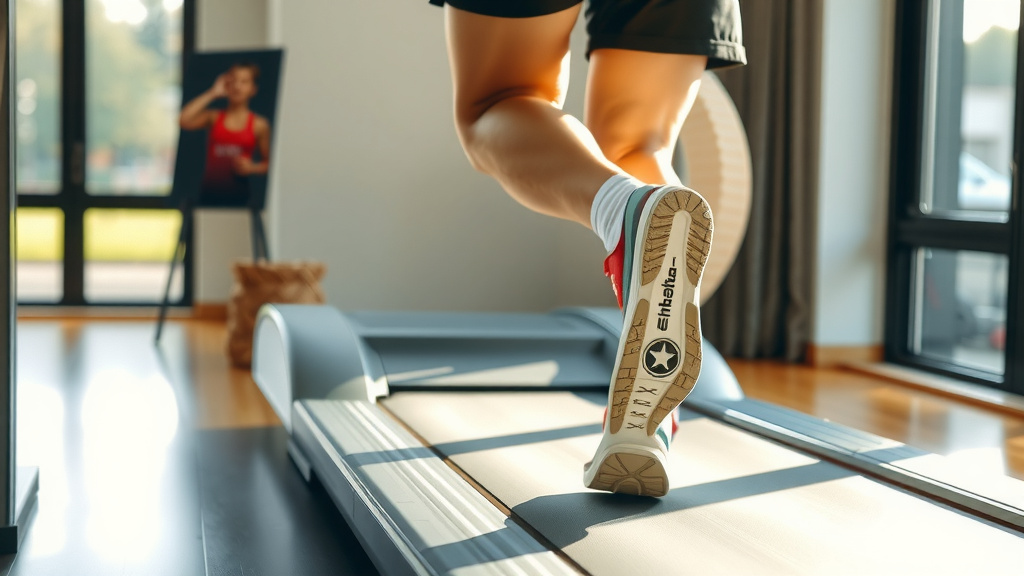
Using Speed and Incline Together
The treadmill offers a unique advantage: you can control both speed and incline. This combination is incredibly versatile. You can simulate hill training or simply make your steady-state cardio more challenging. We found that many users benefit from varying both speed and incline throughout a single workout.
Interval Training on the Treadmill
Interval training involves alternating between periods of high intensity and recovery. For example, you might run at a fast pace for 1 minute, then jog or walk for 2 minutes. Or, you could run at a steady pace and increase the incline for 3 minutes, then return to a lower incline. This method is fantastic for improving both speed and endurance.
A Sample Interval Workout Structure
Here’s a simple way to think about structuring an interval workout. You can adjust the times and intensity to suit your level:
| Phase | Activity | Duration | Intensity |
|---|---|---|---|
| Warm-up | Brsk walk/light jog | 5 minutes | Low effort (can talk easily) |
| Work Interval 1 | Run/faster jog | 1 minute | Challenging (hard to talk) |
| Recovery Interval 1 | Walk/slow jog | 2 minutes | Easy effort (can talk) |
| Work Interval 2 | Run/faster jog | 1 minute | Challenging (hard to talk) |
| Recovery Interval 2 | Walk/slow jog | 2 minutes | Easy effort (can talk) |
| Repeat | Repeat steps 3-6 as desired, perhaps 4-6 times | ||
| Cool-down | Walk | 5 minutes | Very light effort |
Listen to Your Body: The Ultimate Guide
No matter what speeds or inclines you see recommended, the most important factor is how you feel. We’ve found that “listening to your body” is more than just a catchy phrase; it’s essential for safe and effective training. If you feel sharp pain, dizziness, or extreme fatigue, it’s time to stop or slow down.
When to Adjust Your Speed
Your speed needs can change day to day. Factors like sleep, nutrition, stress, and even the weather can impact your energy levels. Be flexible! Some days you might feel great and can push a little harder. Other days, a slower, gentler pace is exactly what your body needs.
Here’s a quick checklist to help you find your pace:
- Start with a speed where you can talk comfortably.
- Gradually increase speed or incline if your goal is calorie burn.
- Slow down for endurance building or recovery.
- Use the talk test to gauge your intensity.
- Don’t be afraid to adjust your speed mid-workout.
- Pay attention to how your body feels.
Finding your optimal treadmill speed is an ongoing process. By understanding your goals and listening to your body, you’ll discover paces that make your workouts effective and enjoyable.
“`Conclusion
Finding your perfect treadmill speed is a journey, not a destination. Remember that your ideal pace isn’t a fixed number, but rather a flexible range that shifts with your fitness level and daily energy. We found that using the ‘talk test’ is a fantastic way to gauge your effort for general cardio, keeping you in a challenging yet sustainable zone. Don’t be afraid to experiment with speed and incline, especially with interval training, to maximize calorie burn or build endurance. The most important tool you have is your own body; listen to it, be patient, and adjust as needed. Your next workout is a great opportunity to put these tips into practice and find a speed that feels right for you today.
Frequently Asked Questions
What is the average treadmill speed for beginners?
For beginners, a good starting point is usually between 2.5 to 3.5 mph. This speed allows for a brisk walk and is a comfortable pace to get accustomed to the treadmill. You should be able to easily hold a conversation at this speed.
Should I run faster on the treadmill than I do outside?
Not necessarily. The treadmill belt moves beneath you, which can make it feel easier than running outdoors. Some people find they can run slightly faster on a treadmill, while others prefer to maintain their outdoor pace. Focus on your perceived exertion rather than comparing speeds directly.
How can I tell if my treadmill speed is too fast?
If you find yourself gasping for air, unable to speak even a few words, or experiencing dizziness, your speed is likely too fast. Sharp pains or an overwhelming feeling of fatigue are also signs to slow down immediately. Your body will tell you when it’s too much.
Can I use incline to make my workout harder instead of just increasing speed?
Absolutely! Using incline is a fantastic way to increase workout intensity without solely relying on speed. We found that adding incline can significantly boost calorie burn and build leg strength, often with less impact on your joints than very high speeds.
How often should I change my treadmill speed during a workout?
For general cardio, maintaining a steady pace is fine. However, incorporating speed changes, such as in interval training, can be very effective for improving fitness and burning more calories. Varying your pace every few minutes, or alternating between high-intensity bursts and recovery periods, is a great strategy.