Treadmill Walking Speed for Weight Loss: What’s Ideal
To lose weight on a treadmill, aim for a brisk walking pace of about 3 to 4 miles per hour. This speed keeps your heart rate elevated enough to burn calories effectively. You’ll want to maintain this pace for at least 30 to 60 minutes per session, several times a week. Finding that sweet spot is key to seeing results.
It’s not just about speed, though. The incline on your treadmill can also make a big difference. Increasing the incline burns more calories and works different muscles. We found that combining a steady pace with moderate inclines can significantly boost your weight loss efforts. Consistency is your best friend here.
- Your target treadmill speed should be 3-4 mph for weight loss.
- Aim for 30-60 minutes of walking per session.
- Incorporate incline to increase calorie burn.
- Consistency is more important than intensity alone.
- Listen to your body and adjust as needed.
Ready to get moving? Below, we’ll break down exactly how to find your perfect treadmill walking speed and routine for weight loss.
You’ve got the desire to shed a few pounds, and you’re eyeing the treadmill. That’s fantastic! But how fast should you really be walking to see those numbers on the scale start to drop? It’s a question many people ask, and the good news is, it’s not rocket science.
Finding Your Weight Loss Walking Pace on the Treadmill
The ideal treadmill walking speed for weight loss is typically a brisk pace. We found that most adults can achieve this between 3 and 4 miles per hour (mph).
This speed allows you to maintain an elevated heart rate. That means you’re burning more calories than a leisurely stroll. Think of it as a comfortable but determined march forward.
What’s “Brisk” Anyway?
So, what does a brisk pace feel like? You should be able to talk, but not sing. Your breathing will be noticeably heavier. You’re working, but you’re not gasping for air. Many fitness experts suggest aiming for 60-70% of your maximum heart rate (Mayo Clinic).
If you’re new to this, start at the lower end, around 3 mph. Pay attention to how your body feels. Can you hold a conversation without getting winded? If so, you’re probably in the right zone.
Why This Speed Works for Fat Burn
Walking at 3-4 mph puts you in a great spot for fat oxidation. Your body needs energy to keep moving. At this intensity, it starts tapping into your stored fat reserves more effectively. It’s like giving your metabolism a gentle but persistent nudge.
Research consistently shows that moderate-intensity exercise is effective for weight loss. It’s sustainable over longer periods. This makes it a winning strategy for consistent results. You’re not just burning calories in the moment; you’re encouraging your body to burn fat.
Beyond Speed: The Power of Incline
While speed is important, don’t forget about the incline. Many people overlook this feature, but it’s a real calorie burner. Think of walking uphill versus on a flat surface.
Adding incline makes your workout more challenging without necessarily increasing your speed. This means more work for your muscles, especially your glutes and hamstrings. It can also make your walk feel more engaging and less monotonous.
How Much Incline Should You Use?
You don’t need to go full mountain climber mode right away. Start with a small incline, perhaps 1-2%. See how that feels for a few minutes. Then, you can gradually increase it.
Many fitness professionals suggest an incline between 3% and 5% for a good balance of challenge and comfort. This range is often enough to significantly boost calorie expenditure. It also helps you work different leg muscles more effectively. You’ll feel it!
Incorporating Incline into Your Routine
You can use incline in a few ways. You might set it and maintain it for your entire walk. This provides a consistent challenge. Or, you could try interval training, increasing the incline for a few minutes and then returning to flat.
A common approach is the “hill climb” workout. You gradually increase the incline over several minutes, reach a peak, and then gradually decrease it. This variety can keep your body guessing and prevent plateaus. It’s like a mini-adventure on your treadmill.
How Long Should You Walk for Weight Loss?
Speed and incline are part of the equation, but duration matters too. For effective weight loss, aim for at least 30 to 60 minutes per session. Consistency is key here.
Many health organizations recommend at least 150 minutes of moderate-intensity aerobic activity per week. Breaking that down, 30 minutes five days a week fits the bill perfectly. This target is achievable for most people.
Finding Your Sweet Spot for Duration
If you’re just starting, 30 minutes might feel like a lot. That’s okay! Begin with what you can manage, even if it’s 15 or 20 minutes. The goal is to build up to that 30-minute mark and beyond.
As you get fitter, you’ll notice that 30 minutes feels easier. You can then increase the duration. Consider adding extra time to your existing sessions or adding an extra day of walking each week. Listen to your body; don’t push too hard too soon.
Consistency Trumps Intensity (Sometimes)
It’s better to walk for 30 minutes at a brisk pace consistently three times a week than to do one killer 90-minute session and then nothing for two weeks. Your body thrives on regularity. Regular movement helps regulate your metabolism.
Think of it like watering a plant. A little bit each day helps it grow strong. Sporadic watering won’t do much. This principle applies to your weight loss journey too. Make treadmill walking a non-negotiable part of your week.
Creating Your Treadmill Weight Loss Plan
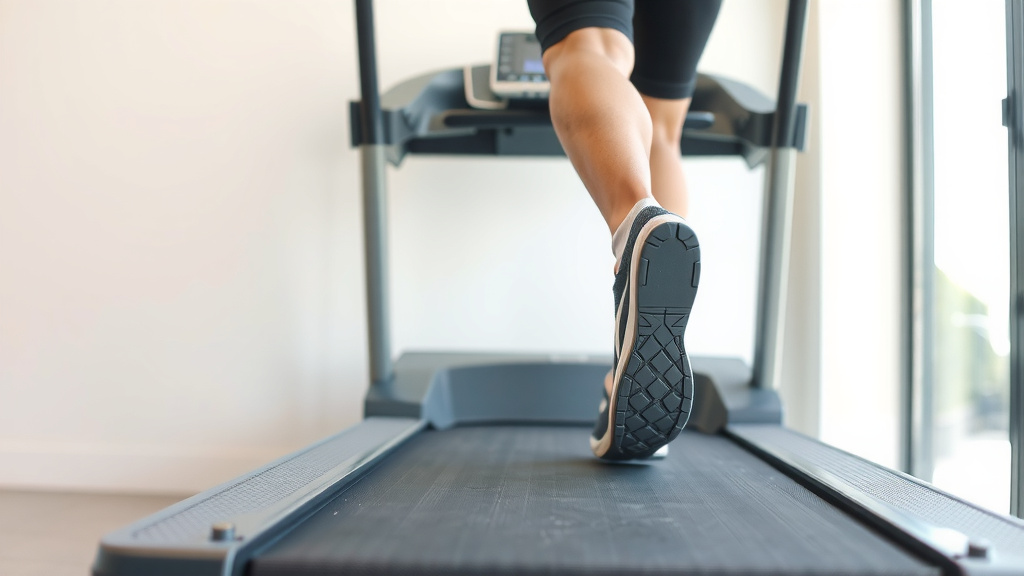
Putting it all together means creating a routine that works for you. Here’s a simple framework to get you started:
- Warm-up: Start with 5 minutes of slow walking (2-2.5 mph) with no incline.
- Workout: Increase speed to 3-4 mph and add a 1-3% incline for 20-40 minutes.
- Intervals (Optional): For added challenge, increase the incline to 4-6% for 1-2 minutes every 5-10 minutes.
- Cool-down: End with 5 minutes of slow walking (2-2.5 mph) with no incline.
Remember to adjust the speed and incline based on your personal fitness level. What feels challenging for one person might be easy for another. You’re the expert on your own body!
Tracking Your Progress
Don’t forget to track your workouts. Many treadmills have built-in consoles that show your speed, distance, time, and calories burned. You can also use a fitness tracker or a smartphone app.
Seeing your progress can be incredibly motivating. Perhaps you can walk at a faster pace for longer, or you can handle a higher incline. Celebrate these small victories!
Listen to Your Body and Stay Hydrated
This is crucial. If you feel pain, stop. If you’re excessively fatigued, take a rest day. Weight loss is a marathon, not a sprint. Pushing too hard too fast can lead to injury or burnout, derailing your efforts.
Also, remember to drink plenty of water before, during, and after your walks. Staying hydrated is essential for your overall health and helps your body perform optimally. It’s the simple, often-overlooked ingredient for success.
Conclusion
You’ve learned that a brisk walking pace of 3 to 4 mph on the treadmill is your sweet spot for weight loss. Don’t underestimate the power of incline to boost calorie burn and challenge your muscles. Aim for 30 to 60 minutes per session, several times a week, and remember that consistency is your most powerful tool. Listen to your body, stay hydrated, and track your progress to stay motivated. Now, lace up your shoes and take that first step toward your weight loss goals!
Frequently Asked Questions
How can I tell if my walking speed is fast enough for weight loss?
A good indicator is your breathing and ability to talk. You should be breathing noticeably heavier, and able to speak in short sentences, but not comfortable enough to sing. This “talk test” helps you stay in the moderate-intensity zone for effective calorie burn.
Can I lose weight if I only walk for 20 minutes a day?
While longer durations are recommended, even 20 minutes of brisk walking is beneficial. It’s better to be consistent with shorter walks than to skip them altogether. As you get fitter, you can gradually increase the duration to reach the 30-60 minute goal.
What if 3-4 mph feels too fast or too slow for me?
It’s okay to adjust! If 3 mph feels too challenging, start slower and build up. If you’re already fit and 4 mph feels easy, you might need to increase the incline or speed slightly to ensure you’re in an effective calorie-burning zone.
How does walking on an incline help with weight loss?
Adding incline makes your workout more demanding without increasing speed. This engages more muscles, particularly in your legs and glutes, and forces your body to work harder, thus burning more calories in the same amount of time.
Should I focus more on speed or incline for weight loss?
Both speed and incline are effective, but they work differently. A brisk speed (3-4 mph) keeps your heart rate up for sustained calorie burn, while incline increases the intensity and muscle engagement. Finding a balance that feels challenging yet sustainable is ideal for your weight loss journey.