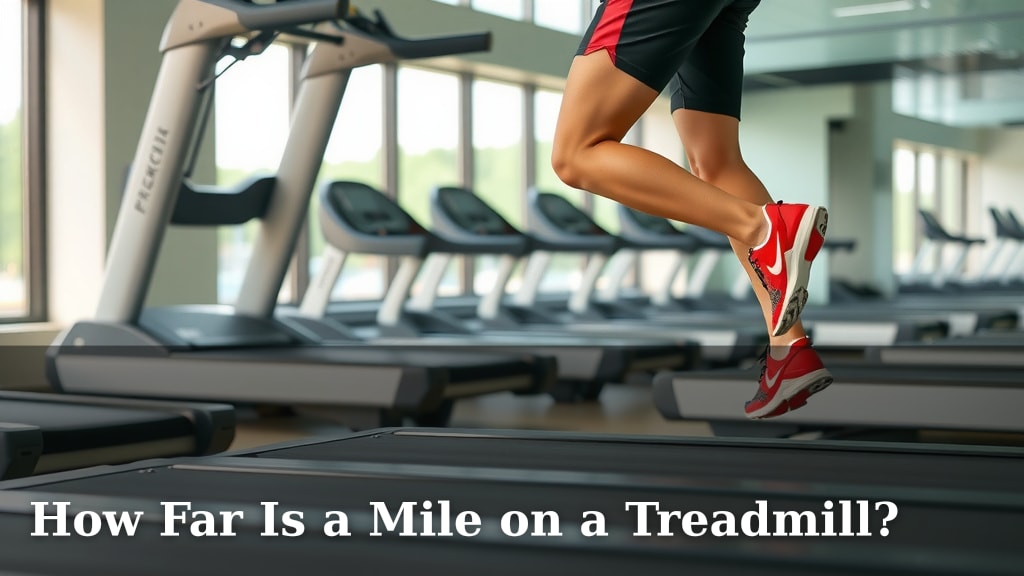
How Far Is a Mile on a Treadmill?
A mile on a treadmill is exactly the same distance as a mile outdoors. Your treadmill’s display is calibrated to measure one full mile, which equals 5,280 feet. So, whether you’re running on the belt or the road, a mile is always a mile!
Many people wonder if treadmill miles feel shorter or longer than outdoor miles. This perception often comes down to effort and pace. Factors like belt speed, incline, and your own energy levels can make it feel different. But the distance itself remains consistent, a reliable benchmark for your workouts.
- A treadmill mile is equal to a real-world mile.
- It always measures 5,280 feet.
- Your workout effort might feel different.
- Treadmills are calibrated for accuracy.
Let’s break down why treadmill miles might feel the way they do, and how you can best track your progress.
“`htmlUnderstanding Your Treadmill Mile
You might be wondering about the actual distance covered when you hit that “mile” mark on your treadmill. Well, you can rest assured: a mile on a treadmill is precisely the same distance as a mile outdoors. It always measures 5,280 feet. Your treadmill is calibrated to ensure that when its display shows “1.00 mile,” you’ve truly traveled that specific distance.
How Treadmills Measure Distance
Treadmills use a few clever methods to keep track of your journey. The most common system involves a sensor that monitors the rotation of the belt. Each rotation is a known distance, and the machine counts these rotations to calculate how far you’ve gone. Think of it like a car’s odometer, but for your feet!
The Role of Calibration
Calibration is key to accuracy. Most modern treadmills are factory-calibrated. This means they are set up to be as precise as possible right out of the box. However, over time and with heavy use, this calibration might drift slightly. That’s why sometimes you might notice a small discrepancy between your treadmill’s reading and a GPS-tracked outdoor run.
For most home users, the factory calibration is more than sufficient. The goal is consistency in your workouts. If your treadmill says you ran a mile, it’s consistently measuring that distance for you, session after session.
Why Does It Sometimes Feel Different?
You’re not imagining it if a treadmill mile feels different from an outdoor mile. Several factors contribute to this sensation, and they primarily relate to the effort you put in and the environment you’re in, rather than the distance itself.
The Moving Belt Factor
One of the biggest differences is the moving belt. On a treadmill, the belt moves beneath you. This means you don’t have to push off the ground as forcefully with each step. Your stride can feel a bit more like you’re floating. This reduced effort can sometimes make a treadmill mile feel easier or faster than an outdoor mile where you propel yourself forward.
Incline and Resistance
Treadmills offer the ability to adjust the incline. This feature allows you to simulate hills. When you increase the incline, you’re essentially making the mile more challenging. This increased difficulty, even though the distance is the same, can make it feel like a longer or harder effort than a flat outdoor mile.
Similarly, some treadmills have resistance settings, though this is less common than incline. If you’re using resistance, it will definitely impact your perceived effort and how the mile feels.
Environment and Pace
Outdoor running involves navigating terrain, wind resistance, and external conditions. You might be running up hills, downhills, or on uneven surfaces. A treadmill offers a controlled environment. You set the pace and the incline. This control can make your pace feel more consistent, which some runners prefer. However, the lack of external variation might make it feel less engaging for others.
Ensuring Accuracy on Your Treadmill
While treadmills are generally accurate, it’s good to know how to ensure yours is giving you reliable numbers. Most manufacturers recommend periodic recalibration, especially if the machine is used frequently.
Checking Your Treadmill’s Accuracy
You can perform a simple test to check your treadmill’s accuracy. Here’s a method many experts suggest:
- Place a well-marked object, like a piece of tape or a sticker, on the treadmill belt.
- Set the treadmill to a comfortable walking speed (e.g., 3 mph).
- Using a stopwatch, time how long it takes for the object to travel a set distance on the belt, such as 100 feet. You can measure this distance with a tape measure.
- There are online calculators that can help you determine the expected time based on the speed and distance. If your timed result is significantly different, your treadmill might need recalibration.
When to Consider Recalibration
If you’ve owned your treadmill for a while and use it regularly, or if you notice a consistent and significant difference between your treadmill’s distance and GPS tracking over longer runs, it might be time for recalibration. Check your owner’s manual for specific instructions. Some treadmills have a recalibration mode accessible through the console.
Treadmill vs. Outdoor Mile: A Comparison Table
To help clarify the differences in feeling, let’s look at a quick comparison:
| Feature | Treadmill Mile | Outdoor Mile |
| Distance | 5,280 feet (Consistent) | 5,280 feet (Consistent) |
| Effort (Base) | Slightly less push-off required | Full push-off required |
| Environment | Controlled, predictable | Variable, external factors (wind, terrain) |
| Incline/Elevation | Manually controlled | Natural terrain |
| Perceived Exertion | Can feel easier due to belt assist; harder with incline | Varies greatly with terrain and conditions |
Making the Most of Your Treadmill Miles
Regardless of how it feels, a treadmill mile is a solid measure of distance. The key is to use it effectively for your fitness goals. Understanding these differences helps you set realistic expectations and optimize your training.
Consistency is Key
The biggest advantage of a treadmill is consistency. You can precisely control speed, incline, and duration. This makes it an excellent tool for tracking progress and hitting specific training targets. For example, if your goal is to run a 10-minute mile, your treadmill can help you train at that exact pace.
Using Incline Strategically
Don’t shy away from the incline feature! Many experts recommend using incline to better mimic outdoor running conditions and increase calorie burn (National Institutes of Health). A 1% incline on a treadmill is often cited as a good starting point to simulate outdoor resistance, but this can vary by machine and user.
Listen to Your Body
Ultimately, how a mile feels is subjective. Pay attention to your heart rate, perceived exertion, and how your body feels during and after your workout. If a treadmill mile feels too easy, increase the incline or speed. If it feels too hard, adjust accordingly. Your treadmill is a tool; use it to challenge yourself appropriately.
Your Treadmill Workout Checklist
To ensure you’re getting the most out of every mile:
- Check your treadmill’s display for distance and pace.
- Adjust the incline to mimic outdoor terrain or increase challenge.
- Wear appropriate footwear for good support.
- Stay hydrated before, during, and after your workout.
- Listen to your body – adjust speed and incline as needed.
- Track your workouts to monitor progress over time.
By understanding how your treadmill measures distance and how different factors affect your workout, you can confidently track your progress and enjoy every mile, whether it’s on the belt or the open road.
“`Conclusion
You’ve learned that a mile on your treadmill is precisely the same distance as a mile outdoors – a solid 5,280 feet. While the distance remains constant, factors like the moving belt and incline can change how that mile feels. The treadmill offers a controlled environment, perfect for consistent training and tracking your progress.
Don’t let the difference in sensation discourage you. Use the treadmill’s features, like incline, to challenge yourself and better mimic outdoor conditions. Keep listening to your body, stay hydrated, and track your efforts. Your next mile, no matter where you run it, is a step toward your fitness goals!
Frequently Asked Questions
Does my treadmill’s mileage count the same as outdoor running for my fitness goals?
Yes, absolutely. A mile is a mile, regardless of whether you’re running on a treadmill or outside. Your treadmill’s calibration ensures it measures 5,280 feet accurately, making it a reliable tool for tracking distance for any fitness goal.
Why does a treadmill mile feel easier than an outdoor mile?
This is a common feeling because the moving belt does some of the work for you, reducing the push-off needed with each step. Additionally, the controlled environment lacks external factors like wind resistance or varied terrain you’d encounter outdoors, which can make the effort feel less demanding.
How can I make my treadmill miles feel more like outdoor running?
You can increase the incline on your treadmill! Many experts suggest using a 1% incline to better simulate the resistance you’d experience outdoors. Experimenting with different inclines can also help you prepare for varied outdoor courses.
Should I worry if my treadmill distance doesn’t match my GPS watch?
Slight discrepancies are normal. GPS accuracy can vary, especially in areas with tall buildings or poor satellite signal. Your treadmill is calibrated to measure belt movement, while GPS tracks your movement through satellites. For consistency, focus on your treadmill’s readings for treadmill workouts.
How often should I check or recalibrate my treadmill’s accuracy?
For most home users, the factory calibration is very reliable. However, if you use your treadmill very frequently or notice consistently odd distance readings, consult your owner’s manual. Some recommend a simple check periodically, but professional recalibration is rarely needed for typical home use.