How Far Is 10000 Steps on a Treadmill?
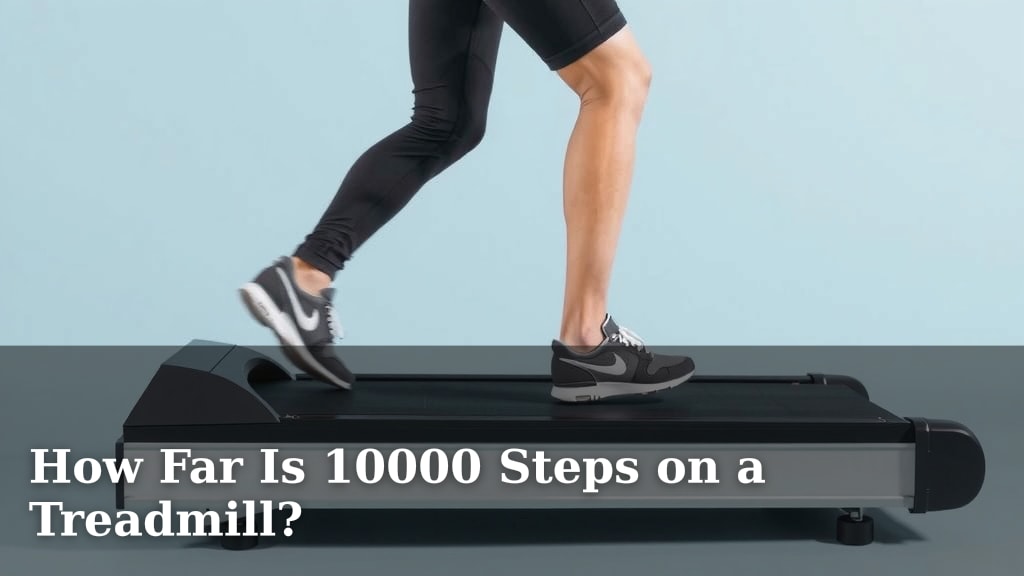
Walking 10,000 steps on a treadmill typically covers a distance of 4 to 5 miles. This distance can vary based on your stride length and treadmill incline. Many find 10,000 steps to be a **great fitness goal** for daily activity.
So, if you’re wondering “How far is 10,000 steps on a treadmill?”, the answer is usually around 4-5 miles. This is a common benchmark for achieving a good workout. It’s a **fantastic way to boost your health** without leaving your home.
- 10,000 steps on a treadmill is about 4-5 miles.
- Your stride length and incline affect the exact distance.
- It’s a widely recommended daily fitness target.
- Consider it a **good benchmark for cardio**.
- It helps track your general daily movement.
Let’s break down how treadmill step counts can relate to distance and what affects it.
Understanding Your Treadmill’s 10,000 Steps Distance
So, you’re aiming for 10,000 steps on your treadmill and wondering how far that actually is? It’s a great fitness goal! Generally, you can expect to cover about 4 to 5 miles. This is a fantastic benchmark for daily activity and a solid cardio workout. But, like most things in fitness, there are a few factors that can change that number.
The Role of Stride Length
Your stride length is a big player here. Think of it like your personal pace-setting superpower. If you have a longer stride, you’ll naturally cover more ground with each step. Someone with a shorter stride will need more steps to reach the same distance. This is why 10,000 steps can feel like a different distance for everyone.
We found that a typical adult stride length is around 2.5 feet. If you do some quick math, 10,000 steps multiplied by 2.5 feet per step equals 25,000 feet. Now, convert that to miles: 25,000 feet divided by 5,280 feet per mile gives you roughly 4.73 miles. See? It hovers right around that 4 to 5-mile mark.
How Treadmill Incline Affects Your Walk
Have you ever noticed how much harder it is to walk uphill? That’s the incline working its magic. When you increase the incline on your treadmill, you’re not just making it tougher; you’re also subtly changing the *effective* distance your steps cover for the purpose of reaching a distance goal. While your step count remains the same, the workout intensity ramps up significantly.
Many experts point out that walking on an incline burns more calories and engages different muscles, like your glutes and hamstrings, more effectively (Harvard Health Publishing). So, even if the physical distance doesn’t drastically change on the treadmill display, the effort and benefits certainly do. You might feel like you’ve walked further due to the increased exertion.
Calculating Your Personal 10,000 Steps Mileage
Since we know stride length and incline can play a role, how can you get a more precise idea for yourself? It’s simpler than you might think!
Measuring Your Stride Length
You don’t need a fancy measuring tape. You can easily figure out your stride length right on your treadmill. Here’s a quick way to do it:
- Set your treadmill to a comfortable walking pace, like 3 mph.
- Let it run for 1 minute.
- Note the number of steps the treadmill displays for that minute.
- Multiply that number by the speed you were walking (e.g., if you walked 120 steps in a minute at 3 mph, your total steps per minute is 120).
- Walk for exactly 30 seconds. Count your steps.
- Multiply that step count by 2 to get your steps per minute.
- Now, simply multiply your steps per minute by 2.5 feet (an average stride). This gives you an estimate of your stride length in feet per minute.
Alternatively, you can measure it manually. Walk a known distance, like 100 feet, and count your steps. Divide the distance by the number of steps to get your stride length. For example, 100 feet / 20 steps = 5 feet per step.
Using Treadmill Features for Distance Tracking
Most treadmills are equipped with consoles that track distance, speed, time, and calories burned. While some advanced models might even have a step counter, many rely on distance as the primary metric. If your treadmill has a built-in odometer or tracks distance, you can simply aim to hit that 4 to 5-mile mark. This makes it super easy to gauge your progress without manually counting steps.
If your treadmill doesn’t have a step counter, you can use a fitness tracker or a smartphone app. These devices often count your steps automatically. You can then sync them with your treadmill session to see how many steps you’ve accumulated. It’s a great way to ensure you’re hitting your 10,000-step target accurately.
What Does 10,000 Steps Mean for Your Health?
The 10,000-step goal isn’t just an arbitrary number; it’s widely recommended as a good daily activity target. Many health organizations suggest this as a baseline for improving cardiovascular health and maintaining a healthy weight. It’s about encouraging more movement throughout your day.
Cardiovascular Benefits
Walking 10,000 steps, especially at a brisk pace on a treadmill, provides excellent cardiovascular exercise. Research has shown that regular brisk walking can help lower blood pressure, improve cholesterol levels, and reduce the risk of heart disease and stroke (Centers for Disease Control and Prevention). It strengthens your heart and improves circulation.
Weight Management and Calorie Burn
Aiming for 10,000 steps can contribute significantly to calorie expenditure. While the exact number of calories burned depends on your weight, speed, and incline, walking around 4-5 miles can burn anywhere from 300 to 500 calories. This consistent calorie burn is a key factor in weight management or loss. It’s an effective way to boost your metabolism.
Mental Well-being Boost
Don’t underestimate the mental benefits! Physical activity, like walking, is a proven mood booster. It can help reduce stress, anxiety, and symptoms of depression. That feeling of accomplishment after hitting your 10,000 steps can also boost your self-esteem. It’s a win-win for your body and mind!
Making the Most of Your Treadmill Steps
Ready to turn those steps into a powerful fitness routine? Here are a few tips to help you maximize your 10,000-step journey.
Consistency is Key
The biggest advantage of a treadmill is its accessibility. You can walk regardless of the weather or time of day. Aiming for 10,000 steps daily, or most days of the week, will yield the best results. Consistency helps build endurance and makes it easier to maintain over time.
Vary Your Workouts
To keep things interesting and challenge your body in new ways, try varying your speed and incline. You could do intervals, where you alternate between faster walking and slower recovery periods. Or, you might try a steady uphill climb for a portion of your walk. This prevents boredom and helps you continue to see progress.
Listen to Your Body
While 10,000 steps is a great goal, it’s essential to listen to your body. If you’re new to exercise, you might start with a lower step count and gradually increase it. Don’t push yourself too hard, too fast. Proper warm-ups and cool-downs are also important to prevent injuries.
Here’s a quick checklist to keep you on track:
- Set a daily step goal (aim for 10,000!).
- Check your treadmill’s distance display.
- Use a fitness tracker if needed.
- Vary your speed and incline.
- Stay consistent, even on busy days.
- Celebrate hitting your milestones!
Conclusion
You’ve learned that 10,000 steps on a treadmill usually translates to about 4 to 5 miles. Remember, your personal stride length and any incline you use will adjust this distance. Hitting this step goal is a fantastic way to boost your cardiovascular health, manage your weight, and improve your mood. Keep walking consistently, vary your routine, and always listen to your body. Now that you know how far you’re going, your next step is to plan your treadmill workout and get moving towards your fitness goals!
Frequently Asked Questions
Will 10,000 steps on a treadmill feel different from 10,000 steps outdoors?
Yes, it often will. Treadmills maintain a consistent surface and speed, which can make steps feel easier or less impactful than uneven outdoor terrain. You also have more control over incline and speed, allowing you to tailor the intensity.
How can I accurately track my steps on a treadmill if it doesn’t have a step counter?
You can use a wearable fitness tracker, a smartwatch, or a smartphone app that has a step-tracking feature. Many of these devices sync with your phone or computer, allowing you to easily see your total step count after your workout.
Is walking 10,000 steps on a treadmill good for weight loss?
Absolutely. Walking 4-5 miles on a treadmill can burn a significant number of calories, typically between 300-500, depending on your weight and pace. Consistent calorie expenditure is key for weight management.
Can I hit 10,000 steps in less than an hour on the treadmill?
It’s possible if you walk at a brisk pace. At 4 miles per hour, you’d cover 4 miles in about an hour, which is roughly 10,000 steps. Picking up the pace will allow you to reach your step goal faster.
What if I can’t reach 10,000 steps on my first day?
That’s perfectly okay! Start with a step count you can comfortably achieve and gradually increase it over time. Consistency is more important than hitting a specific number right away. Building up to 10,000 steps is a journey, not a race.