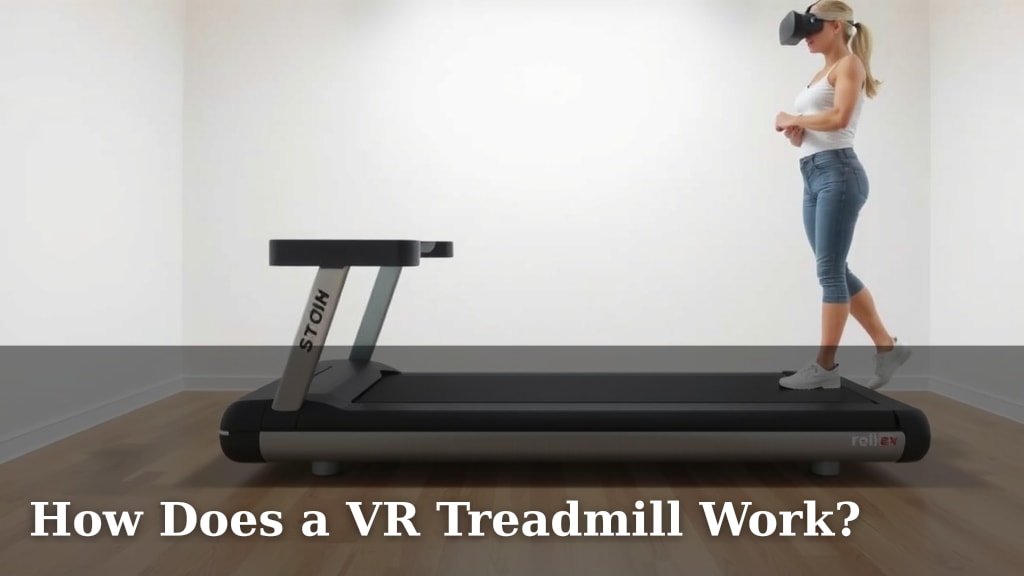
How Does a VR Treadmill Work?
A VR treadmill works by using sensors and a specialized platform to translate your real-world steps into virtual movement. This allows you to walk or run in place while your avatar moves forward in a virtual reality experience. You can experience this immersive technology with a variety of VR games and applications.
Think of it as a high-tech treadmill for your virtual adventures. Instead of moving the whole machine, the platform beneath you senses your movement. This helps create a more realistic feeling of walking or running without actually going anywhere. It’s a smart way to make your VR sessions much more active.
- VR treadmills translate your real steps into virtual movement.
- They use sensors and a special platform for tracking.
- This makes you feel like you’re actually walking or running in VR.
- It’s a way to get more active in your virtual reality games.
We found that understanding how these devices work can really change your VR experience. Let’s break down exactly how a VR treadmill makes your virtual world feel real.
Understanding How VR Treadmills Track Your Movement
VR treadmills make your virtual adventures feel incredibly real. They work by translating your physical steps into virtual movement. This means you can walk, run, or strafe in place. Your avatar then mirrors these actions in the VR game or application.
The Core Technology: Sensors and Platforms
At their heart, VR treadmills are clever combinations of specialized hardware. You’ll find a low-friction platform. There are also motion sensors. These components work together to detect how you move your feet and body. This information is sent to your VR system. It then tells the game what your character should do.
How the Platform Works
The walking surface on a VR treadmill isn’t like a regular treadmill. Instead of a belt that moves under you, it’s designed to let your feet slide easily. Imagine a highly polished surface or a roller system. This allows you to take steps forward, backward, and sideways. It creates resistance that feels natural. Your body’s natural motion is key.
The Role of Sensors
Sensors are vital for tracking your every move. These can be gyroscopes and accelerometers. They’re often built into the treadmill itself or even your VR controllers. They measure changes in direction and speed. This data is collected continuously. It’s what allows for precise tracking of your locomotion.
Translating Steps into Virtual Motion
So, how does a step on the treadmill become a sprint in a virtual world? It’s all about interpretation. The system takes the data from the sensors. It then uses algorithms to convert your physical actions into digital commands.
Forward and Backward Movement
When you step forward on the treadmill, the sensors detect this motion. The system interprets it as you moving forward in the VR environment. The faster you step, the faster your avatar moves. It’s a direct translation. Stepping backward on the treadmill moves your avatar backward. This feels very intuitive.
Sideways and Strafe Movement
Some VR treadmills also allow for strafing. This means moving left or right without turning your body. You can achieve this by subtly shifting your weight or taking side steps. The sensors pick up these sideways movements. Your avatar then strafes accordingly in the game.
Turning in Place
Turning is often handled in a couple of ways. Some systems use your body’s rotation. If you physically turn your body, the sensors detect this. Your avatar then turns in the game. Other systems might use your controllers for turning. You might twist your wrist to make your avatar turn.
Types of VR Treadmill Technology
Not all VR treadmills are built the same. There’s a range of designs, each with its own way of handling movement. Understanding these differences can help you choose the right one for your needs.
Omnidirectional vs. Directional
Omnidirectional treadmills allow movement in any direction. You can walk, run, and strafe freely. Directional treadmills might primarily focus on forward and backward movement. Some have limited side-to-side capabilities.
Active vs. Passive Systems
Passive systems typically involve a low-friction surface. You move yourself around on it. Active systems might use motors or other mechanisms. They can assist with movement or provide specific feedback. Research often points to omnidirectional, passive systems as the most versatile for immersive experiences.
Factors Affecting the Experience
Several elements contribute to how natural and responsive a VR treadmill feels. The quality of the sensors is a big one. The sophistication of the software is also critical. Even the design of the platform itself plays a role.
Latency and Responsiveness
Latency refers to the delay between your action and the VR system’s response. Low latency is essential for a good VR treadmill experience. If there’s a delay, it can cause motion sickness. Many experts say that reducing latency is a top priority for VR hardware developers. We found that faster responsiveness leads to a much more believable immersion.
Friction and Glide
The amount of friction on the platform affects how easy it is to move. Too much friction makes it hard to take steps. Too little can make you feel unstable. Finding the right balance is key for comfort and realism. A smooth glide is often preferred.
A Checklist for Understanding VR Treadmills
To wrap up, let’s recap what makes these devices tick. Keeping these points in mind will help you appreciate the technology.
- VR treadmills use a special low-friction platform.
- Sensors track your steps and body movements.
- Algorithms translate your physical actions into virtual movement.
- Forward, backward, and sideways motion are all possible.
- Turning can be done physically or with controllers.
- Low latency and platform design are key for a good experience.
Conclusion
You’ve learned that VR treadmills are more than just fancy platforms. They combine clever sensors and a specialized low-friction surface to translate your physical steps into virtual movement. This technology makes your VR experiences incredibly immersive and active. By understanding how the platform and sensors work together, you can better appreciate the responsive and realistic feel. Ready to step into your virtual world? Your next step is to explore which VR treadmill best fits your gaming needs and space.
Frequently Asked Questions
Do VR treadmills require a lot of space?
The space requirement varies by model. Some omnidirectional treadmills are quite large, while more compact directional models can fit into smaller areas. Always check the product dimensions before purchasing to ensure it fits your room.
Can I use a VR treadmill with any VR headset?
Most VR treadmills are designed to be compatible with major VR headsets like Meta Quest, HTC Vive, and Valve Index. Compatibility often depends on whether the treadmill uses standard PC VR connections or has specific software requirements.
Will I get motion sickness using a VR treadmill?
Motion sickness can still occur, but it’s often reduced compared to using a controller for movement. Low latency and accurate tracking are key to a smooth experience. Practicing with shorter sessions can help your body adjust.
How durable are VR treadmill platforms?
The durability depends on the materials and build quality. Most are constructed with robust materials designed for consistent use. Regular cleaning and proper maintenance will help ensure your treadmill lasts for a long time.
Are VR treadmills difficult to set up?
Setup can range from simple plug-and-play to more involved assembly. Many models come with clear instructions or setup guides. Some may require calibration with your VR system for optimal performance.