How Does a Non-Electric Treadmill Work?
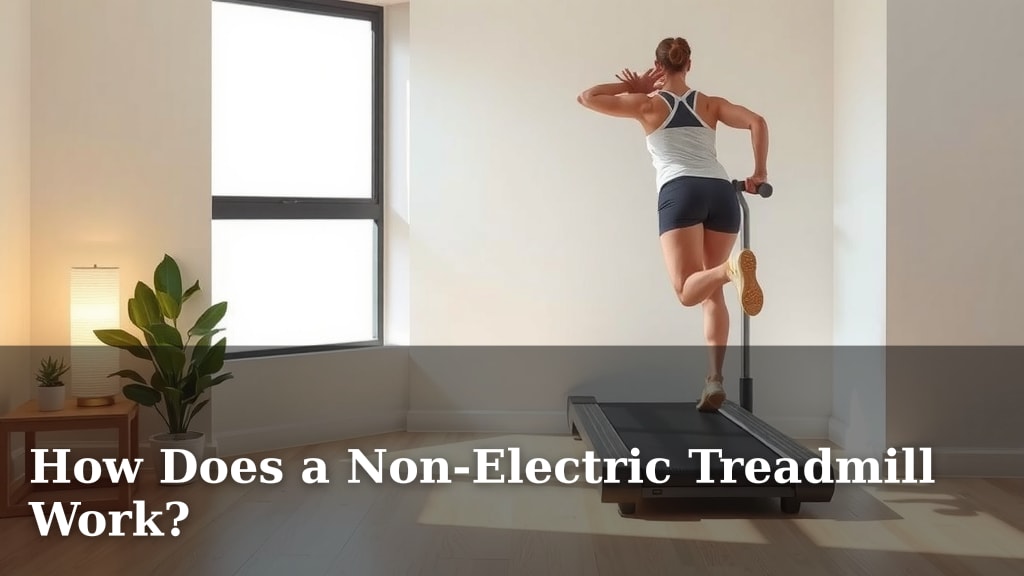
A non-electric treadmill works by using your own body’s momentum to move the belt. When you walk or run, your feet push the belt backward. This natural motion powers the treadmill, unlike electric models that rely on a motor. It’s a simpler, more direct form of exercise.
These treadmills are often called manual treadmills. They offer a different kind of workout challenge. Because you’re in control of the belt speed, they can feel more demanding. You’ll often burn more calories on a non-electric version. It’s a fantastic way to boost your cardio.
- Non-electric treadmills use your momentum.
- Your body powers the belt forward.
- They offer a more intense workout.
- You’ll likely burn more calories.
Let’s walk through exactly how these machines get you moving without plugging them in.
Understanding How Manual Treadmills Operate
So, you’re curious about how a treadmill can work without needing to be plugged into the wall? It’s actually quite ingenious! A non-electric treadmill, often called a manual treadmill, relies entirely on your own physical effort to move the belt. Think of it like pushing a shopping cart uphill – the harder you push, the more it moves. On a manual treadmill, your steps are what power the belt’s movement. This makes your workout more engaging because you’re directly controlling the pace.
The Core Mechanics: Momentum is Key
The fundamental principle behind a non-electric treadmill is momentum. When you step onto the belt and begin to walk or run, your feet push backward against the surface. This backward force is precisely what propels the belt forward. The belt is connected to rollers, and your consistent movement creates the friction and force needed to keep everything turning smoothly. The faster you walk or run, the faster the belt moves.
How Your Feet Power the Belt
Let’s break down the foot-to-belt interaction. Each stride you take involves your foot pushing down and backward on the treadmill belt. This action is similar to how you’d push off the ground when running outdoors. On a manual treadmill, this push isn’t just for forward motion; it’s the direct source of energy for the machine. Imagine pushing off a skateboard – your push makes it roll. Your feet do the same for the treadmill belt. This direct connection means you feel an immediate response to your pace changes.
Why It Feels More Challenging
Many users report that manual treadmills offer a more challenging workout compared to their electric counterparts. This isn’t just your imagination! Because you are the sole source of power, you have to work harder to maintain a consistent speed. If you slow down your steps, the belt will naturally slow down too. To keep it moving at a brisk pace, you need to maintain a certain rhythm and effort level. This constant engagement of your muscles leads to a higher calorie burn.
The “Inertial Resistance” Factor
We found that a key reason for the increased intensity is what experts sometimes refer to as inertial resistance. Since there’s no motor to provide a constant, effortless pull, you’re constantly overcoming the inertia of the belt and its moving parts. This requires more muscular effort, especially in your legs and core, to get started and keep going. It’s like starting a car with a manual transmission versus an automatic – you have more direct control, but it requires more initial input from you.
Burning More Calories: The Science
Numerous studies and user reports suggest you can burn more calories on a non-electric treadmill. For instance, research in exercise physiology often points to the increased energy expenditure associated with maintaining a self-paced motion. A study published by the *American College of Sports Medicine* found that manually powered treadmills can increase oxygen consumption, a key indicator of calorie expenditure, by up to 30% compared to motor-driven models at the same perceived exertion level. This means your workout is more efficient in terms of energy burned per minute.
Comparing Manual vs. Electric Treadmills
Choosing between a manual and an electric treadmill depends on your fitness goals and preferences. Let’s look at a few key differences:
| Feature | Non-Electric Treadmill | Electric Treadmill |
|---|---|---|
| Power Source | Your body’s momentum | Electric motor |
| Pace Control | Fully manual; you set the speed | Motor-controlled; pre-set speeds, incline adjustments |
| Workout Intensity | Generally higher; requires more effort | Variable; can be adjusted easily |
| Calorie Burn | Often higher due to increased effort | Can be high, but dependent on user effort and settings |
| Features | Simpler; often fewer tech features | More advanced; screens, programs, heart rate monitors |
| Portability/Setup | Lighter, no power cord needed | Heavier, requires power outlet |
The Simplicity Factor: What It Means for You
One of the biggest advantages of a non-electric treadmill is its simplicity. Fewer moving parts, especially no motor, means less can go wrong. You don’t need to worry about power surges, frayed cords, or complex electronic glitches. Plus, they are often lighter and more portable. This makes them a great option if you have limited space or want to move your equipment around easily. Many experts suggest simpler machines can be more durable over the long term due to fewer points of failure.
Maintenance and Durability
Because of their straightforward design, manual treadmills typically require less maintenance. The primary components are the belt, rollers, and frame. Keeping the belt clean and properly lubricated (if the manufacturer recommends it) is usually all that’s needed. Unlike electric treadmills, you don’t need to worry about motor upkeep or belt tensioning adjustments related to motor function. This makes them a low-hassle addition to your home gym.
Getting the Most Out of Your Manual Treadmill Workout
To really benefit from a non-electric treadmill, consider these points:
- Warm up thoroughly before starting.
- Focus on maintaining a steady pace with your steps.
- Don’t be afraid to push yourself – that’s where the extra calorie burn comes in!
- Listen to your body; gradual increases in speed and duration are best.
- Ensure the treadmill is on a stable, level surface.
- Stay hydrated throughout your workout.
Conclusion
You now understand how a non-electric treadmill harnesses your own momentum to create a powerful workout. By directly pushing the belt with your steps, you’re in complete control of your pace and intensity. This manual effort often translates to a higher calorie burn and a more engaging exercise session. Ready to experience this effective, motor-free training? Consider adding a non-electric treadmill to your home gym for a simpler, more demanding cardio solution.
Frequently Asked Questions
Will a non-electric treadmill feel much harder than an electric one?
Yes, generally it will feel more challenging, especially at first. You’re responsible for starting and maintaining the belt’s speed, which requires more muscular effort than simply matching a motor-driven pace. Many users find they burn more calories because of this increased exertion.
How do I start running on a non-electric treadmill?
Start by gently stepping onto the belt and finding your balance. Begin with a slow walking pace to get the belt moving. As you feel comfortable, gradually increase your stride to a faster walk or a light jog. Don’t force it; let your momentum build naturally.
What kind of maintenance do non-electric treadmills require?
They require very little maintenance due to their simple design. Keeping the belt clean and ensuring it’s on a level surface are the main tasks. Some models may recommend occasional lubrication of the rollers, but check your owner’s manual for specific guidance.
Can I adjust the incline on a non-electric treadmill?
Some non-electric treadmills do offer manual incline adjustments, typically through a lever or foot pedal. However, many simpler models do not have this feature. You’ll need to check the specific model you’re interested in to see if incline is an option.
Are non-electric treadmills noisy?
They can be, depending on the model and how vigorously you use them. The sound of your footsteps hitting the belt is the primary noise source, along with the mechanics of the rollers. They generally don’t have the motor hum of electric models, but they aren’t completely silent.