
How Far Is a Lap on a Treadmill?
So, you’re wondering, “how far is a lap on a treadmill?” A standard treadmill lap is typically one-quarter of a mile, or about 0.4 kilometers. This measurement is useful for tracking your progress during a run. You’ll often see it displayed on your treadmill’s screen.
Many treadmills are set up so that completing four laps gets you a full mile. This makes it easy to calculate your distance. Some treadmills might allow for custom lap lengths. Always check your machine’s manual for specifics.
- A treadmill lap is usually 1/4 mile (0.4 km).
- Four laps typically equal one full mile.
- This helps you easily track your running distance.
- Check your treadmill’s settings for exact measurements.
Ready to figure out exactly how far you’re running? Let’s break down how treadmill laps work and how to make them work for you.
You’ve got the basics down: a treadmill lap is usually a quarter mile. But what does that really mean for your workout? Understanding these measurements helps you gauge your progress and tailor your runs. Let’s dive deeper into what constitutes a treadmill lap and why it matters for your fitness journey.
Understanding Your Treadmill’s Measurement System
Your treadmill measures distance using a system of sensors. These sensors track the belt’s movement. A lap is simply a pre-set distance the machine uses to mark progress. Most manufacturers set this standard distance. It’s their way of breaking down your total run into manageable chunks.
The Standard Treadmill Lap
Research consistently shows that a standard treadmill lap is set at one-quarter of a mile. This is a common convention across many treadmill brands and models. You might also see this displayed as 0.25 miles. This setup means completing four laps naturally brings you to a full mile. This makes it super simple to track how many miles you’ve covered without needing a calculator mid-run.
Why This Standard?
The quarter-mile lap is largely for convenience and user-friendliness. Think about it: if you’re aiming for a 3-mile run, you know you need to complete 12 laps. This makes setting goals and monitoring your progress intuitive. Many runners find this segmented approach helps them stay motivated. It’s like ticking off small victories along the way.
When Treadmill Laps Might Differ
While 1/4 mile is the norm, your treadmill might have different settings. It’s always wise to check your specific model. You might be surprised by what you find. A little investigation can ensure you’re accurately tracking your distance.
Customizable Lap Settings
Some advanced treadmills offer the option to customize lap lengths. This is a fantastic feature for those who want more control over their workout metrics. You could set a lap to be a tenth of a mile, or even a full half-mile, depending on your preference. This customization can be helpful for specific training plans or personal goals. Always consult your treadmill’s manual for instructions on how to adjust these settings.
International Differences
If you’re outside the United States, you might encounter treadmills set to kilometers. In this case, a standard lap is often 0.4 kilometers. This is the metric equivalent of a quarter mile. So, if your treadmill displays distance in kilometers, remember that four laps will equal 1.6 kilometers, which is one mile. It’s the same concept, just a different unit of measurement.
Checking Your Treadmill’s Display
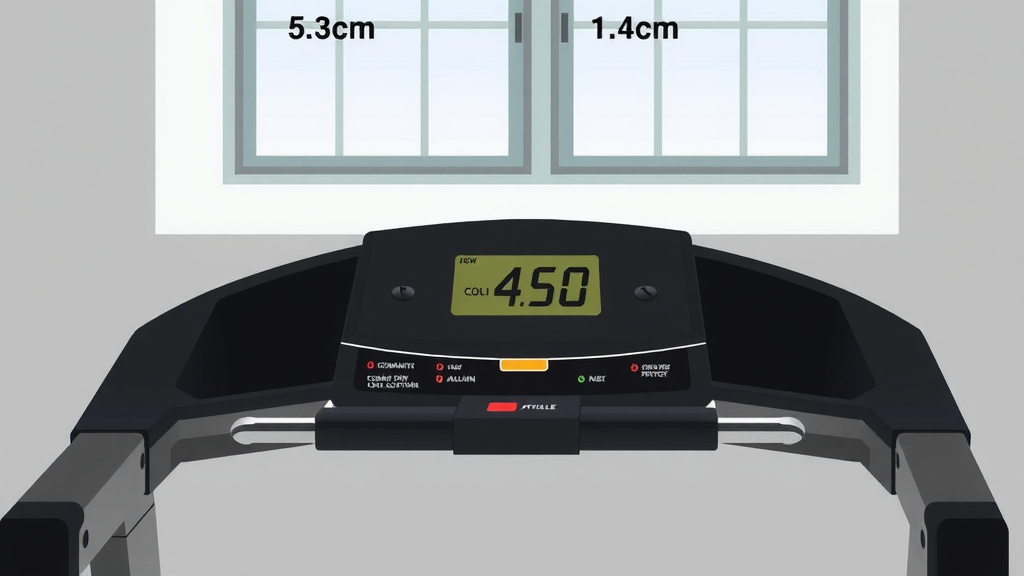
The easiest way to know for sure is to look at your treadmill’s display panel. Most machines clearly show the distance per lap. Sometimes, this is indicated by a small icon or text near the distance readout. If you’re unsure, check the section of your treadmill’s screen that displays “LAP” or “DISTANCE PER LAP.” You might also find a button labeled “LAP” that you can press to see the current lap distance. For example, it might show “0.25 MI” or “0.4 KM.”
How Laps Help You Track Progress
Think of treadmill laps as mini-milestones. They offer a tangible way to see how far you’ve gone. This can be incredibly motivating, especially on longer runs. Breaking down a large distance into smaller, achievable segments makes the overall goal feel less daunting.
Setting and Achieving Goals
Let’s say your goal is to run 5 kilometers. Knowing that a lap is 0.4 kilometers means you need to complete roughly 12.5 laps. You can then track your progress by counting the laps. Reaching 10 laps feels like a significant achievement on your way to 12.5. This segmented approach can help you maintain a steady pace. You’re less likely to hit a wall when you’re focused on these smaller increments.
Pacing and Interval Training
Treadmill laps are also excellent for structured workouts. If you’re doing interval training, you can set your laps to match your work and rest periods. For instance, you might do a fast lap, then a recovery lap. This makes it easy to transition between speeds. You don’t need to constantly check a timer for your intervals. The lap counter does the work for you. Many exercise physiologists recommend using lap counters for this very reason (American College of Sports Medicine).
A Checklist for Treadmill Laps:
- Always check your treadmill’s manual for specific lap settings.
- Look for the “LAP” or “DISTANCE PER LAP” display.
- Know the metric equivalent if your treadmill uses kilometers.
- Use laps to break down longer runs into manageable goals.
- Incorporate laps into interval training for easy tracking.
- Don’t be afraid to customize if your machine allows.
Troubleshooting Common Lap Issues
What if your treadmill’s lap counter seems off? It’s rare, but not impossible. Sometimes, the calibration can get a little wobbly. If you suspect an issue, a quick check can usually resolve it.
Is Your Treadmill Calibrated?
Most treadmills are factory-calibrated for accuracy. However, over time or after moving the machine, this calibration might shift. If you consistently feel like the distance isn’t matching your effort, it might be worth checking. Many manuals will have a section on recalibration. Sometimes, a simple reset can fix minor discrepancies. If the problem persists, contacting the manufacturer might be necessary.
Understanding Different Treadmill Types
It’s worth noting that not all “laps” are created equal. Manual treadmills, for example, don’t typically have electronic lap counters. You’re responsible for tracking your distance manually. Always be aware of the type of treadmill you’re using. This ensures you’re using the most effective tracking methods available.
Comparing Treadmill Laps to Outdoor Running
While a treadmill lap offers a standardized measurement, outdoor running is a bit different. You’re not usually counting laps around a track. Instead, you rely on GPS devices or mile markers along a route. The treadmill’s lap system is designed to mimic this tracking in a controlled environment. It simplifies the process so you can focus on your form and exertion.
The Accuracy Advantage Indoors
Treadmill laps are generally very accurate, assuming the machine is properly calibrated. They don’t account for factors like wind resistance or inclines that can affect outdoor runs. This consistency allows for precise tracking of your training progress over time. You can compare workouts week-to-week with confidence. This is one of the key benefits of indoor training for many athletes (National Institutes of Health).
So, there you have it! A treadmill lap is your helpful friend, usually measuring a quarter mile. It’s a simple tool that makes tracking your miles and achieving your fitness goals much easier. Whether you’re a beginner or a seasoned runner, understanding your treadmill’s lap system is key to maximizing your workout.
Conclusion
You’ve learned that a treadmill lap is typically a quarter mile, a simple standard designed for your convenience. This measurement helps you easily track progress, set goals, and structure your workouts effectively. Whether you’re aiming for a specific distance or using laps for interval training, understanding your treadmill’s settings is key. Always check your machine’s display or manual to confirm its measurements. Now you’re equipped to make every lap count towards your fitness journey!
Frequently Asked Questions
What if my treadmill doesn’t show lap distance?
If your treadmill doesn’t explicitly show the distance per lap, you can usually figure it out. Most treadmills default to a quarter-mile lap. You can also look for a button labeled “LAP” or check your user manual for the standard setting. If it’s a very basic model, you might need to track your total distance and divide it by the number of times you mentally counted a lap.
Can I change the distance of a treadmill lap?
Yes, some advanced treadmills allow you to customize lap lengths. You can often adjust this setting through the treadmill’s menu or a dedicated button. Consult your treadmill’s manual to see if this feature is available on your model and how to set it up for your preferred distance.
Is a treadmill lap always a quarter mile?
While a quarter mile (0.25 miles) is the most common standard, it’s not universal. Some treadmills might use different preset distances, especially those programmed for metric measurements (often 0.4 kilometers). Always check your treadmill’s display or manual to confirm the exact distance per lap for your specific machine.
How do I know if my treadmill’s lap distance is accurate?
Treadmills are usually factory-calibrated for accuracy. However, if you feel your distance is consistently off, recalibration might be needed. Your user manual should have instructions on how to check or reset the calibration. If problems persist, consider contacting the manufacturer.
Why do treadmills use laps instead of just showing total distance?
Treadmill laps serve as mini-milestones, breaking down a longer workout into manageable segments. This makes it easier to track progress during a run, set pacing goals, and manage interval training without constantly watching a timer. They offer a simple way to measure progress in smaller, achievable chunks.