
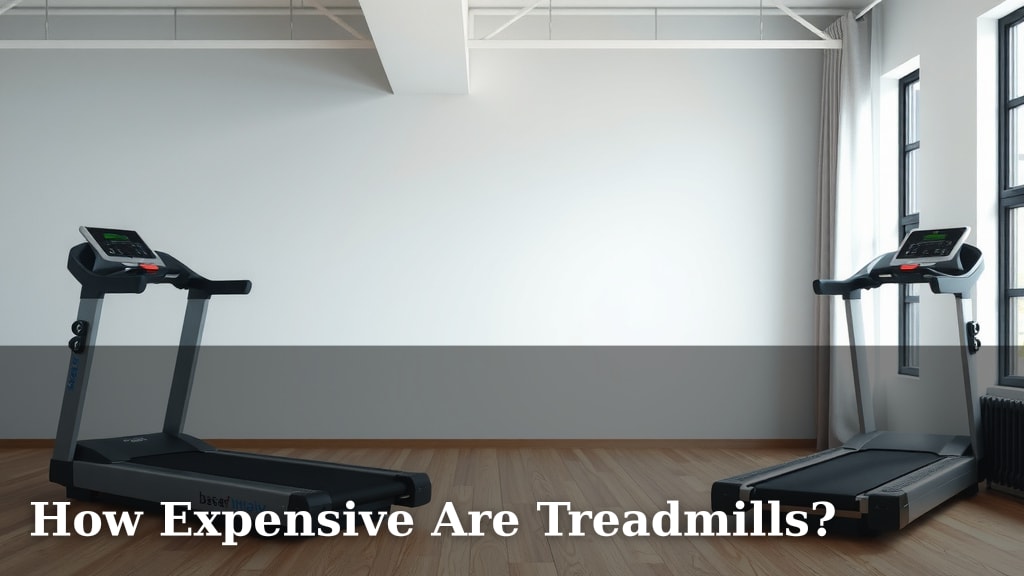
How Expensive Are Treadmills?
Treadmills can range from about $200 for basic models to well over $4,000 for high-end machines. The price really depends on the features, build quality, and brand you’re looking for. You’ll find most quality home treadmills fall somewhere between $1,000 and $2,500.
When you’re budgeting for a treadmill, think about your fitness goals and how often you plan to use it. A machine with a strong motor and a durable frame will cost more but offer a better experience. We found that investing a little more upfront can save you money on repairs later on.
- Basic treadmills start around $200.
- Mid-range options typically cost $1,000 – $2,500.
- High-end models can exceed $4,000.
- Price is driven by motor power, deck size, and extra features.
- Consider your usage and desired durability for the best value.
Let’s break down what influences treadmill prices and help you find the right fit for your budget and fitness needs.
Understanding Treadmill Price Tags
So, you’re curious about how much treadmills actually cost? It’s a question many of us ask when we start thinking about getting fitter at home. The short answer is: it really depends on what you’re looking for. You can find treadmills ranging from a couple of hundred dollars for something very basic to several thousand for a top-of-the-line machine.
We’ve found that most people end up investing somewhere between $1,000 and $2,500 for a quality treadmill that will last. Think of it like buying a car; there are entry-level models and luxury vehicles. Your budget will be a big driver, but so will your fitness goals and how you plan to use the machine.
What Makes One Treadmill Cost More Than Another?
Several key factors contribute to the price tag on a treadmill. Understanding these can help you make a more informed decision without feeling overwhelmed.
Motor Power: The Engine of Your Workout
The motor is arguably the most important part of a treadmill. It’s what makes the belt move. For walking, a 2.0 to 2.5 horsepower (HP) motor is usually sufficient. If you plan on jogging or running, you’ll want to look for at least a 3.0 HP motor, and even higher for frequent or intense running.
A stronger motor means the treadmill can handle more stress and longer use without overheating or slowing down. We found that motors with higher continuous-duty HP ratings tend to be more durable. This often translates to a higher price, but it’s a worthwhile investment for a better experience and longevity.
Deck Size and Cushioning: Your Comfort Zone
The size of the running or walking deck matters. A larger deck gives you more room to move, especially important for taller individuals or runners who need extra stride length. Standard decks are often around 20 inches wide and 55 inches long. For running, many experts recommend a deck that’s at least 60 inches long (Cleveland Clinic).
Cushioning is another feature that affects price and comfort. Better cushioning helps absorb impact, reducing stress on your joints like knees and ankles. Some treadmills offer adjustable cushioning levels, allowing you to customize your workout. You’ll find more advanced cushioning systems on pricier models.
Frame and Build Quality: Built to Last?
The materials used to build the treadmill frame play a big role in its stability and durability. A heavier, more robust frame generally indicates better build quality. This is especially important if you plan on heavy use or if you’re a heavier individual. A wobbly treadmill is not only annoying but can also be a safety concern.
Many affordable treadmills use lighter materials, which can be fine for occasional walking. However, for serious training or frequent use, a sturdy, steel frame is highly recommended. We found that treadmills with a higher weight capacity often have a more robust construction, contributing to their higher cost.
Features and Technology: The Bells and Whistles
This is where treadmills can really vary in price. Basic models might just have speed and incline controls. More advanced treadmills come packed with features like:
- Built-in workout programs: These offer guided routines for different fitness goals.
- Touchscreen displays: Some high-end models have large, interactive screens.
- Connectivity: Bluetooth, Wi-Fi, and compatibility with fitness apps like Peloton or iFit.
- Entertainment options: Built-in speakers, tablet holders, or even screens for streaming.
- Heart rate monitoring: Handgrip sensors or wireless chest strap compatibility.
While these features can make workouts more engaging, they also add to the overall cost. You need to ask yourself if you’ll genuinely use these extras or if they’re just fancy additions.
Treadmill Price Ranges Explained
Let’s break down what you can expect in different price brackets.
Budget-Friendly Treadmills ($200 – $700)
At the lower end, you’ll find treadmills that are good for light walking and occasional use. They typically have smaller motors and shorter decks. The build quality might be less robust, and they often lack advanced features.
These are best for someone who wants to get a few walks in each week and doesn’t plan on intense training. We found that many of these models might not hold up as well under heavy use or over many years. Think of them as an entry point to home fitness.
Mid-Range Treadmills ($1,000 – $2,500)
This is the sweet spot for many home users. In this range, you can expect a more powerful motor, a larger and more comfortable deck, and better cushioning. The build quality is usually much improved, offering greater stability and durability.
You’ll also find more features, such as pre-set workout programs, better incline options, and improved heart rate monitoring. Many treadmills in this category are suitable for regular jogging and even some running. We found that these machines offer a great balance of performance, features, and price for most households.
High-End and Commercial-Grade Treadmills ($2,500+)
These treadmills are built for serious runners and frequent users. They boast the most powerful motors, largest decks, and premium cushioning systems. The construction is exceptionally sturdy, designed to withstand daily, high-impact use.
You’ll find advanced technology, large interactive touchscreens, integrated entertainment systems, and extensive connectivity options. These are often comparable to what you’d find in a commercial gym. While the price is high, the performance, durability, and features are top-notch. If running is your passion and you need a machine that can keep up, this is where you’ll find it.
Are Expensive Treadmills Worth It?
The question of whether a pricier treadmill is “worth it” really comes down to your personal needs and budget. If you’re a casual walker using it a couple of times a week, a basic model might suffice. However, if you’re a runner, plan to use it daily, or have specific performance needs, investing more upfront can save you headaches and money down the line.
We found that treadmills in the mid-to-high range tend to offer better longevity and a more enjoyable user experience. The stronger motors, better cushioning, and sturdier frames contribute to this. Plus, they often come with better warranties, which is a good indicator of the manufacturer’s confidence in the product’s durability.
Quick Checklist for Smart Treadmill Shopping
Before you buy, consider these quick points:
- What’s your primary workout? (Walking, jogging, running)
- How many people will use it, and how often?
- What’s your realistic budget?
- Do you need advanced features or just the basics?
- What’s the warranty like on the motor and frame?
Conclusion
Your treadmill budget depends on your fitness goals and how you plan to use it. Basic models are great for light walking and cost around $200. For regular jogging or running, you’ll want to invest between $1,000 and $2,500 for a quality machine with a strong motor and durable frame. High-end models over $2,500 offer top performance and features for serious athletes.
Think about your primary workout and desired longevity. Investing a bit more upfront in a sturdy, well-built treadmill often saves you money on repairs and upgrades later. Now that you understand the price factors, you can confidently shop for a treadmill that fits your needs and your budget.
Frequently Asked Questions
What is the minimum treadmill price I should consider?
If you’re only planning light walking and occasional use, you might find a basic treadmill for around $200 to $700. However, we found that these models may not offer the durability or features for more consistent workouts. For better longevity and a more comfortable experience, most people aim for at least the $1,000 to $2,500 range.
Is a treadmill with a higher horsepower motor always more expensive?
Yes, generally treadmills with more powerful motors (higher HP) are more expensive. A stronger motor can handle heavier loads and longer running sessions without overheating, making it more durable. If you plan on running frequently or are a heavier individual, the higher cost of a stronger motor is often a worthwhile investment for better performance.
Do advanced features like touchscreens and app connectivity significantly increase the price?
Absolutely. Features like large touchscreens, built-in Wi-Fi, Bluetooth connectivity, and compatibility with fitness apps add to the overall cost. While these can make workouts more engaging and provide valuable data, you’ll pay a premium for them. Consider if these “bells and whistles” are essential for your training routine.
Are there treadmills that offer good value without breaking the bank?
Yes, the mid-range category, typically between $1,000 and $2,500, often provides the best value for many users. These treadmills usually offer a good balance of motor power, deck size, cushioning, and build quality. We found that these machines are robust enough for regular jogging and running without the high cost of commercial-grade models.
Should I worry about the warranty when considering treadmill prices?
You absolutely should. More expensive treadmills often come with longer and better warranties, especially for the motor and frame. A strong warranty is a good indicator of the manufacturer’s confidence in their product’s durability. Always check the warranty details, as it can save you a lot of money on potential repairs down the line.


One Comment