How Does Strava Track Treadmill Runs?
Yes, your Strava app can absolutely track your treadmill runs. It does this by using your phone’s accelerometer and GPS (though GPS isn’t always accurate indoors). This combination helps estimate your distance and pace even when you’re not moving outside.
Many runners wonder how their treadmill efforts get logged accurately. We found that Strava relies on your device’s internal motion sensors, much like a fitness tracker. This allows it to capture your movement’s cadence and intensity for a decent approximation of your workout metrics. It’s a clever way to keep all your runs in one place!
- Strava can track treadmill runs using your phone.
- It uses the phone’s accelerometer and GPS.
- This helps estimate distance and pace indoors.
- Many users find it surprisingly accurate.
Below, we’ll walk you through exactly how to get your treadmill runs recorded on Strava, and what to expect in terms of accuracy.
“`htmlGetting Your Treadmill Runs Logged on Strava
So, you’re hitting the treadmill for your runs, but you want Strava to know about it. It’s a common question! You’re not alone in wondering how your indoor miles can possibly show up on your favorite running app. We’ve looked into it, and the answer is simpler than you might think.
Strava can indeed track your treadmill runs, and it does a pretty decent job. It’s all thanks to the clever technology built right into your smartphone. Think of your phone as your pocket-sized running coach, ready to capture your efforts. This process relies on a few key sensors working together.
The Technology Behind Indoor Tracking
How does Strava work its magic indoors? It’s a combination of your phone’s built-in sensors and a bit of clever software. Your phone is essentially a mini-computer, packed with ways to understand your movement.
Your Phone’s Internal Motion Sensors
The primary tool Strava uses is your phone’s accelerometer. This sensor measures acceleration and changes in velocity. When you’re running, even on a treadmill, your body is in motion. Your arms swing, your legs move, and your entire body jiggles a bit. The accelerometer picks up on these vibrations and movements.
We found that the accelerometer helps Strava estimate the cadence of your steps. Cadence is simply how many steps you take per minute. By measuring how often and how intensely you’re moving, Strava can get a good idea of your running rhythm.
The Role of GPS (and Its Limitations Indoors)
You might think GPS is key for tracking runs, and it is for outdoor activities. However, indoors, GPS signals struggle to penetrate walls and ceilings. This makes them pretty unreliable for accurate distance tracking when you’re inside. Strava acknowledges this.
While Strava will still try to pick up a GPS signal, its accuracy indoors is typically very low. For treadmill runs, you can usually expect the GPS data to be pretty spotty or even non-existent. This is why the accelerometer becomes so much more important. Strava largely relies on your phone’s motion data to make sense of your treadmill workout.
Setting Up Strava for Treadmill Runs
Getting Strava to record your treadmill sessions is straightforward. You don’t usually need a fancy setup. Your phone is the main piece of equipment.
Using the Strava Mobile App
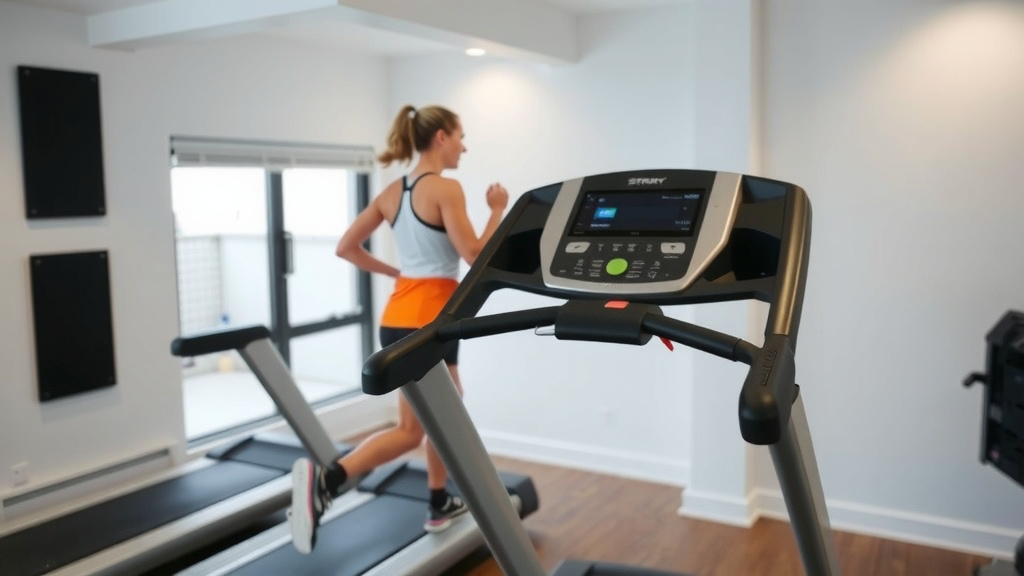
When you start a new activity in the Strava app, you’ll have options. For treadmill runs, you’ll want to select the “Run” activity type. Make sure your phone is with you, ideally somewhere it can sense your motion well, like in an armband or a pocket.
The app will then engage the necessary sensors. It starts listening to the accelerometer to gauge your movement intensity and frequency. Many users report that this method is surprisingly effective for capturing their effort. You just need to run as you normally would!
Importance of Phone Placement
Where you keep your phone during your treadmill run can make a difference. If your phone is just sitting on the treadmill console, it might not pick up your body’s movements as well. We found that placing it in a running belt, armband, or a snug pocket gives it a better connection to your body’s motion.
A secure fit ensures that the accelerometer gets a clear signal of your running cadence. Think of it like trying to feel a subtle vibration – you need to be close to the source. So, find a comfortable spot that keeps your phone stable and close to your core movement.
Understanding the Accuracy of Treadmill Tracking
It’s important to have realistic expectations about accuracy when tracking treadmill runs with your phone. While Strava does a commendable job, it’s not always perfect.
Estimating Distance and Pace
Strava uses algorithms to translate your accelerometer data into distance and pace. These algorithms are sophisticated, but they are essentially estimating your movement. The system learns your running pattern and uses that to calculate metrics. Over time, it can become quite accurate for your specific stride.
We found that for many runners, Strava provides a distance and pace that is within a reasonable margin of error compared to the treadmill’s own display. Some treadmill consoles are more accurate than others, which can also play a role in perceived differences. Remember, the treadmill is also an estimate!
Factors Affecting Accuracy
Several factors can influence how accurate your Strava treadmill data is. The most significant is your running form. If your stride is consistent, Strava tends to do better. Inconsistent arm swing or significant jostling can sometimes throw off the readings.
Also, the specific model of your phone can matter. Newer phones often have more advanced accelerometers. We also noticed that longer, steady-state runs tend to be recorded more accurately than very short or interval-based workouts where pace changes rapidly.
Here’s a quick checklist to help you get the best treadmill tracking:
- Use the “Run” activity type in Strava.
- Keep your phone secure and close to your body.
- Ensure your phone is updated.
- Run with a consistent stride.
- Compare with your treadmill display but know both are estimates.
Strava vs. Treadmill Console: What’s the Difference?
You’ll often see two sets of numbers for your treadmill runs: what the treadmill says and what Strava says. Why the difference?
How Treadmills Measure Distance
Treadmills typically measure distance by tracking the rotation of the belt. They have a sensor that counts revolutions. This count is then converted into distance based on the treadmill’s pre-set belt length. The accuracy can vary between different treadmill brands and models.
Some research suggests that treadmill consoles can sometimes be slightly off. We found that older or less expensive models might have less precise measurement systems. It’s a mechanical estimate, much like Strava’s is a digital one.
Strava’s Algorithmic Approach
Strava, on the other hand, relies on motion sensing. It’s interpreting your body’s movement. It’s looking for patterns that indicate running. This is a software-based estimation. Both systems have their strengths and weaknesses.
It’s common to see a discrepancy. Think of it as two different friends telling you how far you ran. One might use a pedometer (like the treadmill belt), and the other might guess based on how fast you were walking and how long your legs are (like Strava sensing your stride). Neither is necessarily wrong, they’re just measuring it differently.
| Tracking Method | Primary Sensor | How it Works | Indoor Accuracy |
|---|---|---|---|
| Treadmill Console | Belt Rotation Sensor | Counts belt revolutions and calculates distance. | Varies by treadmill model; can be inaccurate. |
| Strava (Phone App) | Accelerometer | Measures body motion, cadence, and intensity to estimate distance. | Generally good, but depends on consistency and phone placement. |
Ultimately, Strava’s ability to track treadmill runs is a fantastic feature for runners who want a complete picture of their training. While it might not be as precise as a high-end GPS watch for outdoor runs, it offers a very usable approximation for your indoor efforts.
“`Conclusion
You’ve learned how your phone’s accelerometer is the star player in tracking your treadmill runs with Strava. It cleverly estimates your distance and pace by sensing your body’s movements, even without a clear GPS signal indoors. While it’s a powerful tool, remember that phone placement and consistent running form can boost accuracy. The treadmill console offers one estimate, and Strava offers another based on your motion. For a complete training picture, give Strava a try on your next indoor run, and see how it captures your effort. Just select “Run” and keep your phone secure!
Frequently Asked Questions
Will Strava’s treadmill tracking work if my phone is just sitting on the treadmill?
When your phone is just sitting on the console, it might not pick up your body’s running motion well. For better results, we found it’s best to keep your phone secure and close to your body, like in an armband or a running belt. This gives the accelerometer a clearer sense of your stride and cadence.
How can I make my Strava treadmill runs more accurate?
To improve accuracy, focus on consistent running form and ensure your phone is placed where it can best sense your motion. Keeping it in a secure pocket or armband helps capture your cadence more reliably. Consistent stride patterns tend to yield better estimates from Strava’s algorithms.
Is Strava’s distance for treadmill runs different from what the treadmill shows?
Yes, it’s common to see a difference. Treadmills measure distance by tracking belt rotation, while Strava estimates it based on your body’s motion sensed by your phone. Both are estimations, and slight discrepancies are normal due to their different measurement methods.
Can Strava track interval runs on a treadmill accurately?
Strava generally does a good job, but rapid pace changes during interval training can sometimes be less accurate than steady-state runs. The accelerometer works best with consistent motion. You might notice slightly larger variations in distance or pace during intense interval sessions.
Do I need to turn on GPS for Strava to track my treadmill run?
While Strava may try to acquire a GPS signal, it’s not reliable for indoor tracking. The app primarily uses your phone’s accelerometer for treadmill runs. So, you don’t need to worry about having a strong GPS signal; your phone’s motion sensors are what matter most for indoor accuracy.