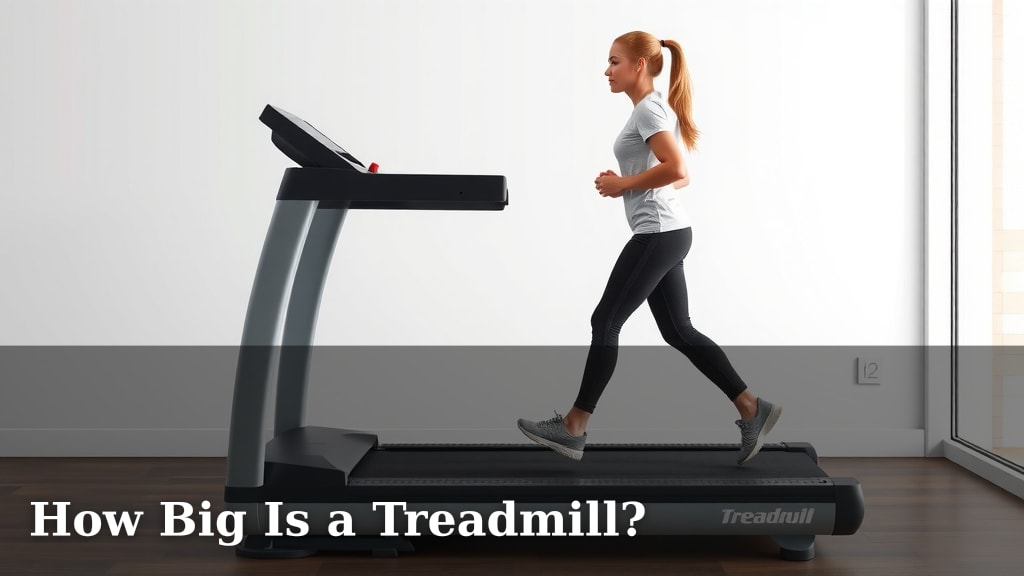
How Big Is a Treadmill?
So, you’re wondering, “How big is a treadmill?” Most treadmills, whether for walking or running, are typically around 6 to 7 feet long and 2.5 to 3 feet wide. You’ll also need to consider the height, which is usually about 5 feet. Remember, this is just the machine itself – you’ll need more space around it!
When you’re figuring out where to put your new fitness friend, think about more than just the treadmill’s footprint. Many experts suggest you need at least 2 feet of clearance on each side and 6 feet behind it for safe use. This ensures you have plenty of room to step on and off easily and, well, to avoid any unfortunate trips.
- Treadmills vary in size, but expect about 6-7 ft long by 2.5-3 ft wide.
- Don’t forget to add space around it for safety!
- Aim for at least 2 feet on the sides and 6 feet behind the treadmill.
- Consider its height, usually around 5 feet tall.
Let’s get into the nitty-gritty details about treadmill dimensions so you can find the perfect spot in your home.
Understanding Your Treadmill’s Footprint
So, you’ve got your eye on a treadmill, but space is a concern. We get it! Figuring out exactly how much room these fitness machines take up is key to making sure it fits comfortably and safely in your home. Think of it like buying furniture – you wouldn’t buy a sofa without measuring your living room, right?
The Basic Dimensions: Machine Size
Let’s talk about the treadmill itself. Most standard treadmills are designed with a specific footprint in mind. We found that the average treadmill measures about 6 to 7 feet long. For width, you’re usually looking at around 2.5 to 3 feet. This gives you a good baseline for the machine’s physical size.
Length: From Belt to Back
The length primarily accounts for the treadmill belt and the motor housing at the front. Even when folded, the length remains a significant factor. You need to ensure this length doesn’t block doorways or high-traffic areas. Imagine trying to walk past your treadmill and constantly bumping into it – not ideal for your daily routine!
Width: Side to Side Space
The width is mainly determined by the treadmill belt and the side rails. While not as long as the length, the width still requires careful consideration. You need enough room to feel stable when you step on and off. It’s also where you’ll find those safety handles, which add a little extra to the overall width.
The Vertical Dimension: Height Matters Too
Don’t forget about the height! When a treadmill is set up and ready for use, it typically stands about 5 feet tall. This dimension is important if you plan to place it near a low ceiling, like in a basement. You’ll want to make sure you have ample headroom, especially if you’re a taller individual or like to stand up straight while walking between workouts.
Creating a Safe Exercise Zone: The Clearance Zone
Now, this is where many people underestimate their space needs. The treadmill itself is only part of the equation. For safe and comfortable use, you need to add space around the machine. Experts strongly recommend a generous clearance zone. This isn’t just a suggestion; it’s for your safety and the longevity of your equipment.
Front Clearance: Stepping On and Off
The area in front of your treadmill is crucial. While the intro mentioned space behind, let’s clarify. You need adequate space to safely step onto and off the treadmill. Most manufacturers suggest at least 2 feet of clear space in front. This buffer zone helps prevent accidental stumbles or falls as you start or finish your workout.
Side Clearance: For Stability and Access
Similar to the front, having space on the sides is important. We recommend at least 2 feet of clearance on each side of the treadmill. This allows you to easily step on and off without feeling cramped. It also provides access for cleaning or maintenance underneath the machine. Think of it as your personal workout bubble!
Rear Clearance: The Safety Buffer
The space behind the treadmill is a critical safety feature. Many fitness guidelines, including those from the U.S. Consumer Product Safety Commission, suggest a substantial amount of clear space behind the treadmill. Aiming for around 6 feet of clear space behind the unit is a common recommendation. This buffer zone is there in case of a misstep or if you need to quickly step off the back.
Compact vs. Standard: Finding Your Fit
Not all treadmills are created equal when it comes to size. If you have limited space, you might be looking for a more compact option. However, even these still require that essential clearance. Here’s a general comparison:
Here’s a quick look at what you might expect:
| Treadmill Type | Approximate Length (ft) | Approximate Width (ft) | Approximate Height (ft) |
|---|---|---|---|
| Standard/Folding Treadmill | 6 – 7 | 2.5 – 3 | 5 |
| Compact/Personal Treadmill | 5 – 6 | 2 – 2.5 | 4.5 – 5 |
| Under-Desk Treadmill | 4 – 5 | 2 – 2.5 | 0.5 – 1 (Height is usually very low for walking only) |
The Foldable Advantage: Space Saving Design
Many treadmills are designed to fold up, which can significantly reduce their footprint when not in use. This is a fantastic feature for smaller homes or apartments. However, remember that even when folded, you still need to account for its length and width in its folded position, as well as the required clearance around it.
Under-Desk Treadmills: A Different Breed
If you’re looking for something specifically to use while working, under-desk treadmills are quite different. These are generally much shorter and flatter. Their main purpose is to fit under a desk, allowing you to walk while you work. They often have very low heights, sometimes less than a foot, but still require clearance around them for safe operation.
Putting It All Together: Your Space Checklist
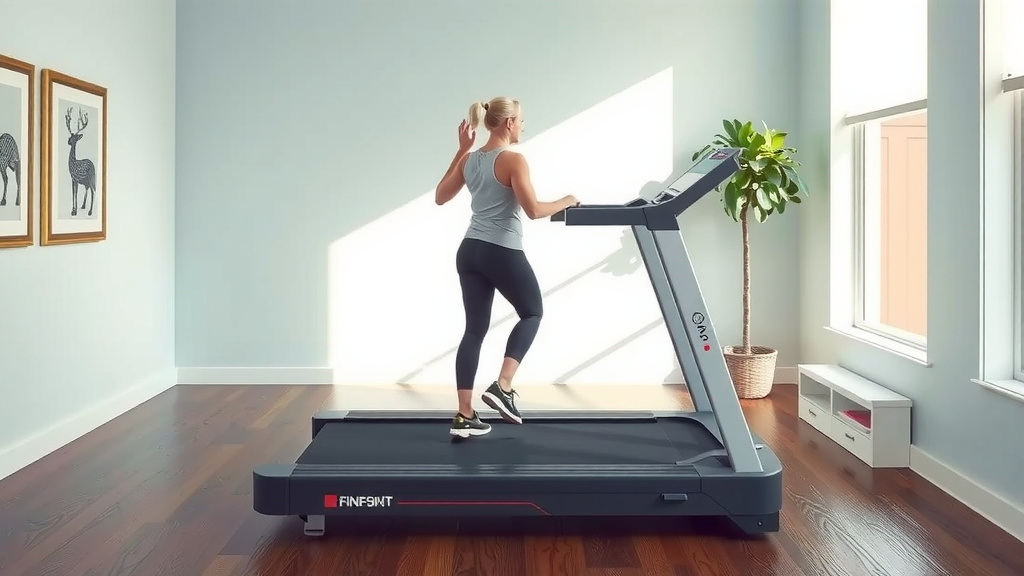
Before you click “buy,” take a moment to visualize the treadmill in your chosen space. Use painter’s tape on the floor to mark out the dimensions of the treadmill plus the recommended clearance zone. This visual aid is incredibly helpful!
Here’s a quick checklist to ensure you’ve got enough room:
- Measure your available space accurately.
- Factor in the treadmill’s length, width, and height.
- Add at least 2 feet of clearance on each side.
- Ensure about 6 feet of clear space behind the treadmill.
- Check for overhead obstructions like low ceilings or fans.
- Consider how easily you can access and use the machine.
Conclusion
You’ve learned that a treadmill’s size isn’t just about the machine itself. It includes the essential space you need around it for safety. We found most treadmills are about 6-7 feet long and 2.5-3 feet wide, but remember to add at least 2 feet on the sides and 6 feet behind. Considering the height, around 5 feet, is also key. Now that you know the dimensions, you’re ready to measure your space accurately and choose the perfect treadmill. Take those measurements and visualize your new home gym!
Frequently Asked Questions
How much space do I really need for a treadmill?
You’ll need space for the treadmill itself, typically 6-7 feet long by 2.5-3 feet wide. Plus, experts suggest at least 2 feet of clearance on each side and a generous 6 feet behind it for safe use and easy entry/exit.
Can I put a treadmill in a small room?
Yes, with careful planning. While standard treadmills need significant clearance, compact or under-desk models might fit better. Always measure the machine’s dimensions plus the required safety zone to be sure.
Does a folding treadmill take up less space overall?
A folding treadmill’s footprint is smaller when stored upright, saving floor space. However, you still need to account for its folded length and width, and the necessary clearance around it when in use and when folded.
What’s the difference in size between a running treadmill and a walking treadmill?
Running treadmills are generally larger and more robust to handle higher speeds and impact. Walking treadmills, especially under-desk models, are often shorter, flatter, and more compact, designed for lower speeds.
Why is rear clearance so important for a treadmill?
The 6 feet of space behind a treadmill acts as a critical safety buffer. It helps prevent injuries if you accidentally step off the back or need to dismount quickly during your workout.