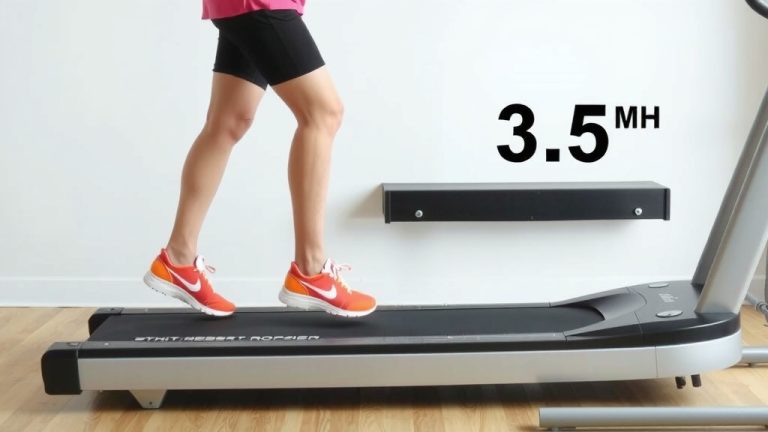
7.2 Treadmill Speed: What Does It Mean for Your Workout
So, you’re wondering, how fast is 7.2 on a treadmill? Great question! Essentially, 7.2 mph on a treadmill is a brisk running pace. It’s faster than a jog for most people. You’d typically be looking at around a 7:45 minute mile pace. This speed is a solid indicator of good cardiovascular fitness.
This speed often falls into the category of a challenging run for many fitness enthusiasts. It’s a speed that requires some effort and focus. Many treadmill users find this speed perfect for interval training. It’s also a great pace for pushing your endurance limits during a steady-state run. It’s not quite a sprint, but it’s definitely moving!
- 7.2 mph is a fast running pace.
- It equates to about a 7:45 minute mile.
- This speed is good for challenging workouts.
- It’s faster than a jog for most people.
Let’s break down what running at 7.2 mph really means for you and how it compares to other paces. We’ll cover what kind of workout you can expect.
“`htmlSo, you’ve hit that 7.2 mph mark on the treadmill and are wondering what it really means for your workout. Think of it as your personal fast-forward button for fitness! You’re moving at a pace that’s more than a jog, pushing into solid running territory. It’s a speed that feels purposeful and makes your heart pump with a satisfying rhythm. Many runners find this pace a sweet spot for building endurance and cardiovascular strength. It’s not quite an all-out sprint, but it’s certainly got some serious speed behind it!
Understanding Your 7.2 MPH Treadmill Pace
When you set your treadmill to 7.2 mph, you’re essentially aiming for a 7 minute and 45-second mile. This is a respectable speed for many individuals. For some, it’s a challenging pace to maintain. For others, it might be a comfortable, brisk run. It depends a lot on your current fitness level and how often you run.
This speed is a great indicator of where you stand fitness-wise. Are you new to running? This pace might feel like a real push. Are you a seasoned runner? You might be looking to increase the incline or add a few more tenths of a mile per hour to make it more of a challenge. It’s a versatile speed that can be adapted to your personal goals.
Comparing 7.2 MPH to Other Speeds
Let’s put 7.2 mph into perspective. Most people’s casual walking pace is around 3-4 mph. A brisk walk can get up to 4-5 mph. Once you hit 5 mph, you’re likely in jogging territory. 7.2 mph is definitely beyond a jog for the average person. It’s a running speed that requires conscious effort and good form.
Think of it this way: a 5 mph pace might feel like a light jog, almost conversational. At 7.2 mph, your breathing will be more pronounced, and you’ll need to focus on your stride. This is where you start to see real improvements in your cardiovascular health. The American Heart Association suggests that moderate-intensity aerobic activity, like brisk walking or jogging, should be done for at least 150 minutes per week. Running at 7.2 mph easily fits into this category, often considered vigorous intensity. Running at 7.2 mph easily fits into this category, often considered vigorous intensity, and leads to real improvements in your cardiovascular health.
What Does This Pace Feel Like?
At 7.2 mph, you’ll likely be breathing quite heavily. You might not be able to hold a full conversation. Your muscles will feel engaged, and you’ll feel the impact of each step. It’s a speed that demands your attention. You’ll feel your heart rate climb significantly. This is exactly what you want for building endurance and burning calories efficiently. It feels like you’re truly working towards a fitness goal.
Your Workout at 7.2 MPH
So, what kind of workouts can you do at this speed? 7.2 mph is a fantastic speed for both steady-state running and interval training. Your choice depends on your goals for the day. Are you training for a race? Building general fitness? Looking to burn some serious calories?
Steady-State Running at 7.2 MPH
If you’re aiming to build endurance, running at a consistent 7.2 mph for an extended period can be very effective. You might aim for 20-30 minutes at this pace. This type of workout helps your body become more efficient at using oxygen. It strengthens your heart and lungs. It’s a great way to improve your stamina over time. Many runners use this as a base pace for longer runs.
Interval Training with 7.2 MPH
Interval training is where 7.2 mph really shines. You can use it as your high-intensity interval. For example, you might run at 7.2 mph for 1 minute, then decrease the speed to a recovery pace (like 5 mph) for 1-2 minutes. Repeat this cycle several times. This method is highly effective for improving speed and cardiovascular fitness. It also burns a lot of calories in a shorter amount of time. Experts often recommend interval training for its efficiency (National Institutes of Health).
Sample Interval Structure
Here’s a simple interval structure you could try:
- Warm-up: 5 minutes at 4.5 mph
- Interval 1: 1 minute at 7.2 mph
- Recovery 1: 2 minutes at 5.0 mph
- Interval 2: 1 minute at 7.2 mph
- Recovery 2: 2 minutes at 5.0 mph
- … Continue for 5-8 total intervals
- Cool-down: 5 minutes at 4.0 mph
Who is 7.2 MPH For?
This pace isn’t for everyone, and that’s perfectly okay. It’s generally suited for individuals who have a solid foundation in running. You should feel comfortable running for at least 30 minutes at a jog. If you can comfortably jog at 5-6 mph, then 7.2 mph is a logical next step for you.
It’s also a speed that competitive runners might use for speed work. For example, a runner training for a 10k or half marathon might incorporate 7.2 mph intervals. However, it’s important to listen to your body. If you’re just starting out, you might want to work up to this speed gradually. Pushing too hard too soon can lead to injury.
Safety and Considerations
Always start with a warm-up and end with a cool-down. Make sure you have proper running shoes. If you have any health concerns, consult your doctor before starting a new workout routine, as recommended by the Centers for Disease Control and Prevention (CDC). Pay attention to how your body feels. If you experience pain, slow down or stop. Proper form is key to avoiding injuries at faster paces.
Think about the incline, too. Adding a slight incline can make 7.2 mph feel more challenging without increasing the speed itself. This can be a great way to vary your workout and engage different muscles. It’s all about finding what works best for your fitness journey.

Making the Most of Your 7.2 MPH Run
To really maximize your effort at 7.2 mph, consider these tips. Focus on your posture. Keep your head up, shoulders back, and arms swinging. Efficient form helps you run faster and longer. Staying hydrated is also super important. Drink water before, during, and after your run. This helps your body perform at its best and recover properly.
Tracking your progress can be very motivating. Use a fitness tracker or the treadmill’s built-in console to record your speeds and durations. Seeing how you improve over time will give you a great sense of accomplishment. You might find that what feels challenging today becomes your warm-up pace in a few weeks!
Quick Checklist for Your 7.2 MPH Workout
- Ensure you’ve warmed up properly for 5-10 minutes.
- Check your treadmill is stable and functioning correctly.
- Maintain good running form throughout your run.
- Focus on your breathing; aim for a rhythm.
- Stay hydrated before, during, and after your workout.
- Cool down with a light walk or stretch for 5-10 minutes.
Running at 7.2 mph is a great way to challenge yourself and improve your fitness. Whether you’re doing steady-state intervals or pushing through a high-intensity session, you’re making a positive impact on your health. Keep up the great work!
“`Conclusion
You’ve learned that hitting 7.2 mph on your treadmill is a significant running pace, roughly a 7:45 minute mile. It’s a speed that offers a fantastic opportunity to boost your cardiovascular health, whether you’re using it for steady endurance runs or high-intensity intervals. This pace challenges your body and helps you build serious stamina. Keep listening to your body, focus on your form, and stay consistent. Your next step is to incorporate this challenging speed into your routine safely and effectively, perhaps starting with short intervals and gradually increasing your duration.
Frequently Asked Questions
Is 7.2 mph a fast speed for running?
Yes, 7.2 mph is considered a fast running speed for most people. It’s significantly faster than a jog and requires a good level of fitness to maintain. You’ll find it’s a challenging but rewarding pace for building speed and endurance.
Can I run a whole mile at 7.2 mph?
If you’re well-conditioned, you might be able to run a full mile at 7.2 mph. However, for many, this speed is best utilized in shorter bursts during interval training. Running a full mile at this pace is a solid fitness achievement.
How many calories does running at 7.2 mph burn?
Running at 7.2 mph will burn a considerable amount of calories due to the vigorous intensity. The exact number depends on your weight, duration, and individual metabolism, but it’s a very effective pace for calorie expenditure.
What’s the difference between 7.2 mph and a 5 mph jog?
A 5 mph pace is typically a comfortable jog, allowing for easier conversation. At 7.2 mph, your breathing will be much heavier, you’ll need to focus on your stride, and it will feel like a demanding run rather than a light jog.
Should I use an incline when running at 7.2 mph?
You can use an incline at 7.2 mph to increase the challenge and engage different muscles. However, many find 7.2 mph challenging enough on its own. Start without an incline and add it gradually if you want to further test your limits.